
Slot Machines in McCarran International Airport. Passengers leaving Las Vegas walking through the airport, some playing on slots.
anouchka/Getty Images
Jessica Steinman fell hard for a gambling addict.

They met when the Austin woman had just moved to Los Angeles in June 2011.
She passed him her phone number while dining at a 24-hour restaurant where he had worked as a host. He called her the next day. Their relationship progressed quickly. He moved in.
Article continues below this ad
She covered the rent, his daughter’s preschool, vacations, dinners and other expenses. He spent his money on sports betting and at the local casino — entire paychecks.
After three years of trying to “fix him,” she finally ended it. He had borrowed roughly $85,000 from her, she said, money that he never paid back.
Today, Steinman is an addiction therapist who moved to Austin in August to help serve the growing Texas population of people — like her ex-partner — harmed by gambling.
Texas has become a target of sorts for those who see the state as woefully unprepared to handle the explosion of online betting.
“I would argue that we have the most demand in Texas,’’ said Sam DeMello, a recovering gambling addict and Boston tech entrepreneur. DeMello launched a digital gambling support platform that has doubled its number of users over the last six months. Hundreds live in Texas — and primarily North Texas.
Article continues below this ad
Boston tech entrepreneur, Sam DeMello. DeMello is a recovering gambling addict who launched a digital gambling support platform.
Courtesy of Sam DeMello
Problem gambling has been traditionally dismissed as an issue that can be fixed by willpower and moral conviction. A growing number of clinicians such as Steinman are raising concerns that excessive gambling can be more lethal and difficult to overcome than more well-researched addictions such as substance abuse or alcoholism.
In young people, gambling disorders can create a dangerous rewiring of the brain, experts say, that is impossible to reverse without targeted support.
And no matter the age, the disorder reports the highest rate of suicide attempts resulting in death among all addictions, experts say.
What’s most troubling is that Texas, unlike more than a dozen other states, contributes no state money for prevention or addiction services, addiction experts say.
Article continues below this ad
The federal government spends billions annually on substance use. It dedicates no money to addressing gambling addiction.
Linda Uphoff, a gambling addiction expert, poses at her home in Dallas, Texas, Friday, September 25, 2026.
Anja Schlein/The Dallas Morning News
“For anybody in Texas to say that we don’t have gambling is, I guess, kind of ignorant,” said Linda Uphoff, a certified gambling addiction counselor in Dallas.
North Texans, she said, regularly call for help. Some bet offshore on sports. Others on online platforms. Some wager in poker rooms or roadside game rooms and casinos in border states.
Uphoff also knows firsthand what it’s like. She’s the mother of a 30-year-old son in recovery.
Article continues below this ad
“Texas can bury its head in the sand and say it doesn’t allow sports betting,” Uphoff said. “Well, you know what? That’s not so true.”
Texas has no state certification for clinicians who specialize in treating gambling addicts, said Carol Ann Maner, founder and outgoing executive director of the Texas Coalition on Problem Gambling, which is based in Houston.
In fact, only five therapists in Texas are trained under best practices. Maner and Uphoff are two of them. There is one in Fort Worth and one more in Dallas, according to the International Problem Gambling and Gaming Certification Organization in Pittsburgh. By comparison, Florida has twice as many.
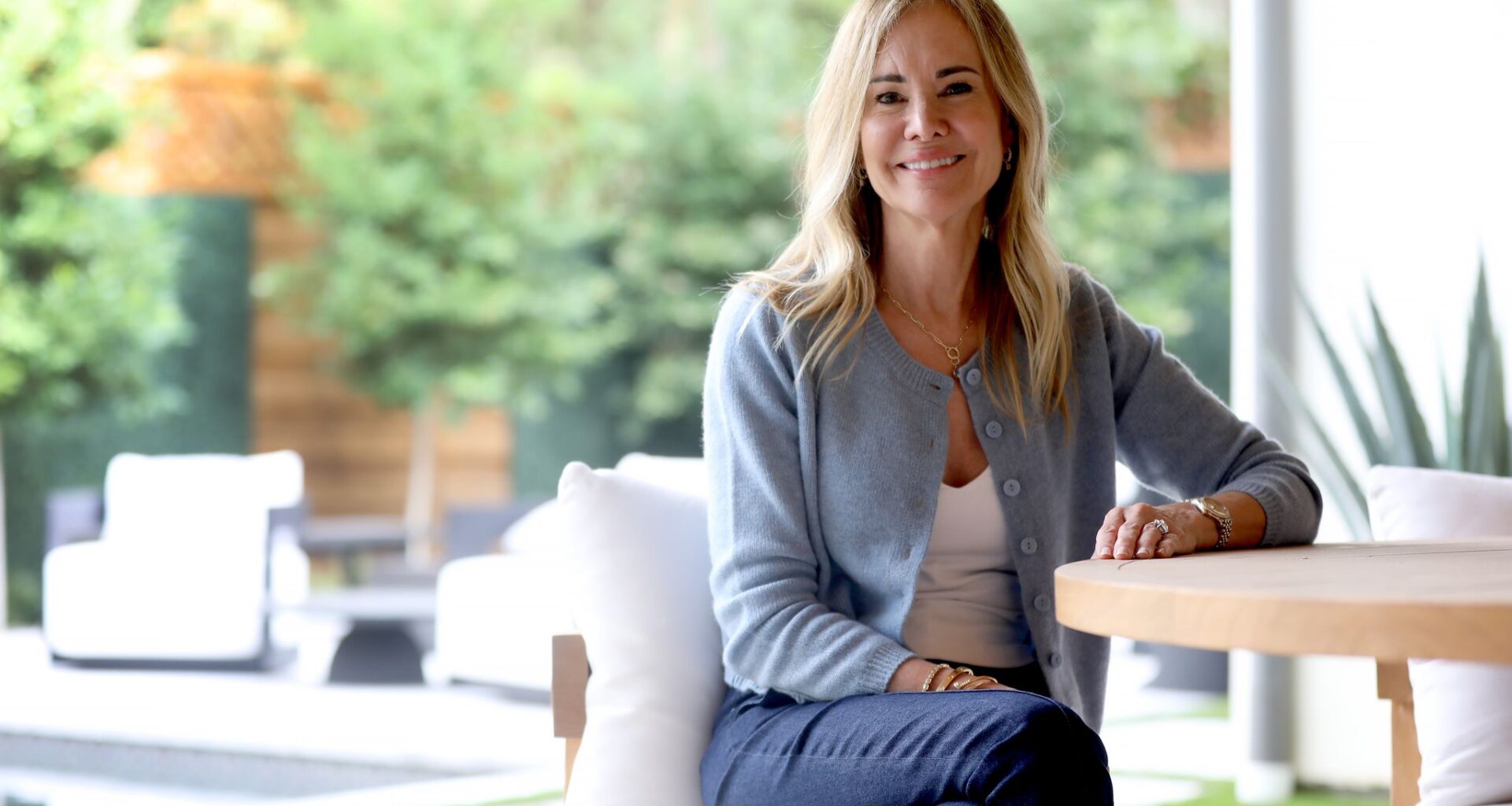
Jessica Steinman, an addiction therapist based in Austin, Texas. Steinman moved to Austin to help serve the growing population of Texans harmed by gambling.
Courtesy of Jessica Steinman
Steinman is hoping to soon close some of those gaps.
Article continues below this ad
On November 15, she is expected to launch No Matter What Recovery, a new treatment facility in Austin that will offer addiction services for people who struggle with alcohol and substance abuse, as well as gambling.
“I feel I really understand the plight of the gambler and families,’’ Steinman said, “obviously for my own personal reasons.”
“It’s truly one of the worst addictions to get sober from.”
Like almost all compulsive gamblers, Steinman’s ex-partner never overcame the disorder. Just before they had met, he had been in an outpatient treatment center but had quickly relapsed.
While they were together, he promised — over and over again — to stop. He never did.
Article continues below this ad
He told her early on that he liked to gamble, was bad with money and frequented casinos and used online sports betting sites. Like many partners and family members of those affected, she stuck by him and hoped things would change.
A lack of awareness
The public has little awareness about why it can become so intense and hard to stop wagering.
Most families of compulsive bettors have little understanding of how the addiction grows.
And gamblers don’t have a clue about how they can be at a higher risk. Some may have a family history. People with Attention Deficit Hyperactivity Disorder can be 20% to 30% more susceptible.
For women, the trigger can be divorce, illness, death of a parent or post-partum hormones.
Just as awareness about gambling disorder is limited, people who are trained to recognize and treat it are rare.
Unlike alcohol or substance abuse, it’s not as easy to remove the addict from the source of their addiction. Without restrictions on access to phones, computers, WiFi and money, gambling addicts can relapse.
And there is often little or no warning that something is terribly wrong.
Kimberlee Freudenberg knows that personally. Six months ago, she and Uphoff founded Parents Standing Together, a national advocacy group for parents of gamblers.
Freudenberg, a high school physics teacher in Northern California, said the early stages of her son’s gambling addiction looked like normal preteen behavior.
At age 11, he would play Counter-Strike: Global Offense, a first-person shooter video game that pitted terrorists against counter-terrorists.
Using money he received at Christmas from his parents, he would buy “skins” to change the appearance of his characters into something flashier. He would also use his parent’s credit card to make in-app purchases on his phone for minimal amounts of money.
Eventually, he was routed to an offshore casino site where he was introduced to roulette, blackjack and other casino games, his mother said.
By his freshman year in college, he escalated into sports betting and crypto casinos, she said. He never left his dorm, didn’t shower, didn’t eat, hardly slept and was consumed by gambling most of the day, she said.
On FaceTime, he seemed OK, she said.
His grades were slipping, she said, but as parents, hoping that he would learn from his mistakes “we let it ride.
“We thought, ‘He needs to figure it out,’ not at all understanding the depths of what was happening to him.”
Now 23 years old, Freudenberg’s son is in his second year of recovery. But it didn’t come without severe consequences, including co-occurring substance abuse, legal trouble and time in jail.
A substance abuse treatment program didn’t help him, Freudenberg said. He relapsed within nine days because after he left the program he was able to access his phone and money.
“We didn’t have anything shut down,” she said, “because we weren’t taught that.”
A game or two
Christina Cook, who grew up on the Texas-Oklahoma border, also knows well the problems of gambling and is trying to do something about it.
In 2021, the former 15-year compulsive gambler from Norman, Oklahoma, founded The Broke Girl Society, a podcast in which women from all over the world discuss turning to gambling in difficult times — the birth of a baby, a cancer diagnosis, divorce, fertility challenges and other crises.
In her late 20s, Cook was newly divorced and facing infertility problems. She felt alienated from her girlfriends, who were getting married or having babies.
She saw the local casino as a diversion.
“It felt like a safer alternative than going to the bars to me.”
For a few years, she limited her occasional visits to the casino where she could play a game or two and have a drink in a well-lit area.
Then a series of bad relationships found her spending more time escaping the pain in casinos.
She was crushed in 2018 when she was diagnosed with cervical cancer. Unable yet to have children, she sank even deeper into despair.
She won a lot of money playing slot machines, she said, but lost just as much.
Slot machines at a casino in Las Vegas, Nevada.
Aaron Black/Getty Images
Her life was chaos, trying to rob Peter to pay Paul. She frequently lied about where she was spending her time to cover her tracks. She had a job in business administration and accounting. Still, she found herself relying on her sister to bail her out.
“That’s something that always stuck with me,” Cook said. “I just assumed she would cover it even though she didn’t have any more money than I did.”
Two years later, when COVID-19 forced the casinos temporarily to close, she went cold turkey for six weeks. It felt good, she said, but the minute the casino doors opened up again, she was back. “It was just as bad as ever.”
At Christmas, she was on a week-long binge. “I’d won the most money I’d ever won that week, and played it all.”
By midnight on the day before her last bet, she had terrifying thoughts of the different ways she could kill herself.
Then, her mind went blank and, in the next split second, performed a reboot almost like a computer clears its memory. “Something in me changed.
“I realized I didn’t want to end my life,’’ she said. “I wanted to live my life and I hadn’t been living my life in a very long time.
“My gambling was very much about avoiding all the hard things in life,’’ she said. “I didn’t know how to navigate them. I didn’t. I, personally at the time combined with everything, didn’t know how to get out of the mess.
“I didn’t know how to get out of the cycle.”
The suicide note
Linda Uphoff, a gambling addiction expert, poses at her home in Dallas, Texas, Friday, September 25, 2026.
Anja Schlein/The Dallas Morning News
One reason Cook says she and others remain sober today is because of advocates like Uphoff.
For years, gambling addicts have been sight unseen, Uphoff said, without a public acknowledgment of their suffering or solutions for treatment.
“There is no understanding of the addiction,” she said. “If you tell someone, ‘My son has a gambling problem.’ Most people will tell you to tell him to stop.”
That was DeMello’s experience.
About a decade ago, DeMello, the Boston tech entrepreneur who launched his digital gambling support platform, sought help for his gambling problem. He was referred to a licensed therapist who specialized in substance abuse disorder.
“I walked in and said, ‘I have a gambling problem.’ ”
The therapist tried to draw him into talking about his “traumatic childhood and everything you were trying to escape.”
“I am a stereotypical cisgendered middle class white dude,” DeMello said. “I grew up in Oakland, California in the ‘90s. That was not my experience.”
The therapist, who had never worked with a gambler, referred him to a 12-step recovery program, where everyone else was three times his age.
“I was talking about gambling on my cell phone with cryptocurrency,” DeMello said, “and the other members were talking about the horse track in 1985.”
Online crypto currency and gambling can become an addiction for people like other forms of gambling like casinos and scratch offs.
ijeab/Getty Images/iStockphoto
For the next three years, he continued to live a double life — a health tech executive with a six-figure income and a compulsive gambler.
In his early 30s, DeMello ran his first ultra marathon, received a work promotion and enjoyed a thriving social network.
He also wrote a suicide note.
Growing support
In March 2023, DeMello, now months shy of 40 and six years into recovery, posted about his gambling struggles on Reddit. It went viral.
Two months later, he developed his mobile platform, Evive, which offers support tools to people struggling with gambling. Nationwide, the platform has doubled to 10,000 downloads over the last six months.
As many as 20 state health departments now purchase the platform and incorporate it as a digital access channel into their systems, he said.
The platform also provides data on users and how they are interacting with the platform.
In their own but different ways, DeMello, Freudenberg, Uphoff, Cook and Steinman are doing what they can to address the problem of gambling harm. (Counselors and others who work in the addiction space maintain a strictly neutral position on legalized gambling.)
DeMello has expanded his platform to Texas thanks in part to $25,000 in seed money from an anonymous donor. Texas does not set aside public funding for problem gambling.
Six months since Freudenberg and Uphoff launched their national parent advocacy group, Parents Standing Together, more than 300 families have joined, including several families in Dallas.
In November, Steinman expects to open the treatment center that will assist those who struggle with compulsive gambling.
With her podcast, Cook says she has provided a safe space for thousands of women to speak openly about their struggles with gambling.
The reality, Cook and other advocates agree, is that it will take a significant effort on multiple fronts to combat the problem — one that is only going to get worse.
“It’s about making sure that the support, resources and conversations are in place,” Cook said. “People just want to feel better and build a life they don’t want to escape from.”