
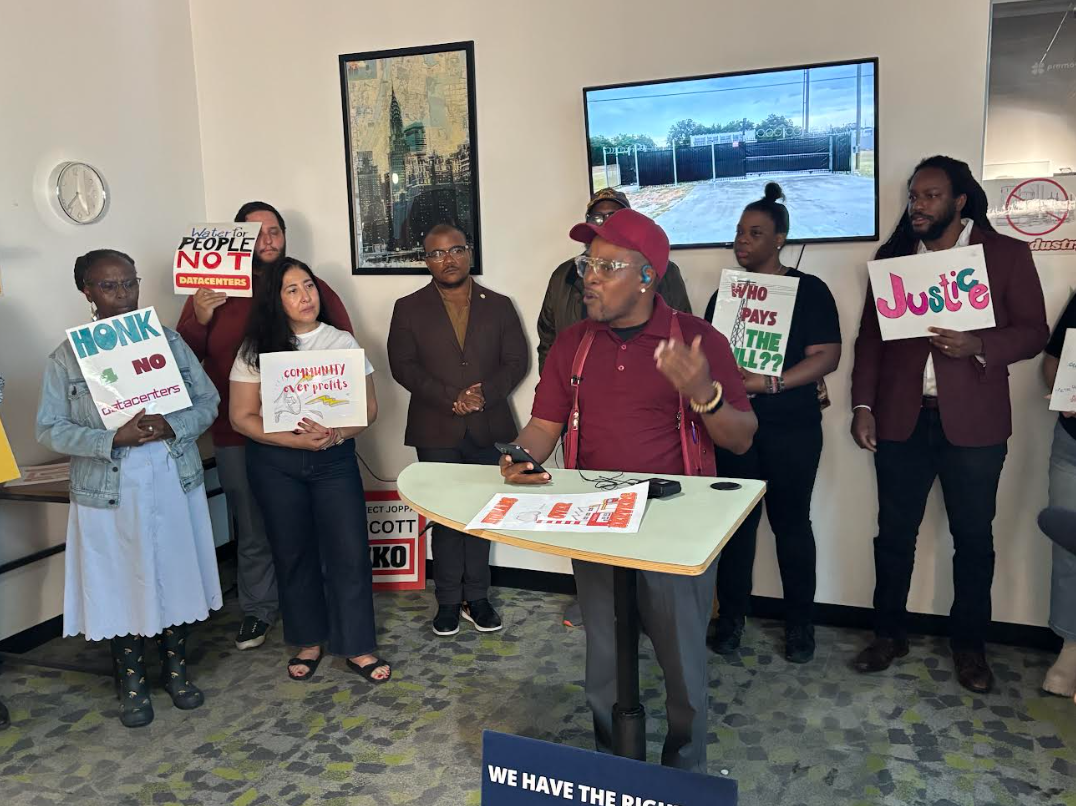
Residents of southeast Dallas’ Joppa neighborhood are demanding transparency and oversight after a data center landed in their neighborhood without warning.
Much of the discussion on data centers in Texas paints a similar picture: a massive, 100-acre-plus megacampus opens in a rural county, creating noise and other issues that local residents often resist. But in the case of Joppa, a primarily Black historic neighborhood straddling Interstate 45 where residents pronounce it “Joppee,” it took only a small, one-story facility to raise concerns among community members.
According to prior reporting by The Dallas Morning News, the facility is owned by a company associated with cryptocurrency mining and comprises three roughly 300-square-foot buildings. Work began in 2024 and was completed in 2025, and the operator is currently waiting for certificates of occupancy, The News reported.
The Dallas-Fort Worth area has become the world’s largest hub of data center development amid an explosion in the AI sector. Over 240 facilities operate in the Dallas area, with at least two dozen operating in city limits alone. More are planned, and North Texans are starting to push back against the disruption these facilities are perceived to cause in their communities. Concerns include water supply amid persistent droughts, the strain the facilities put on local electric grids and the disruptive noise emanating from computer cooling systems.
Sign up for the This Week’s Top Stories newsletter to get the latest stories delivered to your inbox
THANK YOU!
You’re all set.
CLOSE
Polling by the Texas Politics Project at The University of Texas at Austin shows that most Texans are concerned about the growth of data centers in Texas, with 56% of respondents saying they would oppose the development of one in their neighborhood.
Residents with Justice for Joppa said the development blindsided them at a press conference Thursday. They want the city to take action, but more than anything, speakers called for the community to have a say.
“We’re not here today to point the finger at anyone,” Emmanuel Davis, a resident and co-chair of Justice for Joppa, said. “We’re here today just pleading and begging to be a part of the process.”
Popping up
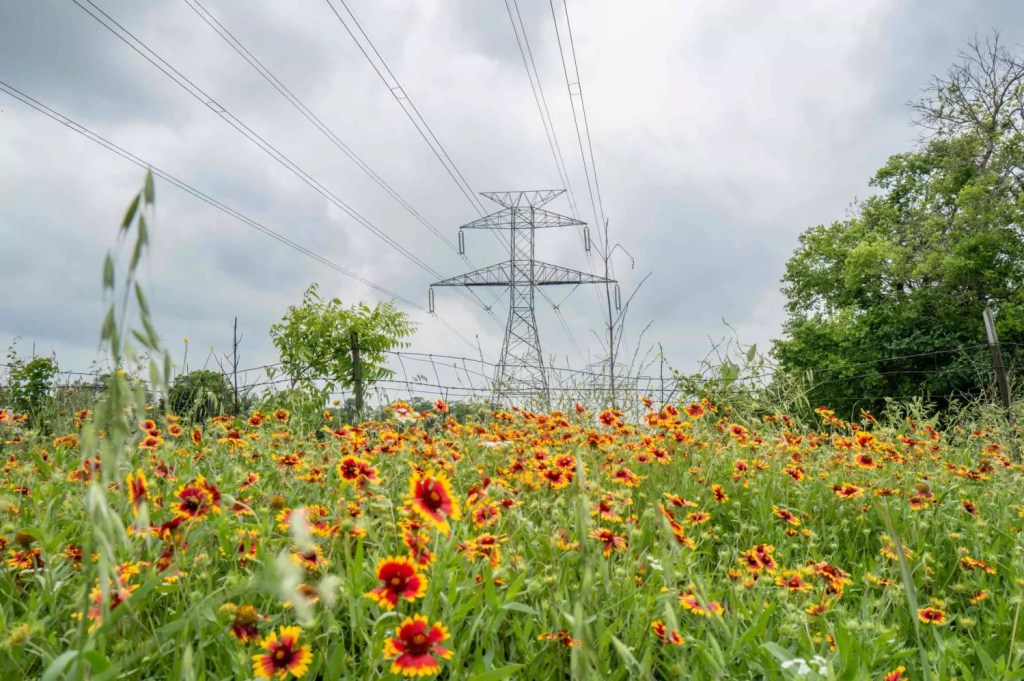 North Texans might prepare to see 3,000 more miles of powerlines to handle the energy demands of data centers.
Brandon Bell/Getty Images
At the press conference, which began with a moment of silence as a TV speaker blared noise organizers said was reminiscent of what they hear every day, it became clear that much of the frustration stemmed from how the data center was allowed to enter their community in the first place.
Under the city’s current building code, data centers can be built by right in most non-residential or commercial areas. That means operators and contractors can proceed with projects without a public hearing or approval from the city’s zoning commission, largely removing public input and governmental guardrails from the process.
“If you have any type of zoning that allows for warehouses for utilities, you can have this nearby,” Caleb Roberts, executive director of local environmental group Downwinders at Risk, said. “You can have this next door. That can pop up without any permit, without any oversight, without any conversation with the community.”
On Sept. 16, five Dallas City Council members submitted a memo to Mayor Eric Johnson requesting a record vote on a moratorium for data center development in Dallas. The move came after Gov. Greg Abbott issued a statewide moratorium on data center development and called for an audit on their use of the state’s electrical grid in early August. Other cities are taking similar steps; Fort Worth recently approved a 90-day pause on data center development, and the Austin City Council is also pursuing tighter development regulation. San Marcos became the first Texas city to approve an overarching ban on new facilities in June.
In Dallas, Oak Cliff council member Chad West wrote that existing regulations were “inadequate to prevent the new development from being detrimental to the public health, safety, or welfare of the residents.” The moratorium, the memo explained, is designed to allow the city to reconsider its existing regulations and building codes to better control the proliferation of data centers. The process could lead to new requirements, such as a new land use designation or requiring special use permits for the centers, both of which would require public hearings and city approval before projects can begin.
But Roberts said Joppa is still worried about being shut out of the discussion.
“There has been no indication that the citizens of Dallas will be engaged in that process,” Roberts, who called for a citizen advisory committee, said. “We have yet to hear that any of these residents have been contacted to see how a data center impacts them, and we think that’s a necessary part of any growth and development of this city. Communities need to be a part of that discussion.”
‘Basic human decency’
Residents of the small neighborhood, founded as a freedmen’s town in 1872, said they are used to being ignored by city officials. Referencing persistent quality-of-life issues such as crime and lack of infrastructure, resident Andrew Martin said he has “never seen a community disrespected the way Joppa is being disrespected.”
“We’re left begging the city for basic human decency, law enforcement, and respect,” Martin said. “And as if we haven’t dealt with enough disrespect, it’s reaching a peak level now.”
Martin also said that to leave the neighborhood, people must pass a concrete plant and other industrial facilities. The neighborhood is bordered to the west by a large industrial district, and environmental issues have been documented as negatively impacting residents’ health. A Texas A&M study found that those living in the area are exposed to air pollution at a rate two to three times higher than other Dallas residents. The study also found that residents suffer from respiratory illnesses at significantly higher rates than the rest of the city.
Dallas officials have considered shuttering plants and are reviewing zoning around the community to address the long-term environmental effects of heavy industry. The process will include community input through a public hearing process.
Alicia Kendrick, an organizer with Downwinders at Risk, said the industrialization fight has become a “moral issue” about communities’ right to determine their future. She added that the same concern applies to the data center controversy.
“This data center popped up overnight, and within maybe two weeks, it has been up in Dallas,” Kendrick said. “Who knew? And if there is no accountability and there’s no notification, there’s no way to fight back. Again, who has the right to self-determine and who does not? And right now, we are demanding the right to self-determine.”
‘About balance’
State Rep. Venton Jones, who represents the Joppa area in the Texas House of Representatives, said the effort is not about “being against or demonizing data centers,” but rather calling for more accountability amid the state’s AI boom. Data centers will almost certainly be a leading issue considered by state lawmakers like Jones in January’s legislative session. However, he kept his remarks focused on how Dallas officials should assess data centers’ impact on the city.
While the Dallas council memo specifically referenced a moratorium on hyperscale data centers, which are massive, 10,000-square-feet-plus facilities designed to meet the needs of companies like Amazon, Jones widened his calls for a pause amid the challenges faced in Joppa.
“While massive hyperscale campuses have traditionally been sited in industrial corridors, we are now seeing an unprecedented push towards smaller-scale distribution facilities popping up right outside residential and mixed-use neighborhoods like the Joppa community,” Jones said. “We cannot allow facilities to quietly multiply in our Dallas neighborhoods while our regulatory framework remains decades behind this technology.”
Jones said the city needs to thoroughly research the impact of data centers on noise levels, air quality and the heat they produce. He also called for studies on water usage, the amount of power they pull from the grid and how that affects neighboring residents.
But first, the council must reach a consensus. According to a memo from Johnson, the matter has been referred to the Economic Development Committee. A committee meeting for next week has been canceled, so it remains unclear when it will discuss the matter or when the proposed pause will go to a full council vote.
“This is about balance, common sense, and responsible growth,” he said. “Technological innovations and community respect do not always have to be at odds. Let’s enact a local moratorium. Gather the facts. Let’s update our zoning classifications so high resource users face the scrutiny they warrant, and let’s protect our communities.”