
Many Austinites will choose their City Council representative in the November election. Voters will decide five of the City Council’s 10 seats, with 23 candidates running.
Austin has used a district-based representation system for more than a decade. Ten City Council members represent districts across the city, while the mayor represents Austin as a whole and is elected citywide. Together, the 11-member body makes critical decisions that impact Austin residents, including setting the tax rate and making development decisions.
A resident’s official address determines which City Council district and race they can vote in.
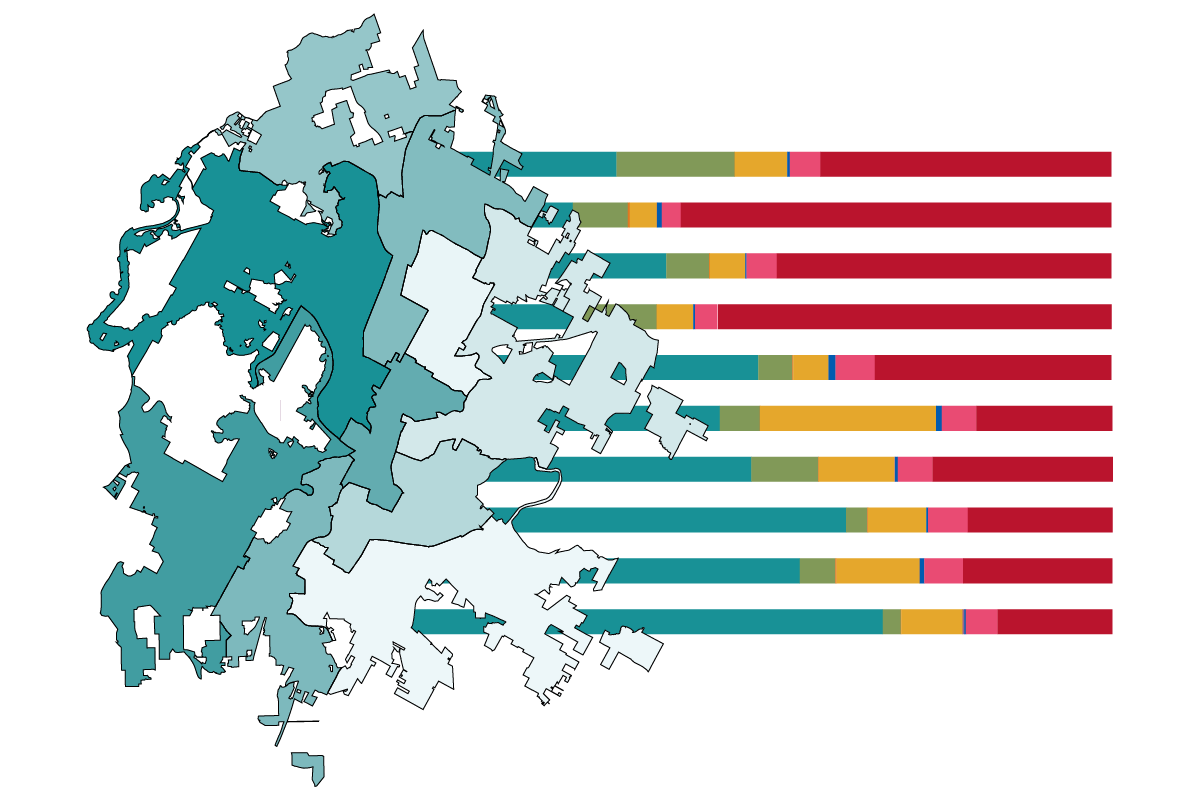
The districts differ in many ways, including income, education, race and age. The western districts, including Districts 6, 8 and 10, are wealthier and have larger white populations than the rest of the city. Parts of East Austin and downtown, including Districts 1, 3, 4 and 9, have higher poverty rates.
There are also sharp divides in English proficiency, education, health insurance coverage and housing type.
Enter your address in the search bar below to find your City Council district, and to learn more about your neighbors. Use the dropdown menu to choose a topic and compare districts in the bar graphs below.
Choose a topic and a variable:
Why it matters
City Council members represent their district’s residents when they vote on city policies and programs. Along with the mayor, who represents the entire city, they make decisions that affect Austinites. Census data offers a view of how districts differ in income, housing, age and health — and can help show the distinct needs of their communities.
How to read the data
The map shading shows how each demographic measure varies across Austin. The drop-down menu provides additional options for topics to explore.
The bar chart below the map provides more detail for each topic. Select “Race and ethnicity,” for example, to see the breakdown for each district.
The population represented varies by measure. Income estimates, for example, are calculated at the household level, while education estimates are calculated for individuals. A household can consist of one person or a group of people living together; members do not have to be related. The label above the color legend identifies the population used for each measure.
The tool uses data from the City of Austin Demographics & Data Division, which draws most of its figures from the U.S. Census Bureau’s 2024 American Community Survey one-year estimates. Other sources include the city, the Austin Board of Realtors and Austin Investor Interests.