
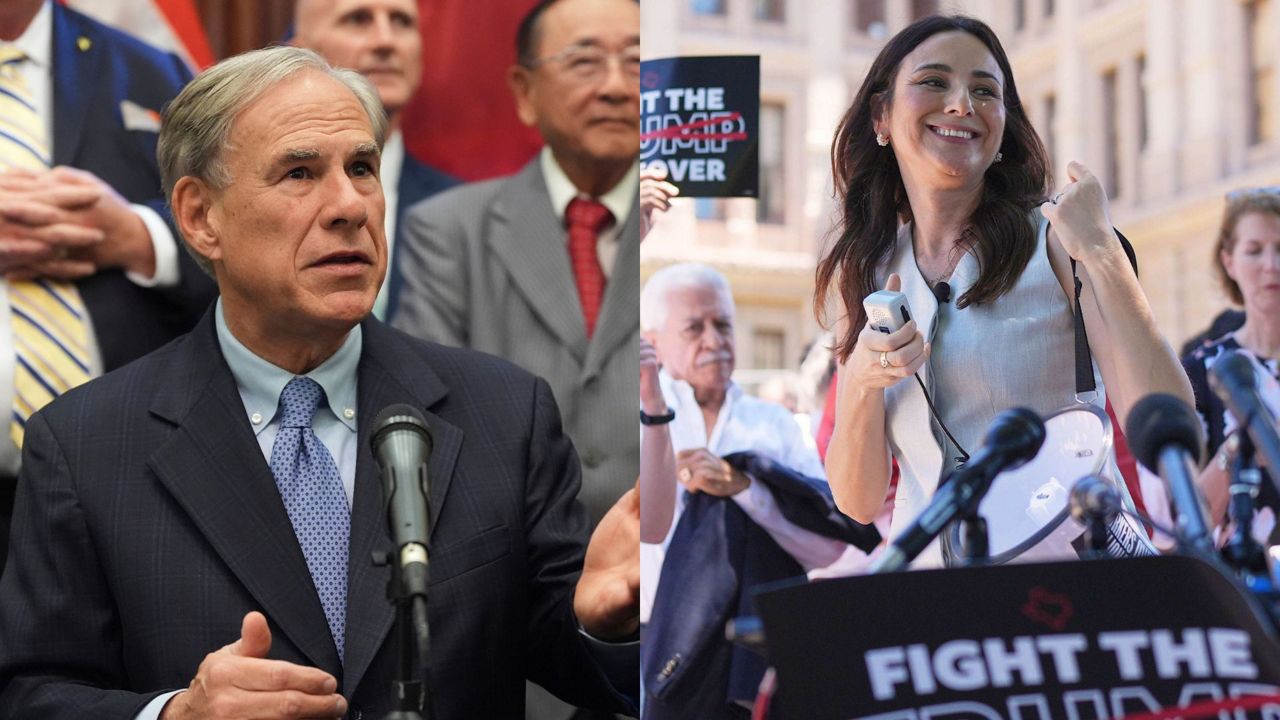
WASHINGTON — With the election only four weeks away, it has become increasingly likely that the candidates for governor and U.S. Senate in Texas will not debate. It is a major break from past elections in the state, when voters had the opportunity to see the candidates go head-to-head.
Matthew Wilson, a political science professor at Southern Methodist University, said he believes it is unlikely there will be any debates between Republican Ken Paxton and Democrat James Talarico in the Senate race, and Republican Gov. Greg Abbott and Democratic challenger Gina Hinojosa.
“We’re starting to run short on time to pull something together logistically, and I think it’s pretty clear that there is not a strong desire on the part of particularly the Republican candidates to engage in a debate,” Wilson told Spectrum News. “It is a tough environment for Republicans up and down the ballot, not just in Texas, but all around the country.”
Wilson added, “In that kind of climate, in a Republican-leaning state like Texas, the hope for Republican candidates is they can just ride out the storm, win with perhaps reduced margins. But a one-point win is still a win, and it still gets you the office.”
No general election debates would be a dramatic departure from past Texas elections. Abbott debated the three previous times he ran for governor: twice against Wendy Davis in 2014, and once each against Lupe Valdez in 2018 and Beto O’Rourke four years ago.
Abbott’s campaign did not respond to a request for comment. Hinojosa said in a statement that Abbott won’t debate because he is a “weak governor with a failed record.”
“He’s got a much larger name ID,” said Brian Mayes, president of Mayes Media Group and GOP consultant. “If he puts her on stage with him, and it’s on three different debates across the state, she now becomes his equal. That’s probably what he’s thinking is I don’t have to debate … People know who I am. I just think if he did debate, it would help down-ballot candidates.”
Sen. John Cornyn, who lost to Paxton in the primary, debated each year he ran for the office going back to 2002, as did Sen. Ted Cruz, who first ran in 2012.
Paxton, who has been attorney general since 2015, historically does not debate. Talarico has challenged Paxton multiple times to a debate, even making a campaign ad out of it. Paxton has so far not accepted a debate, despite his team in July saying they would “of course” do so. Paxton’s campaign did not respond to a request for comment.
Mayes said Republicans should be eager to participate in such a forum.
“We should be excited about talking about our message of low taxes, stronger communities, a more prosperous economy,” Mayes said. “If you’re confident in your ideas, the format doesn’t really matter. If you look at polling, the candidate behind always wants to debate, right? And Paxton’s behind, and he still doesn’t want to debate.”
Wilson said it is likely that Paxton’s team wants to deny Talarico a one-to-one setting.
“Ken Paxton has a lot of potentially embarrassing things that he doesn’t want to talk about on a public stage related to past ethics charges, related to marital infidelity. We also know that he is not a particularly gifted orator or rhetorician or stump speaker, and so I think that his campaign thinks that that contrast would be unfavorable,” Wilson said.
How much a debate could have changed the race is unclear, but the clock is ticking, with early voting beginning Oct. 19 in Texas.