
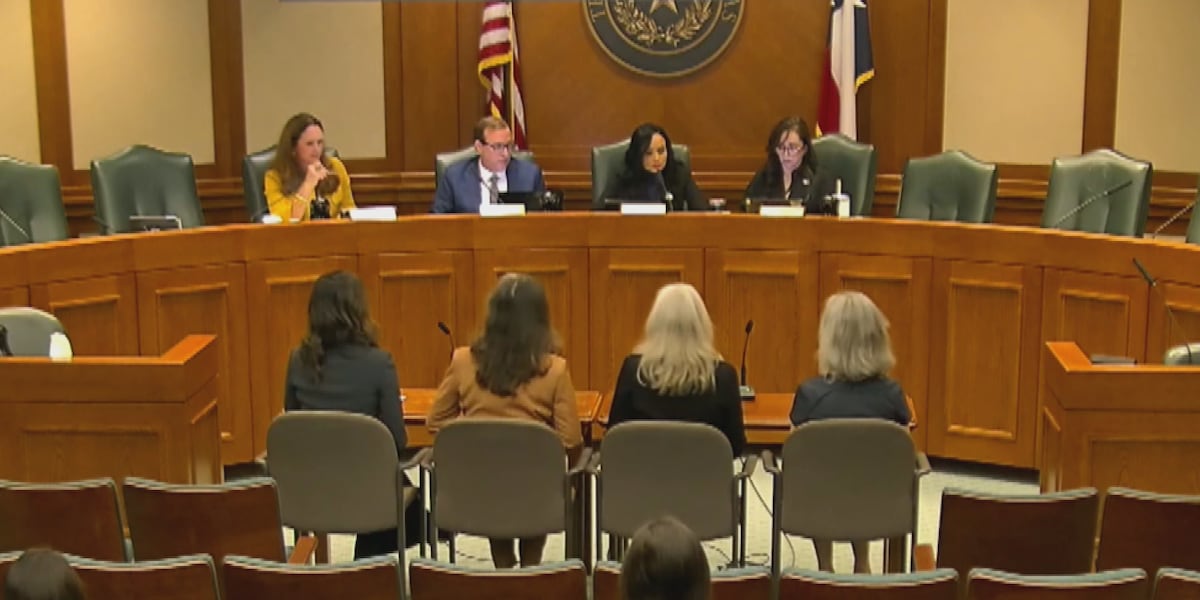
AUSTIN, Texas (KCBD) – Days after a Lubbock OBGYN, midwife and mom highlighted the need for more access to maternal health care on the South Plains, physicians told Texas lawmakers women on the other end of the spectrum — those in perimenopause and menopause — also struggle to get care.
The House Subcommittee on Maternal Health, Menopause and Access to Evidence-Based Medicine heard from doctors and subject experts Monday.
Rep. Katrina Pierson said the committee’s charge was to study opportunities to increase preventative efforts and early detection of hormone imbalances, and the use of hormone replacement therapy to treat perimenopause and menopause symptoms.
She said the panel is also tasked with evaluating coverage and recommending ways to expand access to care and find barriers keeping patients from it.
“Too many women have spent years going from appointment to appointment with symptoms getting dismissed, misread, and treated one at a time, if any at all,” Pierson said. “Sleepless nights, mood changes, memory lapses, weight gain, bone loss, every symptom gets its own prescription and no one connects the dots.”
Dr. Mary Claire Haver, an OB-GYN and certified menopause specialist, said menopause happens the day a woman has gone 12 months without a period, but perimenopause can last for years before that.
She said hormones do not decline slowly or smoothly, and symptoms can show up everywhere. She said her patients often see several clinicians before her and have already lost years of better health.
“I hear the same things over and over. They’ve been told it’s stress, or it’s their age, or it’s just menopause,” Haver said. “There’s nothing we can do. They’re sleeping four hours at night. They’ve turned down promotions. They’ve cut their hours, or they’ve walked away from careers they’ve spent 20 years building. I see marriages disraveling. I see, and no one ever told them why or what could be possibly going on.”
Dr. Karen Horst of Texas Children’s Hospital said health care systems are not prepared to take care of menopausal women. She said there is not enough training for OB-GYN, psychiatry or family practice residents.
The health care professionals also discussed addressing medication costs, hoping legislators can help make hormone replacement therapy accessible for all women.
Copyright 2026 KCBD. All rights reserved.