
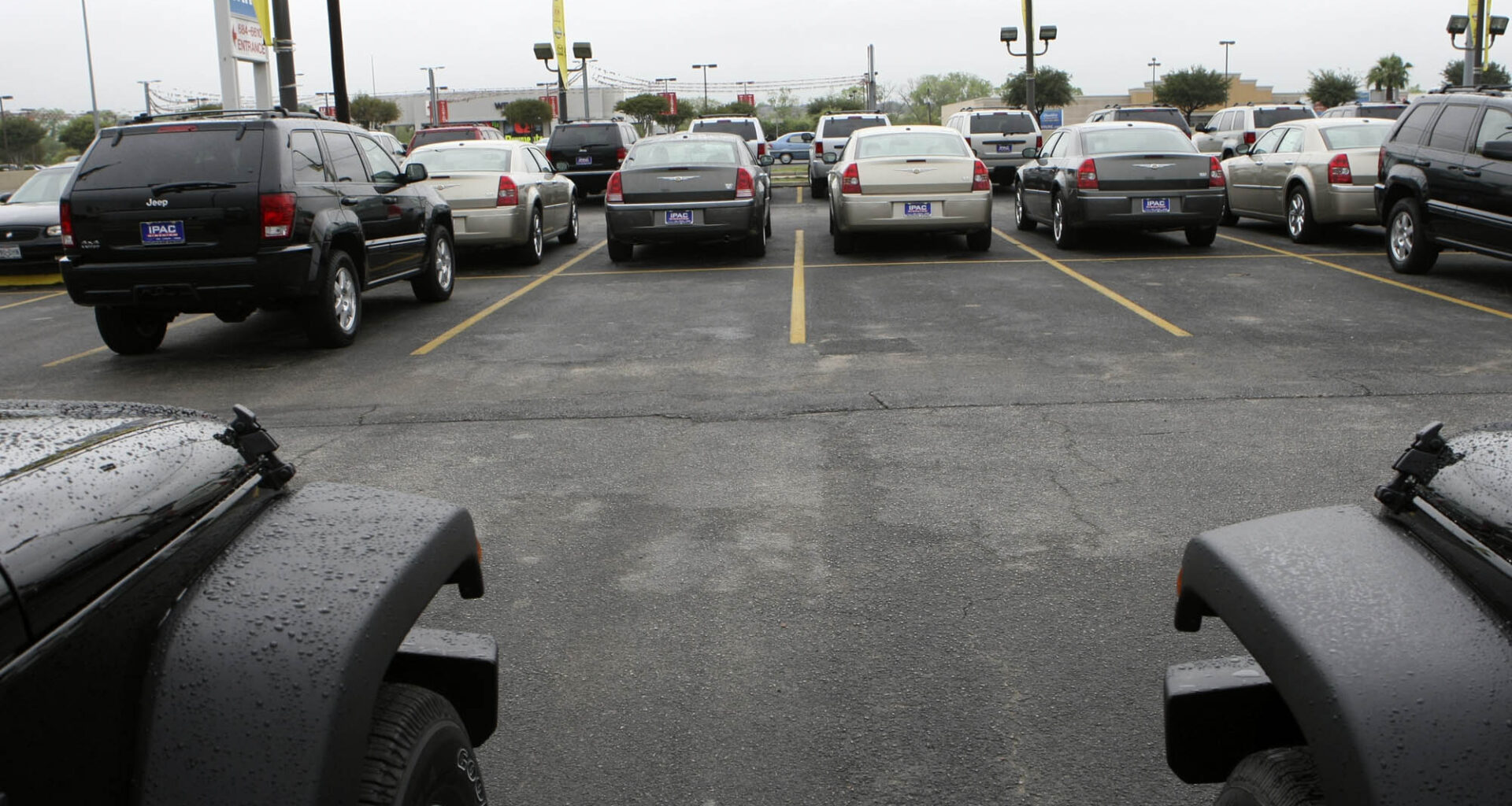
The Ingram Park Chrysler Jeep Dodge Ram dealership in San Antonio, a sister dealership and their owner have agreed to settle accusations of sex-based discrimination and retaliation brought by the federal government and a former employee. The defendants denied the allegations.
HELEN L. MONTOYA/SAN ANTONIO EXPRESS-NEWS
Two San Antonio auto dealerships and their owner have agreed to pay $430,000 to settle a federal lawsuit alleging sex discrimination, harassment and retaliation against two female employees.

The agreement, which covers Ingram Park Chrysler Jeep Dodge Ram, Ingram Park Nissan and owner Benson Enterprises Inc., is subject to court approval.
Article continues below this ad
The U.S. Equal Employment Opportunity Commission sued about two years ago, accusing the defendants of unlawful employment practices involving Rebecca Owen and Tammie Faulkner-Taylor.
Owen later intervened, saying she wanted to pursue her individual claims and seek attorney fees through her own lawyer. She argued that the EEOC represented the public interest and was seeking relief for another worker whose claims differed from hers.
RELATED: Ingram Park Chrysler Jeep, Nissan dealerships and San Antonio owner sued over sex discrimination
Consent decree outlines payments and workplace changes
Under the consent decree filed Monday in U.S. District Court in San Antonio, the defendants have agreed to pay Owen $410,000: $121,188 in back pay, $121,187 in emotional-distress damages and $167,625 in attorney fees and costs. Faulkner-Taylor will receive $20,000 in emotional-distress damages.
Article continues below this ad
San Antonio Express News Logo
Make us a Preferred Source on Google to see more of us when you search.
Add Preferred Source
As part of the agreement, each defendant would have to adopt a written process for handling complaints of sex discrimination, harassment and retaliation. Managers and supervisors would have three days to report complaints or such conduct they observe to human resources, and the companies would have to keep a central record of complaints, investigate them promptly and impartially, preserve relevant evidence and document any corrective action. Employees found responsible could face discipline up to termination.
The decree also requires annual training for employees, with additional instruction for managers and those responsible for investigating complaints.
San Antonio attorney Kala Dumont, who represents Owen, said her client was grateful the defendants agreed to the decree.
Article continues below this ad
“Resolving this matter after over five years of pursuing her legal rights through the proper legal channels is very gratifying for us,” Dumont said in an email. Owen, who no longer works for the dealerships, filed her EEOC charge in 2021.
READ MORE: Bitter ‘business divorce’ between San Antonio auto dealership partners leads to $20M jury verdict
Philip Moss, the EEOC’s lawyer, and Lawrence Morales II, an attorney for the defendants, did not respond to requests for comment.
Lawsuit alleged discrimination and retaliation
The defendants denied the allegations in the complaints. The consent decree resolves the case without a trial, which had been scheduled for Dec. 7 before Judge Xavier Rodriguez.
Article continues below this ad
The EEOC said the dealerships treated the women differently because of their sex, created a hostile work environment and retaliated against Owen after she complained. It also said the service manager left both women out of communications about work and bonus opportunities.
Owen’s complaint said the service manager made sexist remarks, diverted her customers to male advisers, took away her assistant and excluded her from work messages about bonuses and other incentives, reducing her commission income. She said the dealership fired her the day after she submitted a written discrimination complaint then kept its fleet service business and gave her duties to a male adviser.
At an Aug. 13 status conference, Rodriguez told the parties that the last three employment cases tried before a jury in his court had gone badly for the plaintiffs.
Article continues below this ad
“Both sides have problems, so both sides should try to get reasonable,” he said, adding that the case had problems and the parties should consider settling.