
 Dr. Brad Jacobson, associate professor in UTEP’s Department of English, wears a shirt featuring Miranda Hernandez’s West Texas Writing Project design. Jacobson partnered with Giangiulio and her graphic design students during the Spring 2026 semester, helping connect the Department of English’s work with the students’ design skills to create branding for the organization. (Allysa Vela-Quezada)
When Dr. Brad Jacobson, an assistant professor in the English department at the University of Texas at El Paso (UTEP), set out to re-establish a West Texas site for the National Writing Project, he knew he needed professional branding materials to bring his vision to life.
At a conference in Denver, Jacobson was inspired by other established sites of the project to collaborate with student designers on the project.
Unsure if the resources were available, Jacobson reached out to Anne M. Giangiulio, an associate professor in the art department at UTEP and shared his idea to utilize student talent for the project.
“I just wrote an email from the conference, and I was like, ‘Hey, I got this idea. Do you think you have some students who might be interested?’” Jacobson said. “And Anne was like, ‘Actually, I have a class that could probably do this.’”
Gianguilio presented the project to introductory level graphic design students for their last assignment of the spring semester, continuing a tradition of doing projects like this with her classes every semester. Students will create professional materials for a nonprofit organization while learning how to deal with a client with guidance from an instructor.
“I think, [a] need that graphic design students have, and that they usually miss out on in project-given assignments, is that interaction, that interfacing with speaking to non-artists,” Giangulio said. “So that they can collaborate and learn how to communicate in words so that the project fulfills what the client truly needs.”
Before the students started creating ideas for the West Texas Writing Project (WTWP) logo, Jacobson presented his ideas for what WTWP would look like. The students met with Jacobson and worked on ideas until after the semester ended before finalizing the logo.
Working with the students gave Jacobson a new perspective on the design process. He says it was interesting to learn why he didn’t respond to certain design principles or the reason behind some artistic choices.
“I learned a lot about design in those meetings. But then the students in the class were able to ask me questions about, you know, what we were looking for, why we were looking at certain [things], looking for certain things and not others so I thought that was really helpful too,” Jacobson said.
Giangiulio believes community-based assignments are beneficial for both the student and organizations because it displays UTEP talent and fulfills a need in the community.
“It’s a great partnership, and both parties are really getting exactly what they need out of the situation,” Giangulio said. “Not only is it a school project, they’re actually building their real resume.”
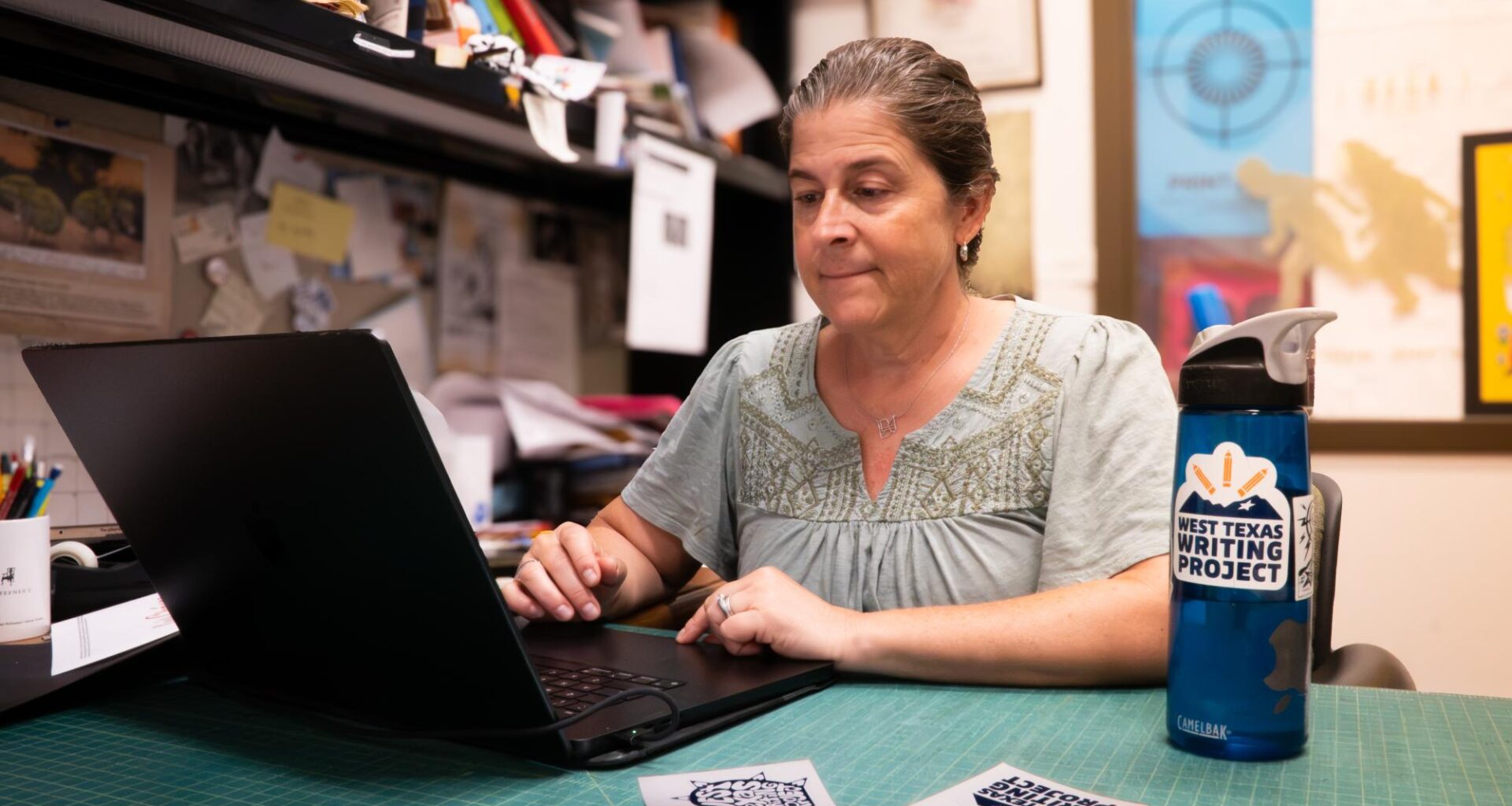
 Stickers featuring various designs created for the West Texas Writing Project highlight the range of concepts developed by students in UTEP’s graphic design program. The project allowed students to apply their classroom skills to a real-world collaboration with the West Texas Writing Project, a network of educators focused on writing instruction and literacy development. (Allysa Vela-Quezada)
WTWP chose Miranda Hernandez’s mountain star logo design and a cactus design by Annabelle Aguirre to represent the organization. Stickers, shirts and other various branding materials were created using the two students’ artwork.
“We had a panel of three teachers and four undergraduate students, pre-service teachers, who gave feedback on the designs. We sat in a room together and projected them on a screen and talked about what we liked and didn‘t like and offered feedback,” Jacobson said. “It was really hard because there were some really great designs, but we really hope to use this for a long time because we like it.”
The art department can be a resource for organizations on campus who are looking for creative work while giving students a chance to showcase their talent and collaborations between departments like this one are an example of the UTEP community working together.
Kayla Rodriguez is a staff reporter and may be reached at [email protected]