
Lucio Vasquez/Houston Public Media
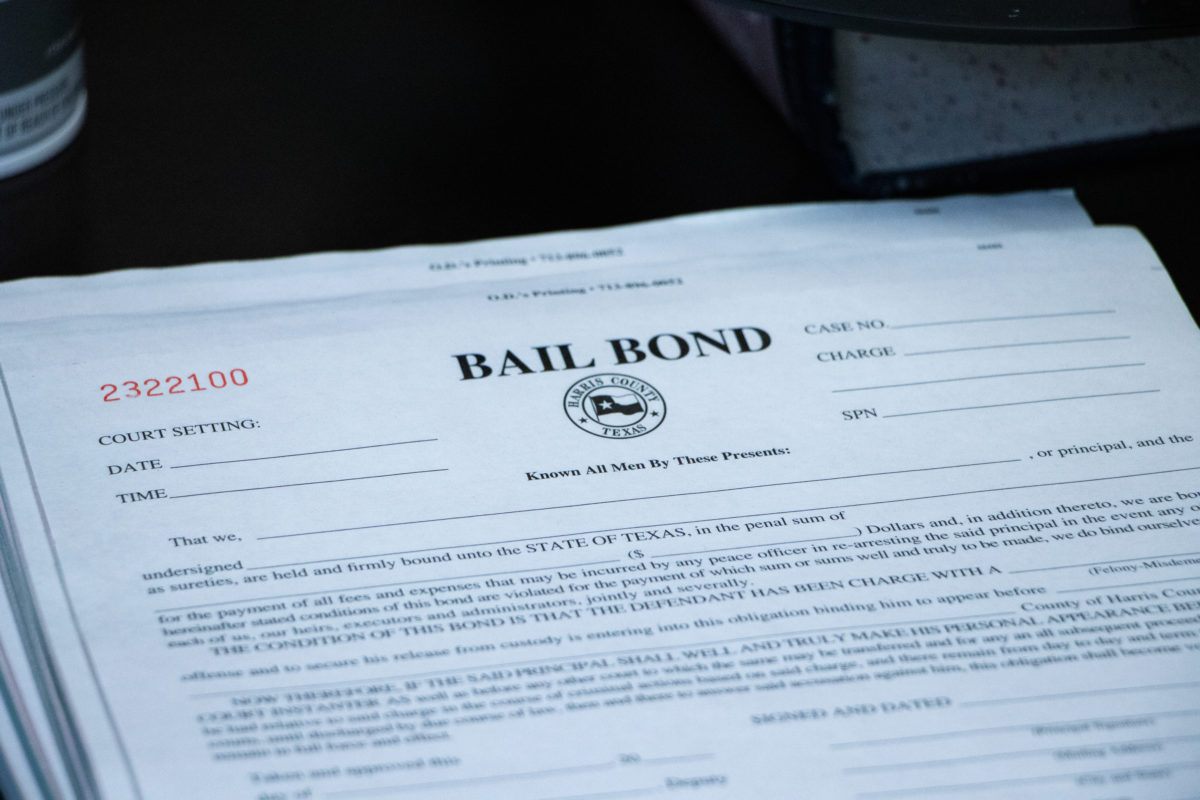
A bail bond application form. Taken at Action Bail Bonds in Houston on Oct. 17, 2019.
A federal judge has denied Texas Attorney General Ken Paxton’s effort to shutter Harris County’s misdemeanor bail reform decree, which stemmed from a lawsuit that argued Houston-area defendants charged with low-level crimes were penalized for being unable to afford cash bail.
In a 40-page opinion Monday, United States District Judge Lee Rosenthal ruled that the attorney general’s office exceeded the amount of time it has to make certain arguments in the case, therefore making its legal challenge to vacate the consent decree moot.
“The court’s decision today ensures the Consent Decree will continue to protect the physical liberty of tens of thousands of people every year,” Travis Fife, an attorney who represented Harris County in the case, said in a statement. “Vacating the Consent Decree would have been disastrous for taxpayers, public safety, and presumptively innocent people accused of crimes.”
Sign up for the Hello, Houston! daily newsletter to get local reports like this delivered directly to your inbox.
Since 2019, the bail reform decree, referred to as the ODonnell Consent Decree, has given most misdemeanor defendants the opportunity to be released from jail before trial without first paying cash bail. The decree was created after Maranda Lynn ODonnell filed a lawsuit in 2016 arguing she had been penalized for being unable to afford cash bail. ODonnell had been arrested for driving without a valid license that year and was held in the Harris County Jail for several days because she was unable to post bail.
In August 2025, one day after President Donald Trump issued a federal seeking to end cashless bail for people who are accused of violent offenses or pose threats to public safety, Paxton in the ODonnell case and vacate the consent decree.
During arguments held last month, attorneys who represented the AG’s office argued that the case should be moved from federal court to state court, urging Rosenthal to abstain from overseeing the case. In his opinion this week, Rosenthal ruled that the office failed to make those arguments in a reasonable time frame.
Since the consent decree was issued, court-appointed monitors have consistently reported success in reducing the population of misdemeanor defendants in the Harris County Jail, which has been plagued by overcrowding, staffing issues and costly contracts to outsource jail inmates.
In its arguments, the AG’s office has cited the opinions of four judges and two state laws that passed since the decree went into effect. Senate Bill 6, signed into law in 2021, requires people charged with violent crimes in Texas to post cash bail in order to be released from jail.
While Senate Bill 6 deals with defendants facing felony charges, the county’s consent decree applies only to those charged with misdemeanors.
RELATED: Judge opens door for Texas AG to argue why Harris County’s misdemeanor bail reform should end
The AG’s office also mentioned Senate Bill 9, which was written into law last year. The law adds to the list of offenses for which defendants are required to post a cash bond — including terroristic threats, unlawful possession of a firearm and stalking, which can be charged as misdemeanors in Harris County.
The AG’s office appealed Rosenthal’s latest decision to the Fifth Circuit Court of Appeals on Monday.