
Being a good diner means more than just regularly visiting your favorite spot and tipping like you mean it. Technology has pushed our society forward in ways that force us to address new issues. Like the nonstop use of phones, digital payments and “space entitlement.”
Lisa Burdette is a Dallas-based, internationally trained etiquette expert who runs The Dallas School of Etiquette. “I think culture has moved in a direction that the big thing is people not caring about others,” she says. She recently invested in extended training with Dan Post, Emily Post’s grandson.
“It used to be children; now it’s adults,” she says of a shift she’s seeing in business, reflecting a shift in society. Manners can mean a lot of things, but for this article we’re looking specifically at being a good diner in Dallas.
An otherwise perfect meal …
Sign up for the Food & Drink newsletter to get the latest stories delivered to your inbox
THANK YOU!
You’re all set.
CLOSE
At a recent dinner, the dining room was a literal woo-sah: a deep, relaxing breath after a hectic day. A warm glow from a flock of wicker lamps over tables mingled with late-day natural light. I felt my body relax as I sank into a wide, cushioned chair (thank you). Service was attentive but not intrusive. Drinks came quickly. The music was soft and on point.
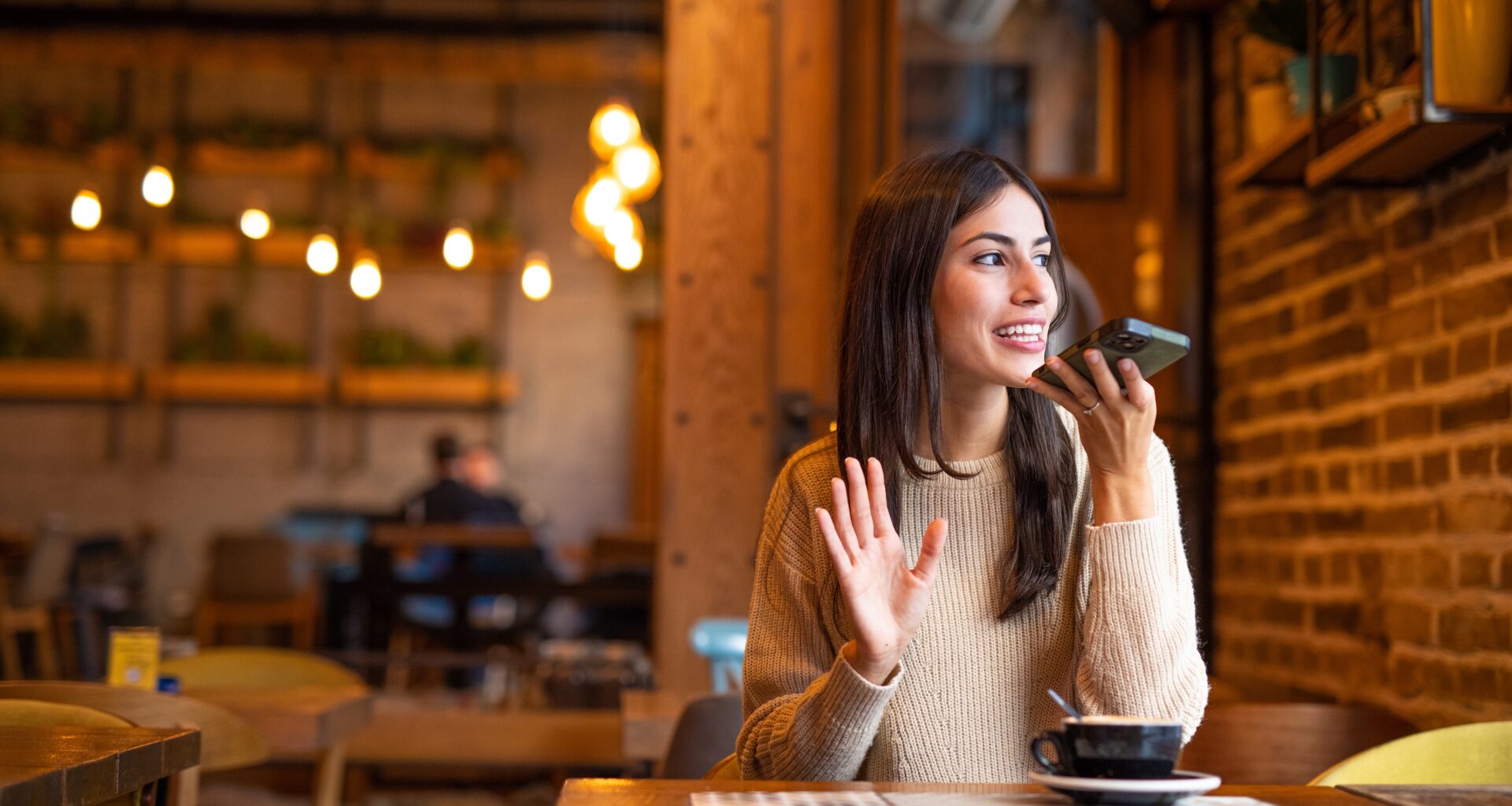
But then a guy at the bar was screaming (a bit of an exaggeration) into his speakerphone as it cackled back at him. This went on from when we sat down until the entrees landed on our table. He held it about four inches from his face, which made me wonder why he couldn’t just turn the speaker off and put it to his ear. And as much as I tried to breathe deep and focus on my friend across from me, the mangled noise grinded through everything else.
No. 1: Mind your speakerphone in public
Turns out that’s not just me being easily annoyed; it’s actual science. Heather Darwall-Smith, a psychotherapist, explains that, for one, listeners hear just one part of the conversation, forcing our brain to keep trying to fill in the gaps. What’s he mad about? What did he just say?
“Our nervous system is used to tuning out the sound of two people talking,” Darwall-Smith told the Observer. “But with a speakerphone, the sound is compressed, unpredictable, and forced on us, so our brain can’t relax. It stays on low alert, which is one of the reasons it feels so irritating.”
Darwall-Smith dives deeper on her website, saying it’s also annoying because it ignores social cues (like people in the room trying to enjoy dinner) and, perhaps most on point, the noise “activates your body’s stress response.” People living with ADHD, autism, or just a lower tolerance for auditory clutter can feel overwhelmed.
Darwall-Smith points out that social norms aren’t established around this yet, and a little awareness goes a long way. But how do we get there? Does this mean we can start shushing people or politely asking strangers to turn off their speakerphone? Would people with a strong sense of individual entitlement respond graciously? How many of us are willing to find out? (Not me.)
No. 2: Mind your table camping
We recently wrote about cafe camping: going to a cafe, hanging out for hours, and not buying anything. Some campers take their shoes off and stretch out on couches. It’s not really so much annoying to other customers as it is to busy owners. Then there are some who take video calls without headphones. It’s all a sense of space entitlement.
On that note, the other day, associate editor Alyssa Fields timidly asked (while discussing this story) what the etiquette is for going to, say, Las Palmas, sitting on the patio for an extended amount of time and ordering just margs and free chips and salsa. Someone who asks clearly knows not to sip two margs over three hours and order nothing else. The Alyssas of the world aren’t the problem.
Burdette says we have to respect that that is someone’s business. It’s how they pay bills and rent.
“As a level of politeness, remember that restaurants are moving people through,” says Burdette. “They don’t want you there two or three hours.” And cafes: they’re not your office, she adds.
“Dinner should be no more than 90 minutes to two hours,” Burdette says. “Two hours if it’s a formal dinner; 90 minutes if it’s a regular dinner. It’s kind of like the level of economics of where you’re dining. Because there are people there, and [overstaying] stops the revenue.”
No. 3: How to split the check graciously and gracefully
It’s imperative to discuss how dinner is being paid for before everyone sits down. Appoint someone with affable charm to make a quick PSA; communication is key.
Technology has made it really easy to split the bill. But sometimes it can be a lot for a busy staff if they have to pause the flow of a restaurant while dissecting the receipt for a table of seven. If drinks, appetizers and entrees were ordered about evenly and the bill for each person is give or take $5, then just split it evenly.
Sometimes there are great variations: I get anxiety watching the person across the table order their third top-shelf marg, while I’m sipping a Diet Coke all night. How are we divvying this up? Or in some scenarios, everyone pulls out menus and their phones to see how much each person owes, handing over cards like “72.48 on the red one at the bottom.”
It’s great to tell your server up front if there will be multiple checks. With many POS systems, this is easy now and won’t tie up the entire restaurant.
In another scenario, at the end of dinner, a friend with middle-child energy who hates confrontation might offer: “I’ll pay for it and you can all Venmo me later.”
In this scenario, pay the person before the sun comes up. Don’t make the payer wake up wondering what dumb thing they said last night and if one of them was, “Oh, I’ll get it and you can take care of it later.” Handle up on your business pronto.