
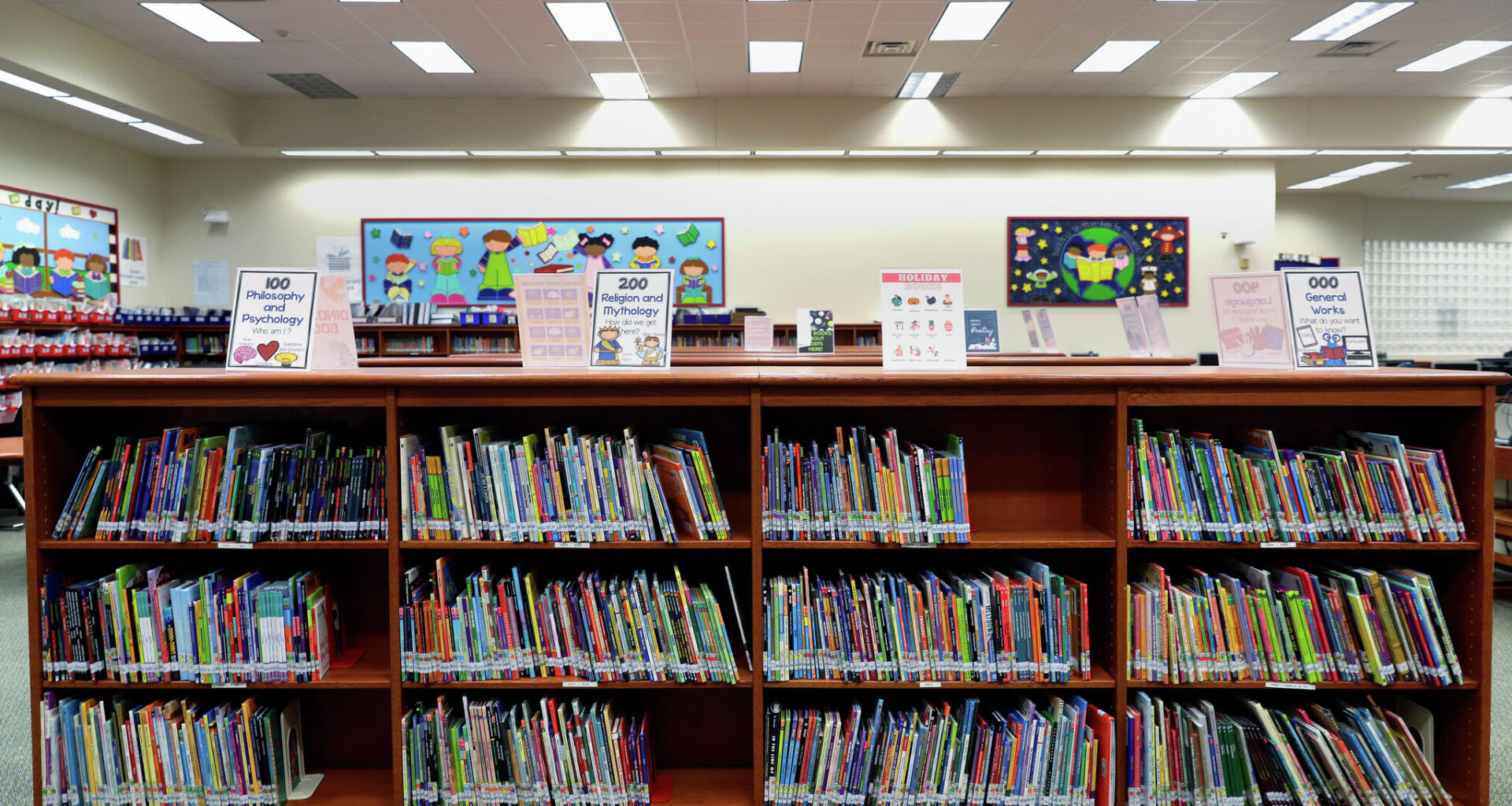
According to a report by PEN America, a nonprofit that advocates for freedom of speech across the U.S., Texas led the country in public school book bans last year, restricting access to 8,193 books.
Michael Wyke/Houston Chronicle
Texas districts banned more books in public schools than any other state in the nation — and leaders are increasingly using artificial intelligence to decide what to ban, according to PEN America.

The nonprofit, which advocates for freedom of speech across the country, released a reportMonday recording the number of book bans in U.S. public schools. It found that schools took 11,982 books off library shelves across the U.S. in the 2025-26 school year — the highest number since PEN America started tracking bans in 2021.
Texas led the pack of bans per state, restricting access to 8,193 books last year. It’s a stark increase from last year, where PEN America found Texas districts banned just under 2,000 books.
Article continues below this ad
PEN America senior manager Philomena Polefrone said the finding was “staggering” — but not completely unexpected, given recent statewide legislation.
“When any state has over 8,000 bans it’s going to come as a surprise,” she said. “On the other hand, when H.B. 900 and S.B. 13 were being debated in the state legislature, this is what we’d been saying it would lead to the whole time.”
The Texas Legislature passed H.B. 900, which required book sellers to rate materials for sexual content, in 2023. After a federal judge declared the rating system unconstitutional and permanently blocked portions of the law in 2025, legislators passed S.B. 13 to increase oversight of public school library materials through advisory councils and parental supervision.
Related: Book bans and attempted bans remain at record highs, with ‘Sold’ topping the list
Article continues below this ad
Polefrone said the legislation — combined with increasingly combative rhetoric from state leaders — make it more difficult for Texas librarians to keep books on their shelves.
“It’s quite clearly political pressure and fear of political targeting that is causing all the bans,” she said, referencing a recent news conference where Texas Lt. Gov. Dan Patrick threatened penalties for school districts who did not remove certain books.
Related: Targeting school library books a Texas House priority
Over a dozen districts in North Texas — including McKinney ISD, Plano ISD and Fort Worth ISD — established school library advisory councils last year. The SLACs review books librarians propose purchasing for their collections — as well as any proposed bans that can come from anyone who lives in the district.
According to the report, Texas districts are increasingly relying on AI to evaluate what books should be removed from school shelves. PEN America partnered with the Texas Freedom to Read project to obtain public records showing prompts and responses that dictated districts’ decisions to restrict books.
Article continues below this ad
Related: Trustees can block ‘indecent’ school library books under bill passed by Texas House
Polefrone said it was “chilling” to see how generative AI recommended restrictions based on the actions of other districts — not legal grounds.
“AI was saying that books weren’t legally obscene but other districts banned them,” she said. “That’s a huge problem because in that case the accusation becomes evidence itself.”
The PEN America report defines a “ban” broadly — essentially any action taken to partially or entirely restrict a student’s access to a book. This includes permanently taking books off shelves, as well as limiting grade-level access to material or requiring parental approval for access.
Polefrone said access to books about queer characters or people of color were more commonly restricted across the U.S. By taking these books off shelves, she said, districts make it harder for students to see themselves represented in their library collections.
Article continues below this ad
Related: As AI spreads in classrooms, North Texas students help shape school policy
“For a lot of kids, they may not know another kid like them in their school, or in their community,” she said. “The library might be the only place they see themselves represented — and they’re losing that.”
Mary Woodard, former president of the library advocacy nonprofit Texas Library Association, was not surprised that Texas topped in this year’s report. But as more books get taken off the shelves, the retired librarian worries it may be more difficult for young Texans to understand themselves and the world around them.
“Books can be used as not only mirrors to reflect the lives that we live, but also windows into someone else’s life,” she said. “That helps them develop empathy and understanding of experiences that they may not have themselves.”
Article continues below this ad