
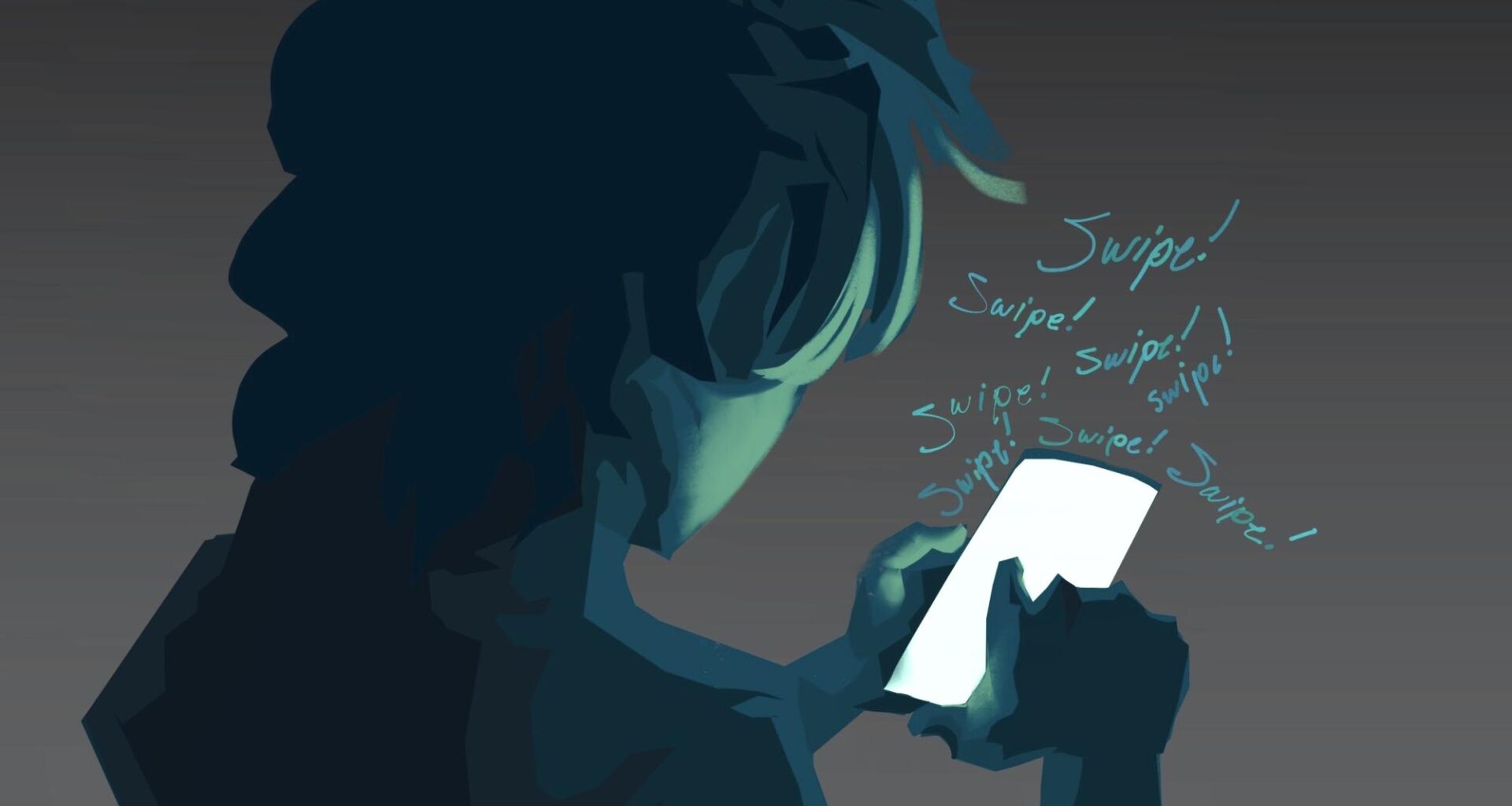
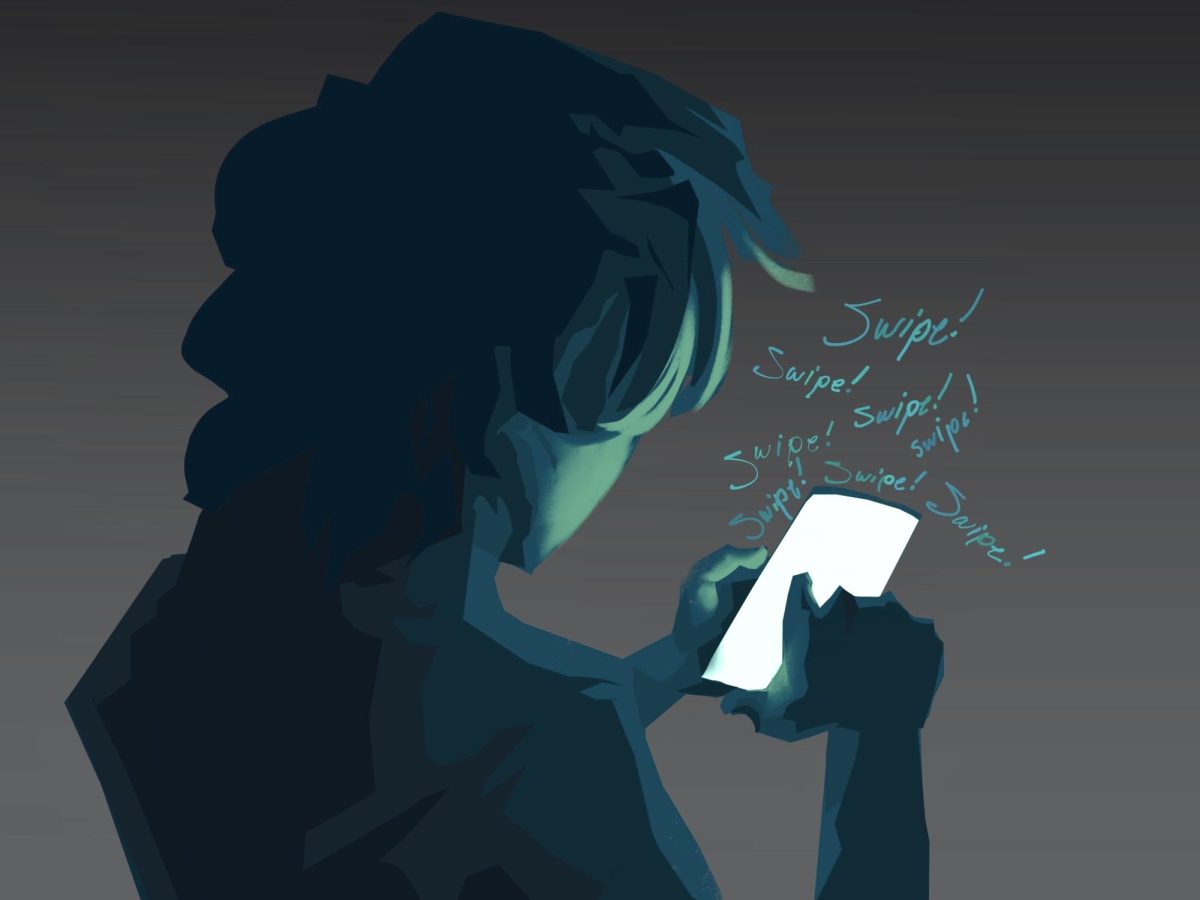
Dating apps have changed the way college students meet and form relationships. Swiping through profiles in bed is easier than starting a conversation after class. This is part of a larger problem across the country. Young adults say they want a serious relationship, but fewer of them are actually dating. At UT, we’re surrounded by thousands of people our age, but so many of us still turn to a screen to meet someone.
“(Dating apps) become the normative way by which people meet, which makes zero sense, especially on a college campus,” sociology professor Mark Regnerus said. “You are interacting with people of your comparable age every day.”
Regnerus said apps plant the idea that someone better is always out there. Even though that may be true, the grass isn’t always greener on the other side. A wandering mindset impedes any authenticity and commitment in genuine social connection. This results in a dating culture where people feel replaceable, and few connections last long enough to become anything more.
English sophomore Vivian Day has seen this firsthand. Her friends made her a Hinge profile in the middle of class during her senior year of high school and since then has gone on and off the app, stepping away whenever it became too exhausting. Many of her connections turned into situationships — relationships stuck somewhere between casual and committed.
“I feel like a lot of people our age are so prone to getting into situationships without even meaning to because of (a) lack of communication and being able to fulfill the other person’s needs,” Day said.
According to Day, apps can weaken the skills that dating in person requires. People who depend on apps too heavily and continuously indulge in cheap thrills, like casual hookups, can struggle to interact with someone face-to-face — as the app has done the hardest part for them.
Supporters of dating apps make their intentions clear: when two people match, they both know why they’re there. But in person, it can be hard to tell whether someone is flirting or just being friendly.
“I feel like we all think that we’re mature, but in actuality, we’re not,” Day said. “So sometimes, I think people can be hesitant or scared to pursue (romantic relationships).”
But to treat apps as the only solution overlooks what we lose by skipping the awkward parts. First conversations teach us how to read people, handle rejection and say what we want. Avoiding that discomfort doesn’t make dating easier but instead leaves us less prepared for it.
If students want real relationships, then we should stop accepting apps as the default and start treating in-person connection as a choice worth making. This could look like staying after class to talk to a classmate or going to a campus event with the intention of meeting someone new. Building a friendship first can help people figure out whether they actually like each other for who they are.
Dating is more than matching with someone on a screen. It’s about the slow, sometimes awkward process of getting to know another person. Maybe that’s why so many of us feel stuck. Not because we’ve stopped wanting connection, but because we’ve stopped looking for it where it’s most likely to happen.
Rodriguez is a psychology and philosophy junior from Houston, Texas.