
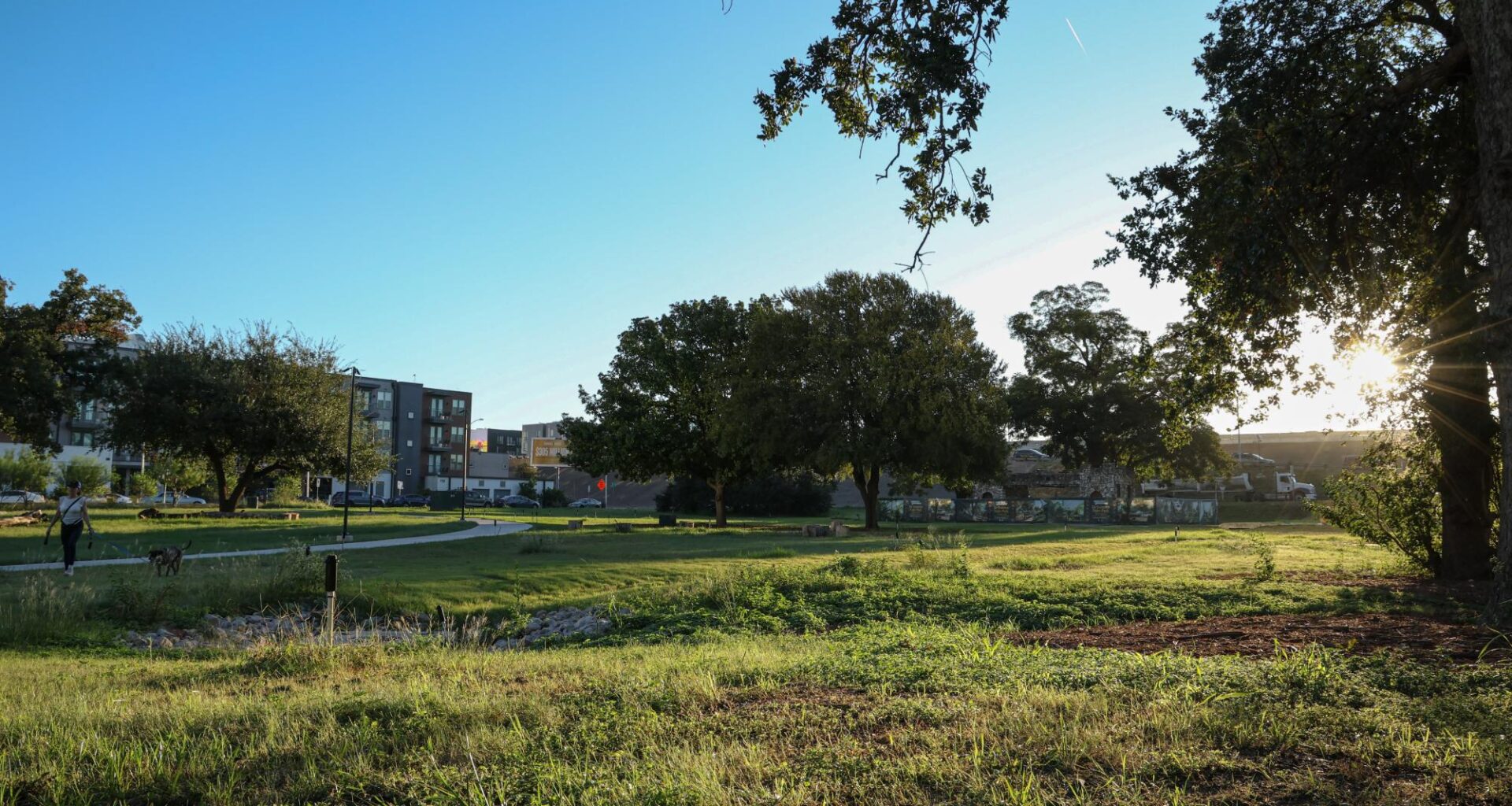
The Austin City Council authorized the submission of a grant application to the National Park Service and the Texas Parks and Wildlife Department to restore and renovate a downtown Austin park on Sept. 24.
Sir Swante Palm Neighborhood Park, built almost a century ago, is seeking an Outdoor Recreation Legacy Partnership of more than $5 million to rehabilitate the area into a more family-oriented space that celebrates the park’s history.
Palm Park is named for a 19th-century Swedish diplomat whose 1897 donation of about 12,000 books from his personal collection expanded UT’s library holdings by more than 60% at the time, according to the Texas State Historical Association and Don Carleton, founding and executive director of the Dolph Briscoe Center for American History.
“That’s enormous,” Carleton said. “He had played a major role in getting that started, the great library that we have today.”
Palm spent the rest of his life, until his death in 1899, as the University’s assistant librarian, overseeing use of his collection.
Although the council approved up to $9 million in matching funds for the historic green space, the project team applied for less because of other grant funding sources from donors like Texas Parks and Wildlife.
“The final request in our application was $5.7M in grant funds with a $5.7M match from the City of Austin and private philanthropic fundraising from Waterloo Greenway Conservancy,” an Austin Parks and Recreation spokesperson wrote in a statement.
District 9 Council Member Zohaib “Zo” Qadri, who represents UT and West Campus, wrote in a statement that the renovation is long overdue, citing the park’s historical significance.
“Palm Park is a cornerstone of Austin’s cultural and historical fabric, and it holds special significance for the diverse communities that call our city center home,” Qadri wrote.
Beyond its University ties, Palm Park and its shelter house also served as a gathering space for East Austin’s Mexican-American community and families with children at the nearby Palm School, according to John Rigdon, the chief planning and design officer with Waterloo Greenway Conservancy.
“What we’re going to do with that (shelter house) building is really try to preserve it and bring it back to its former glory while addressing some critical accessibility and kind of modernization concerns,” Rigdon said.
The public, including students, can apply to create art for the park that honors its history and story. Rigdon said there are also plans to integrate a trail into the park that travels all the way north to the University but said future funding will impact construction timelines.
The National Park Service will announce federal grant recipients on May 1, 2027. Austin Parks and Recreation expects to wrap up final design work in 2027, according to an Austin Parks and Recreation spokesperson.