
I’ve been pregnant three times, and each time, I’ve wrestled with Death.
The first time was at the end of my first pregnancy. I had carried my daughter for 41 weeks before the doctor suggested we induce. I was so eager to meet her—so tired of the foot-cramping, back-aching work of carrying her—that I agreed. Twenty-four hours before my induction, pain began radiating across my back. I assumed it was more of the same nine-month seasoning I had experienced before. So, I found a position on all fours, shoved a pillow under me for added comfort, and refused to move from the bed. Little did I know, I was in labor.
By the time I arrived at the hospital the next day, I was three centimeters dilated, with my daughter well on the way to making her grand arrival. To the doctors, she wasn’t coming fast enough. After a few hours of waiting, they decided to induce, but the drugs they gave me seemed to halt my labor. I writhed in the hospital bed, waiting to see what would happen.
Time produced no widening, but a child was surely descending. They painted a dire picture: the child could split me open, kill her or us both, if we didn’t intervene with an emergency C-section. I wish I’d known then that Texas has some of the highest delivery-by-C-section rates in the country and a pattern of doctors recommending them more for convenience and speed than for quality of life. I was terrified. I wanted to do whatever would keep my baby and me alive.
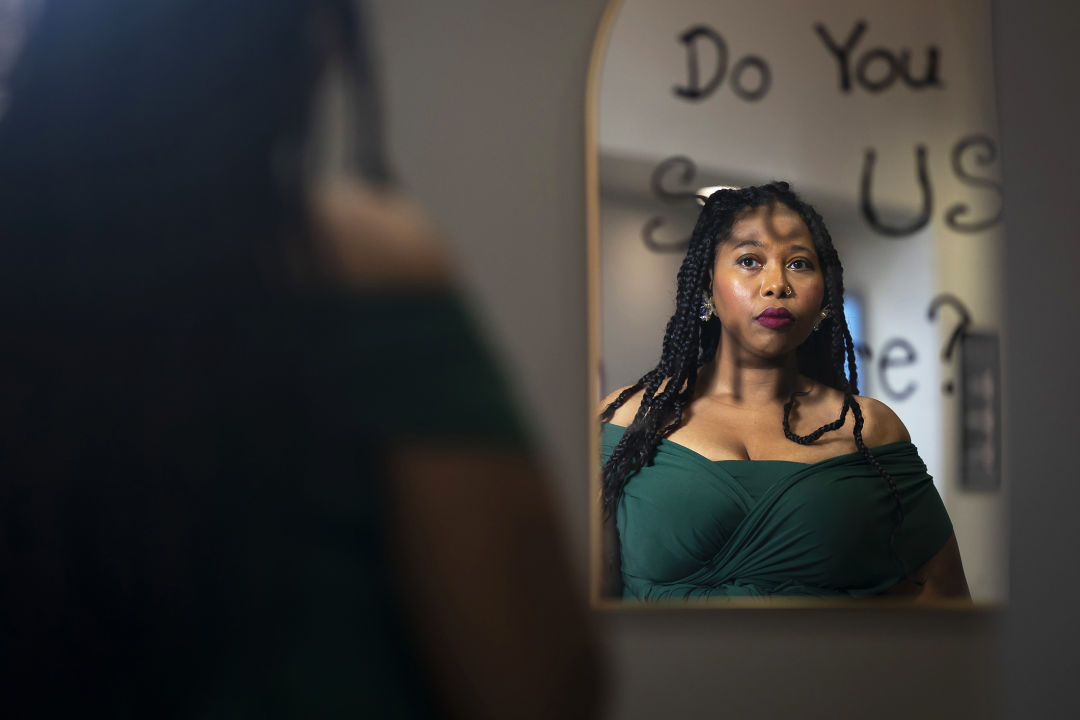
Deborah D.E.E.P. Mouton, the first Black Houston Poet Laureate, unpacks her experiences during pregnancy and grapples with Black maternal mortality in her new exhibition, The Call Me Mother Experience .
They rushed me into a surgical suite and removed my husband from the room, awarding him his souvenir hairnet and green gown for making it this far. I remember the room buzzing around me with nurses and doctors as I trembled on the steel operating table, trying to settle my racing heartbeat that played on stereo through the heart monitor. And then something happened.
Like a light switch, all the hustle that torrented around me became a current flooding out of the room. On her way out, a nurse came by my bedside and explained that a nearby patient had “crashed.” Reassigning my team to her was faster than waiting for a new team to scrub in. Then they left me alone, shivering beneath a paper sheet, listening to my heart rate begin to slow.
There was no new team. No one showed up to check on me, except Death.
She came in on my husband’s heels and watched as he held my hand, trying to reassure me. She counted the seconds as more than 20 minutes passed—as my baby’s heart rate began to climb, as the exhaustion of being in labor for over 47 hours began to take hold.
I guess, now, my husband made some deal with Death to let me stay, because a few hours later, I woke to our eight-pound bundle of joy resting in his arms. Seeing her erased every close call and aching pain.
I chalked up the mistakes and neglect I experienced in that hospital room to the crucible of becoming a mother. After all, every woman in my family had a story of a near-death experience during childbirth. When I explained how terrified I had been, I was met with more indifferent “Welcome to the club”s than compassion.
My next encounters with Death were just as chilling. About 11 weeks into my second pregnancy, I began to bleed at work. It was so early in the pregnancy that I hadn’t even told my close friends I was expecting. I raced to my doctor, scared something awful was happening. The doctor conducted a sonogram. He saw nothing wrong but assumed it was a miscarriage.
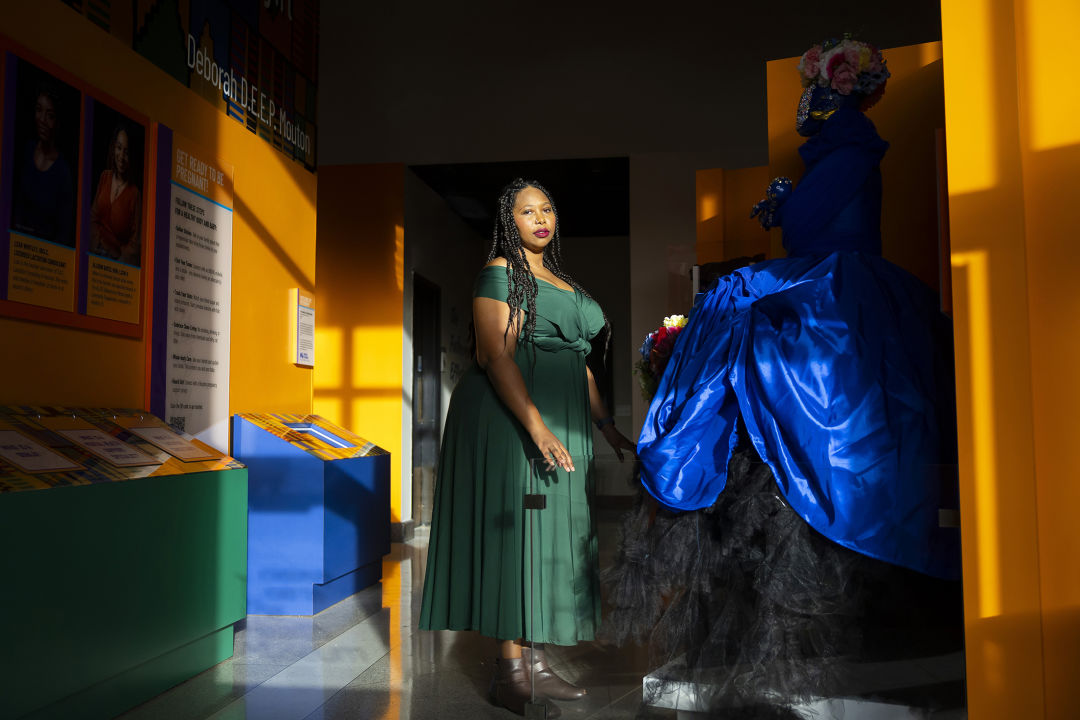
Since 2024, Mouton has collected the stories of Black birthing individuals, partners, doulas, and more for an artistic expression and answer to Harris County’s high rates of Black maternity mortality.
I explained that I have an autoimmune disease that causes bleeding ulcers; he told me all we could do was wait. He sent me home without running any additional tests or telling me what to expect. Only later would I learn that there are blood tests that can determine if you are miscarrying. No one prepared me for what might come next. For the 10 days that followed, I spent every waking moment praying and scouring the internet for solutions. Nothing showed up, except Death at my door. She was there to take my child away.
My last pregnancy may have been the scariest. I began bleeding at 13 weeks. More familiar with how quickly a child can slip away from you, I rushed to my doctor, more determined to find answers. I was met with the same copy-and-paste protocol: a sonogram without additional testing and another assumption that I was miscarrying. When I pushed for more information, begging my doctor to investigate “why,” he pulled up his stool and looked me square in the eyes, Death waiting just behind his shoulder. He offered to “start me over.” Removing my baby so I could try to get pregnant again was his only solution.
I sought out Eastern medicine. I had success with acupuncture for irregular periods before. Though the acupuncturist couldn’t promise to save my baby, they told me they might be able to stop the bleeding. I lay still, praying for a miracle while they pressed thin needles into my legs and belly. They gave me Chinese herbs and sent me home. Within two days, the bleeding stopped.
Fearing my child hadn’t survived, I went to my next appointment. That’s when they found a strong, steady heartbeat. I wailed loudly in the exam room. The nurses tried to quiet me, not knowing the fear, hope, and longing baked into my cry.
After hearing the good news, the doctor returned and took a deep breath, his face deadpan: “You should know your child will never be normal,” he told me. Without running any tests or investigating why I was bleeding in the first place, he urged me to prepare for my child’s death—a warning he repeated at each visit for the rest of my pregnancy. Despite this, I delivered a healthy baby boy at forty weeks.
For years, I explained my experiences away, thinking it was because of my insurance or my income. Then I heard stories about Beyoncé, Serena Williams, Tori Bowie, and Tatyana Ali—celebrities and Olympians with all the resources who still faced the same predicament. The healthcare system ignored them, too.
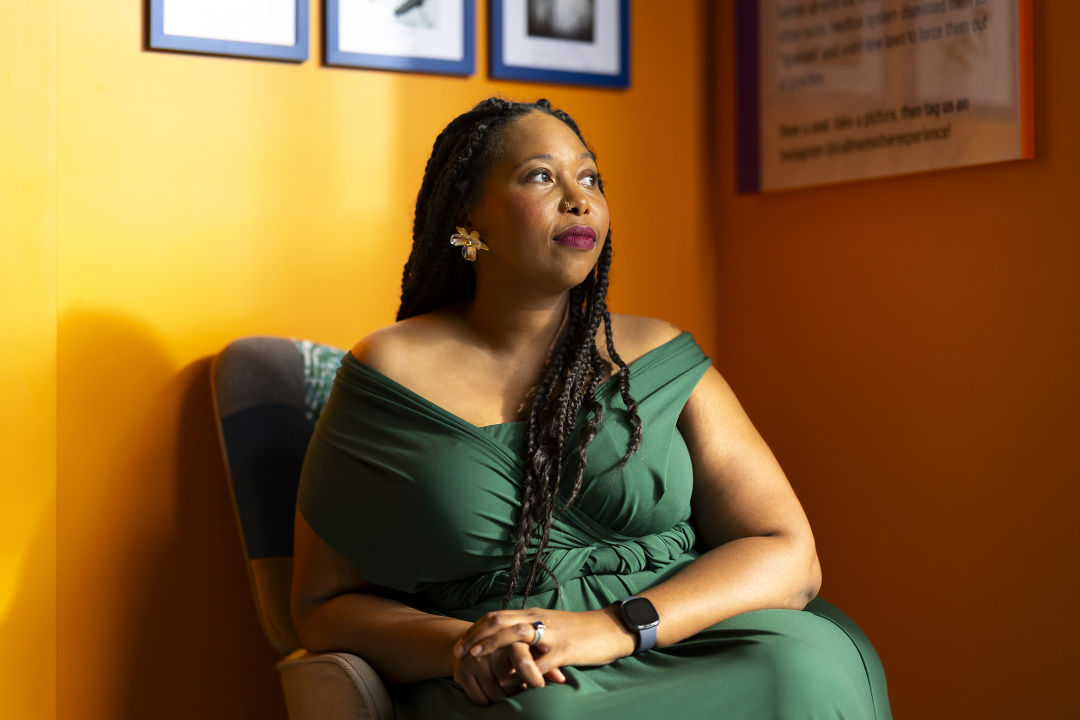
Mouton says she thought what she experienced during her pregnancies was normal until she heard the stories from famous Black women who similarly were ignored, dismissed, or mistreated. It inspired her to create The Call Me Mother Experience.
I’d learned that what I once thought was paying my dues as a mother was actually a red flag, a sign that too many of us have experienced traumatic treatments during birth that have put our lives in danger. That something happens when there’s a history of this, when a community accepts a practice as normal. They are less likely to challenge it, to dream that better is even possible.
Research shows no amount of education, class, or status changes the outcomes for Black mothers. In Houston, the numbers are even more stark. A recent study named Harris County the worst place in the US to give birth, with the highest rate of maternal mortality for Black women in the nation. Even with Houston touting one of the largest medical complexes in the world, the CDC reported in 2024 that Black women die at a rate nearly 3.5 times higher than their white counterparts during childbirth and the first year postpartum. These numbers don’t include the many women with near-misses—ones left injured and scarred.
I want to tell you this has nothing to do with race—to say the numbers have been skewed or blame it on the environment. The truth is: These numbers closely mirror the national average. My experience was not an exception. It was the rule.
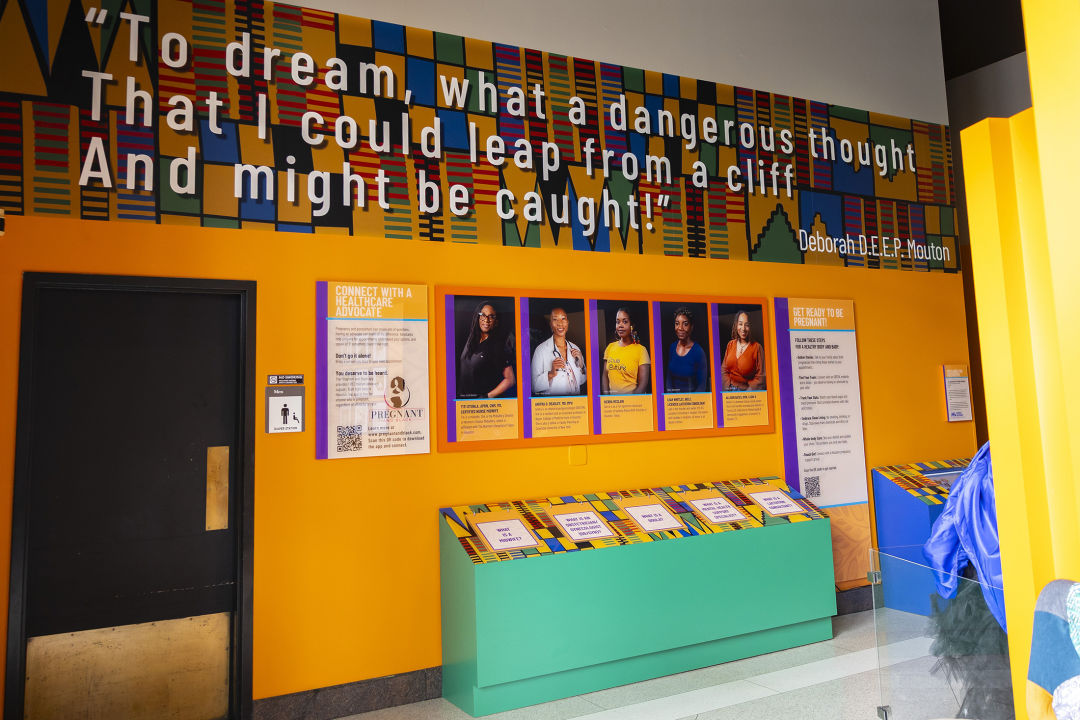
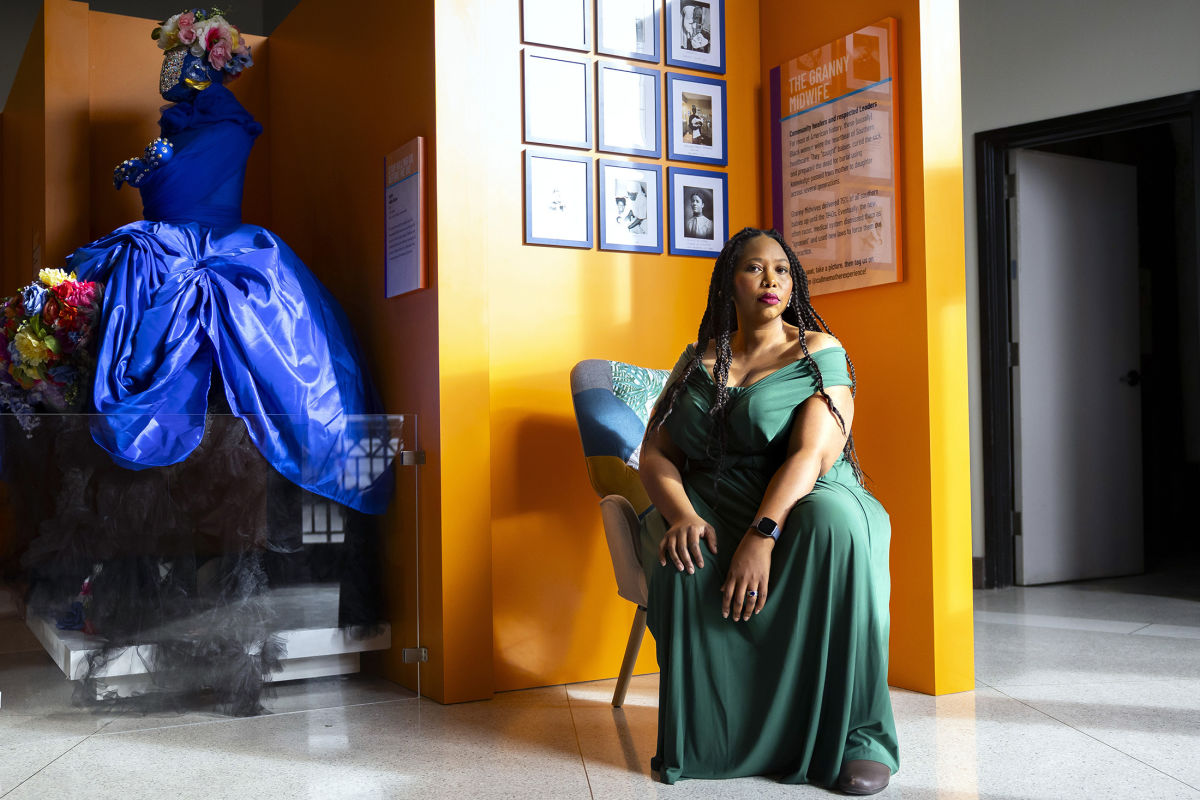
The Call Me Mother Experience debuted at the Health Museum in early October and will feature satellite exhibits at various other locations.
That realization sparked The Call Me Mother Experience—an immersive, curated look at maternal health through art.
I knew there had to be a way to make practitioners see our humanity and dignity. As an artist and storyteller—someone who has always processed the world’s hardest truths through my creative work—I set out to collect stories from people in my community. Starting in 2024, I reached out to artist friends of all genders to see how birthing a child had affected them. I found people who lost babies they were still mourning—ones they had never mentioned to anyone, not even to partners. I found artists who had been making work others had refused to exhibit. I found practitioners, doulas, midwives, and community organizers who, for years, have been making it their mission to change how Black birthers are treated. I found a community of stories that added life and depth to complex and often dismissed data.
The multi-site experience—starting at the Health Museum—stretches across five additional community sites, combining my art with that of eight other artists who have experienced painful losses around maternal care: Omari Maynard, Keda Sharber, Andonnia Maiben of Annlettered, Stacey Allen, Joshua Mouton, Saida Carter, Vogue Robinson, and Chris “Truth B. Told” Owens. Each contributes to a showcase spanning sculpture, photography, film, performance, and two-dimensional art, letting audiences see the humans behind the trauma—people like me who wanted family and legacy, only to be met with indifference.
Call Me Mother is an invitation for the Houston community, artists, and the healthcare system to join a conversation about the care we all deserve. Because when Black women call for more culturally competent care, everyone gets to advocate for their needs. When we demand to be heard, everyone gets a closer listening ear. And when we address the most affected populations, Death doesn’t get a permanent place in the rooms where we’re trying to welcome new life.
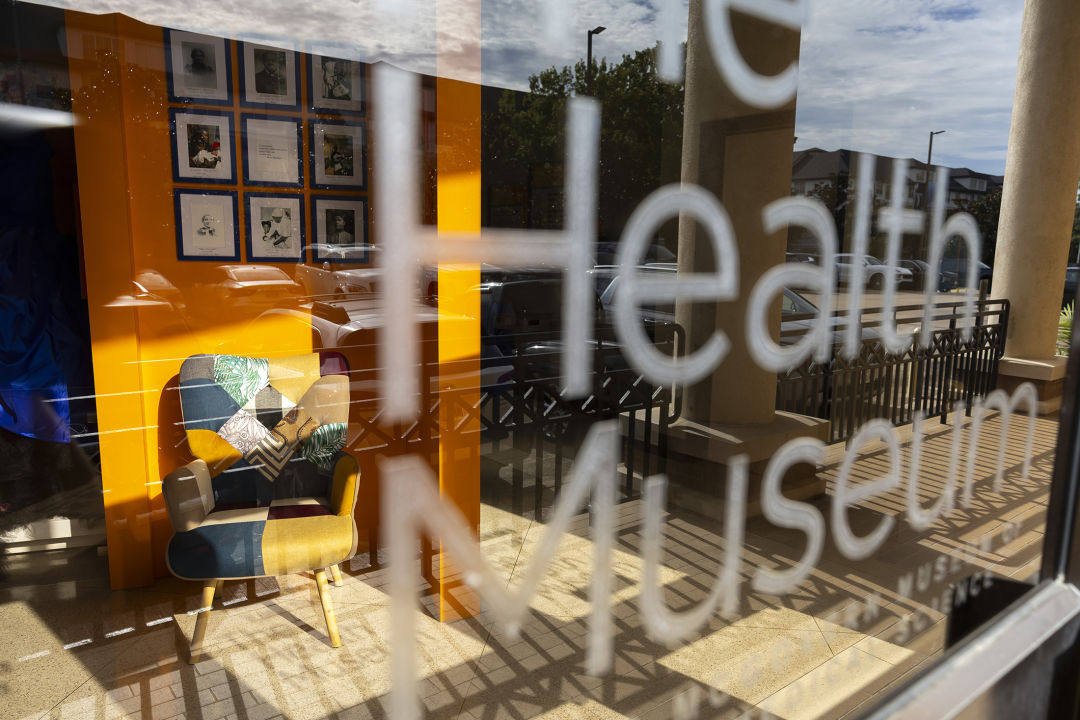
The Call Me Mother Experience is on view at the Health Museum through February 27. Satellite exhibits and installations will be hosted at the Jung Center, January 8–February 15, and the Alley Theater, January 28–February 7.