
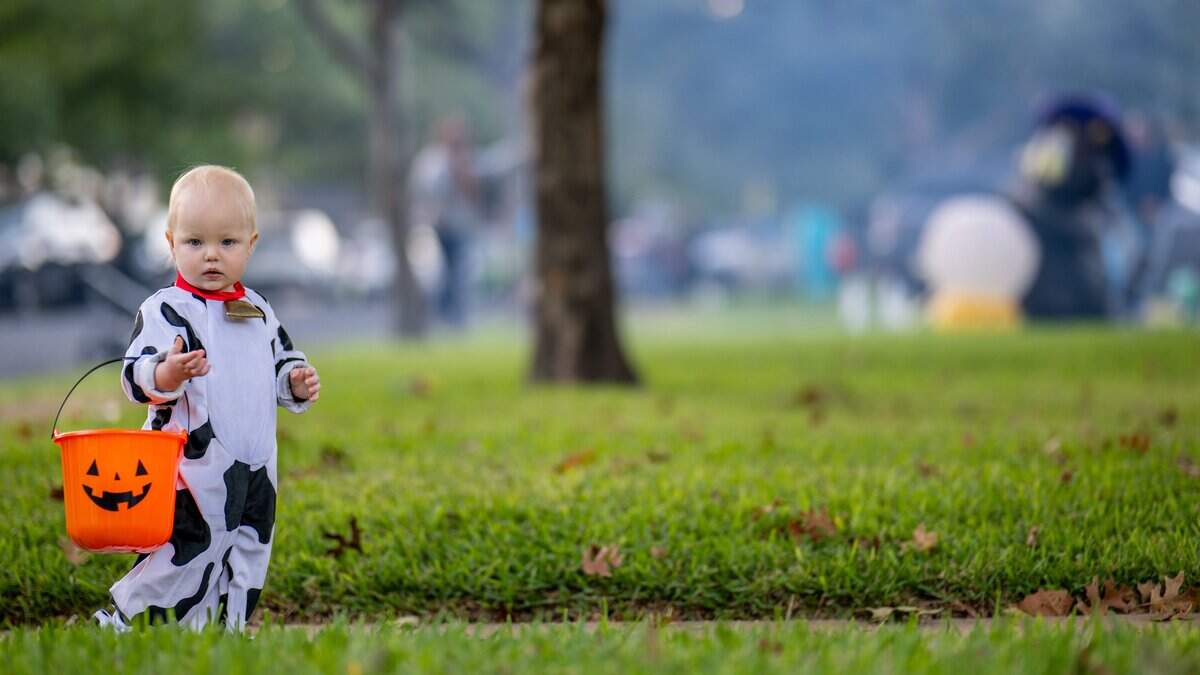
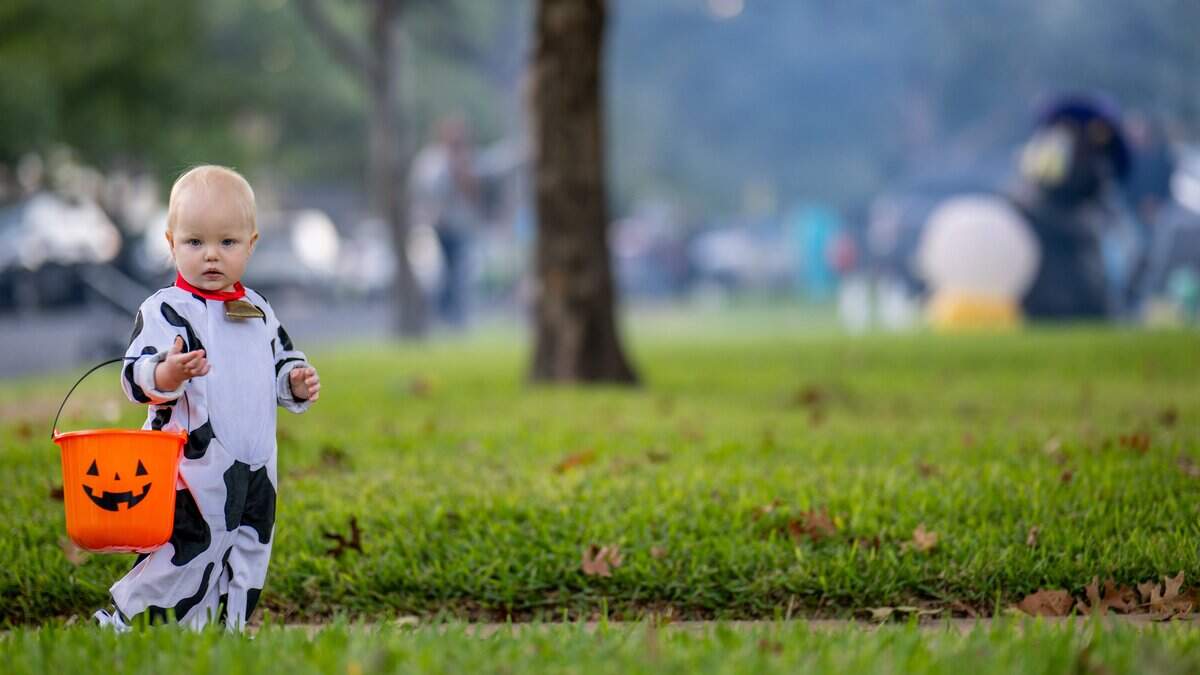
The Jarrard family trick-or-treats together in the Allandale neighborhood on Oct. 31, 2023, in Austin, Texas.
Brandon Bell
Getty Images
Spooky season is beginning, and families are preparing for the tricks and treats that will come with it on Halloween night.
Although it’s a holiday that’s meant to be fun, Texas pediatricians want families to be mindful of certain safety and health precautions. Here are some tips parents should consider ahead of the festivities, according to Dr. Diane Arnaout, a pediatrician at Cook Children’s Pediatrics Forest Park, and Dr. Danielle Grant, associate medical director of Texas Children’s Pediatrics.
Costumes
Grant recommends children dress according to the weather, so they aren’t too warm or too chilly either. The weather in Texas can be unpredictable around Halloween time, so it’s important to check the forecast as the date draws closer, she noted.
“For the younger kids, ages 1-5, Halloween can be super exciting, but they also want to be super comfortable, too. So, you want to choose an outfit or costume that is safe: not super long because if they’re running, they can trip on it. Making sure that they use face paint that’s nontoxic and not (wearing) a big, heavy mask that can block their vision if they’re walking or running while they’re trick or treating,” she said.
As far as face paint goes, parents should look for nontoxic, hypoallergenic and water-based products.
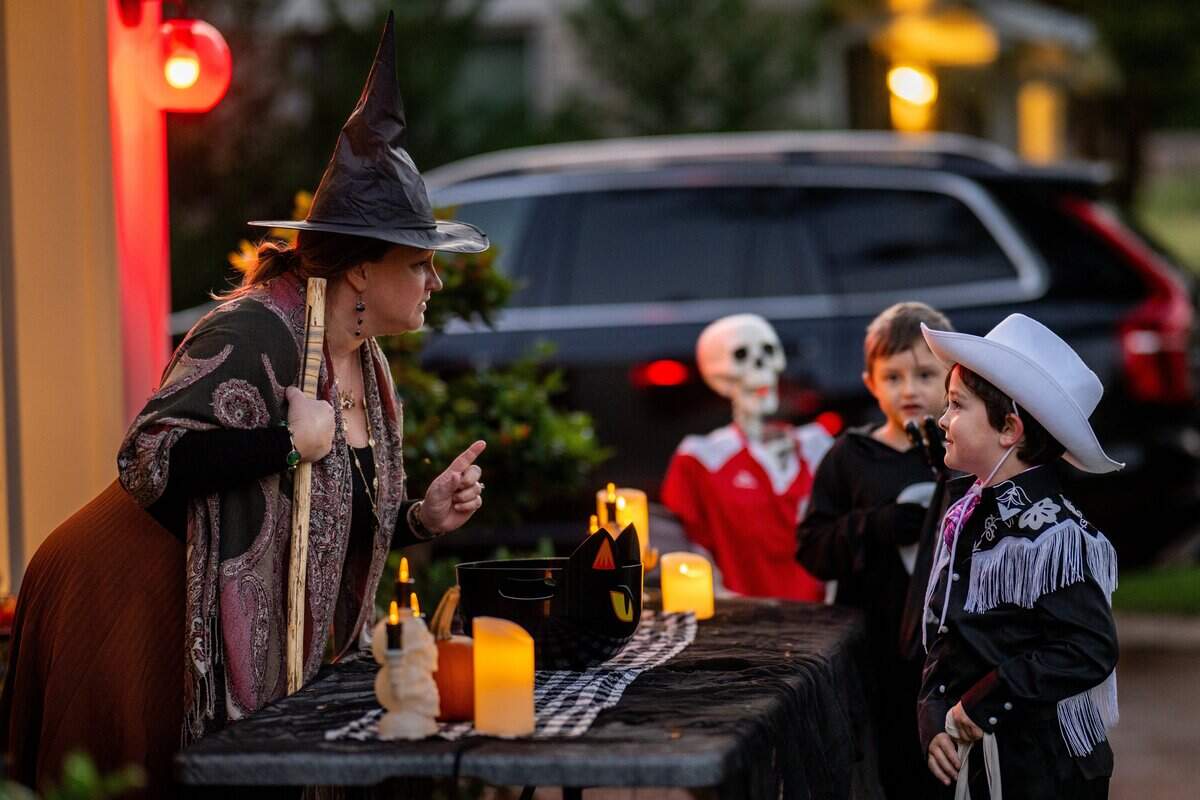 Community members trick-or-treat together in the Allandale neighborhood on Oct. 31, 2023, in Austin, Texas. Community members and families came out to celebrate Halloween together. Brandon Bell Getty Images Outdoor safety
As a parent herself, Arnaout considers street and pedestrian safety her primary concern on Halloween night. Children can get so excited about the festivities that they forget to look both ways before crossing the street. Children between 4 and 8 years old are 10 times more likely to be hit by a car on Halloween than any other evening, according to research published by the Journal of the American Medical Association.
She recommends parents talk about expectations with their children ahead of time, such as laying out rules against running in the street or else their trick-or-treating time might be cut short. Parents can also pull their younger ones around the neighborhood in a wagon as a safety measure.
“I think that’s one of the main things I want parents to sort of let sink in. It’s really easy for your kid to get hit by a car on Halloween because it’s dark, no one’s paying attention to the rules and sometimes people drink on Halloween, so they may be not in their mindset when they’re driving a car,” she said.
Arnaout also pointed to dark costumes as another liability when trick-or-treating. Parents can put glow sticks, glow necklaces or reflective tape on their children’s costumes for better visibility.
Candy
It’s tempting for children to dive into their candy haul when they return from trick or treating. Some parents may be more lenient than others on the candy indulgence, but Arnaout says setting limits is important to avoid children getting stomach aches or nausea.
“I think Halloween night should be fun. My kids always throw everything on the ground and at home, and they like trade and have fun with it,” she said. “After that, I’m a big fan of out of sight, out of mind… My kids maybe eat it for a few nights, and then suddenly it’s not around anymore, and they completely forget it happened.”
Chocolate freezes easily and can be saved for later, too, she emphasized.
“I’m a firm believer in parent tax. I walked you all over my neighborhood, I’m getting some of that candy… This is physician recommended,” Arnaout teased.
Grant recommends families make a plan of how much candy can be eaten in the following days or weeks after Halloween. If there’s an abundance of it, they can also donate the extras. Avoid giving younger children hard candies such as Jolly Ranchers or other kinds that can’t be chewed easily.
Additionally, parents should look out for candies that have been unwrapped or tampered with, in addition to homemade items.
“I always worry about kids with food allergies, too. Sometimes the bigger candies are labeled really well, but the small snack-sized things that come in these big bags can be unlabeled. And then, certainly, things that are unwrapped or homemade treats — you don’t really know what the ingredients are,” Grant said.
Related Stories from Fort Worth Star-Telegram

Fort Worth Star-Telegram
Lina Ruiz covers early childhood education in Tarrant County and North Texas for the Fort Worth Star-Telegram. A University of Florida graduate, she previously wrote about local government in South Florida for TCPalm and Treasure Coast Newspapers.