
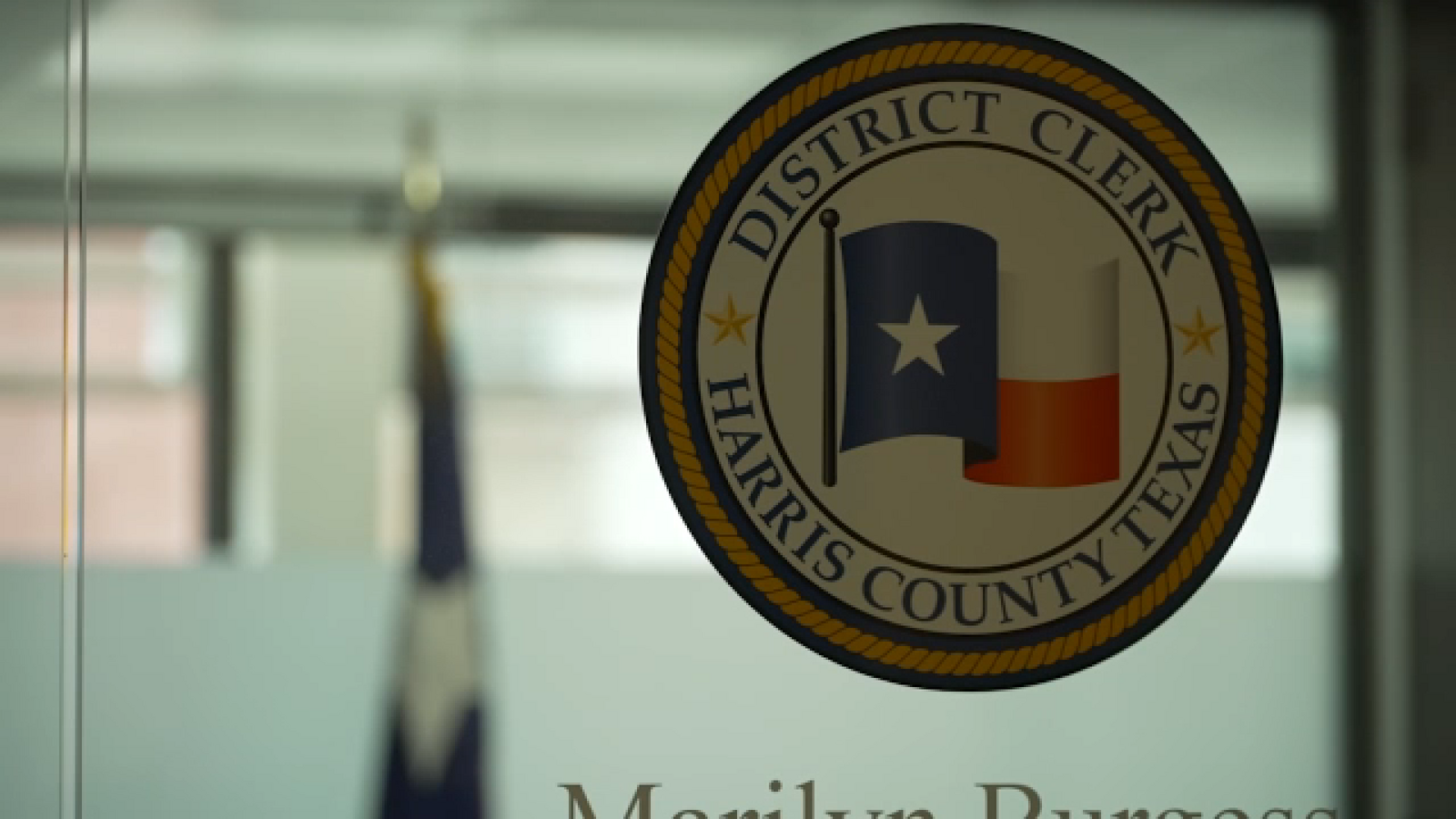
HARRIS COUNTY, Texas (KTRK) — When you get a jury duty letter in the mail, it comes from the Harris County District Clerk’s Office. Well, when District Clerk Marilyn Burgess received one herself, she didn’t expect it to lead to a seat on a grand jury.
“I assumed because of my role that was considered a conflict of interest, and I would not be picked, and I’d be disqualified right away,” Burgess said. “But that was not the case.”
Burgess was called for regular jury service July 9. Out of a pool of 100 people, she said, she was one of 16 selected to serve on a grand jury. She became its foreperson and got a firsthand look at the process used to decide whether to indict someone.
Burgess said her panel’s service began in August and is scheduled to continue through the end of the month. She says her panel meets Mondays and Wednesdays for four to five hours a day, reviewing roughly 60 to 80 cases each session.
What stood out to her was that everything was done on paper. A painstaking process she realized was antiquated.
“If you no bill something, it was on a three-part carbon list form where you had to handwrite in ink the defendant’s name, the case number, the judge, and then the foreman had to sign that paper manually,” Burgess said. “And I’m like, this is crazy. We’re in 2026, and we’re still using carbon paper to do these things.”
With three months remaining before her retirement, Burgess made it one of her missions to bring the grand process into the 21st century. Burgess met with Stephen Driver, the Harris County District Attorney’s Office grand jury division chief, who, we should note, is running for judge of the Texas 208th District Court. Driver agreed the process needs to be digitized, and said it hadn’t been because of other priorities.
“This process would allow the indictments to go directly from the grand jury to the district clerk without having the potential for that paper to disappear somewhere between those two points,” Driver said. “It has happened rarely, where we have misplaced an indictment.”
Burgess said computerizing the process will make it less labor-intensive and more efficient, reducing costs and saving taxpayers money. She also says the current process is prone to mistakes.
“My criminal intake people tell me there are a lot of mistakes that they catch and have to correct,” she said.
Burgess estimated that moving to a computerized system would require a three- to six-month project.
After seeing the process herself, she said, the opportunity for improvement was clear.
“It was so obvious that it could be done easier and electronically and faster and more efficient and more accurate,” Burgess said.
Copyright © 2026 KTRK-TV. All Rights Reserved.