
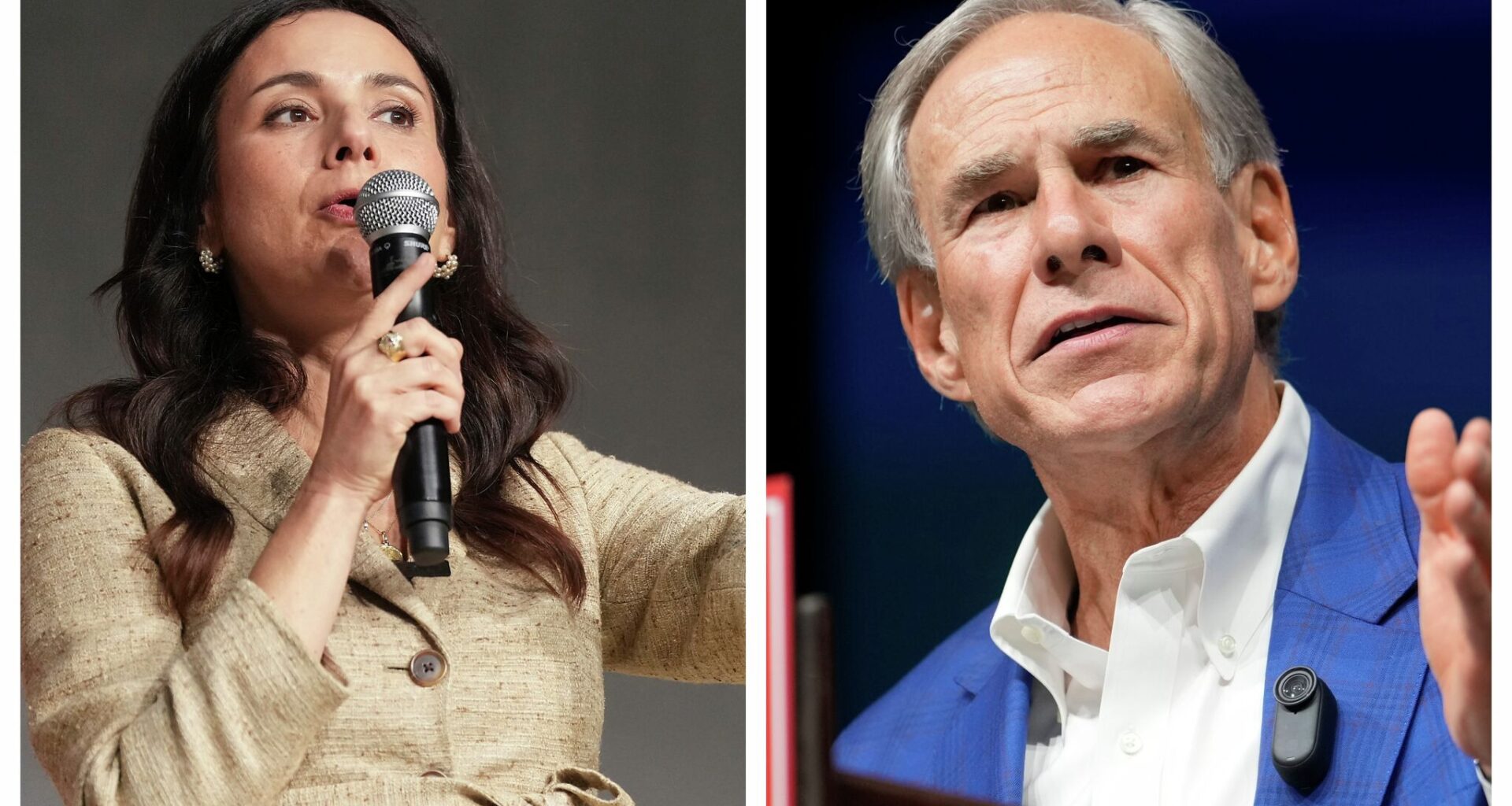
Gov. Greg Abbott really wants to talk about income taxes.
It’s not that Abbott wants to impose such a levy in Texas. Instead, he wants to convince Texans that a vote by his Democratic rival Gina Hinojosa in 2019 is a smoking gun that proves she really wants to implement an income tax in Texas — something she insists isn’t true.
But Abbott, for weeks now, in press releases, fundraising emails and digital ads, has been pointing to the 2019 vote as evidence that Hinojosa wasn’t against income taxes and “is dangerous for Texas.”
It’s become such a steady drumbeat that Hinojosa now has a digital ad out about a state income tax where she says directly to the camera, “I oppose one,” with that phrase in big bold letters flashing across the screen.
The Texas House vote that Abbott’s camp is pointing to was one that most Democrats in the chamber, including Hinojosa, opposed. So did some of the state’s biggest public school advocacy groups. House Joint Resolution 38 changed the state constitution to make it harder to create an income tax in Texas, even though it was already pretty difficult.
Since 1993, Texas had a provision in the state constitution that required any attempt to create a state income tax to pass both the House and the Senate and get approval from voters. And if one were ever created, the amendment championed by then Lt. Gov. Bob Bullock, a Democrat, required two-thirds of the revenue from such a levy to go to reducing school property taxes and the remaining one-third to education.
But in 2019, state Rep. Jeff Leach, a Collin County Republican, wanted to make it even harder to create a tax heading into the 2020 election cycle. He proposed HJR 38 to require that the Legislature, in order to pass an income tax, get two-thirds of its members, then send it to voters for final approval. It removed the Bullock provision requiring the money from a potential income tax to go to schools.
Teacher groups were quick to condemn the measure because it removed the guarantee that if an income tax were created, it would be for education funding and cutting school taxes.
Leach at the time argued the change was important because it would make it more difficult for an income tax provision to ever get passed out of the Texas Legislature in the first place.
“So in order for there, in the future, to be an income tax, we would have to amend the constitution again and that would take, of course, two-thirds of both chambers, the governor’s signature and then the approval of the people in Texas,” Leach said at the time.