
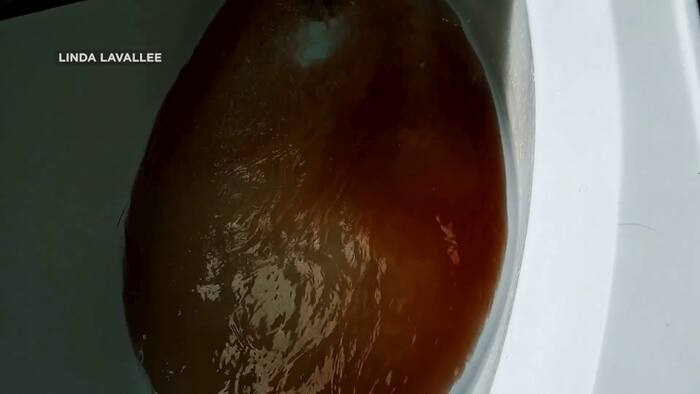
HOUSTON – When you fill a glass of water at your sink, you expect clear, clean water. You need it to drink, bathe, and clean.
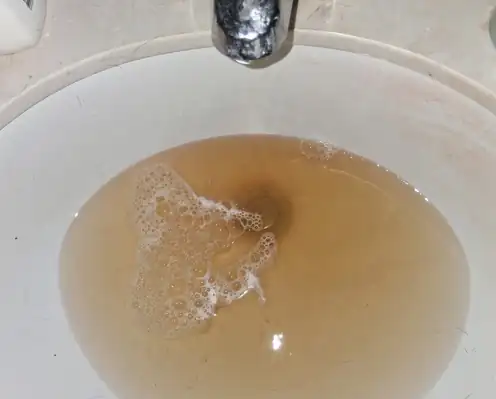
But many Houston-area residents tell KPRC 2 that the water coming out of their taps, faucets and sprinklers is brown and looks dirty.
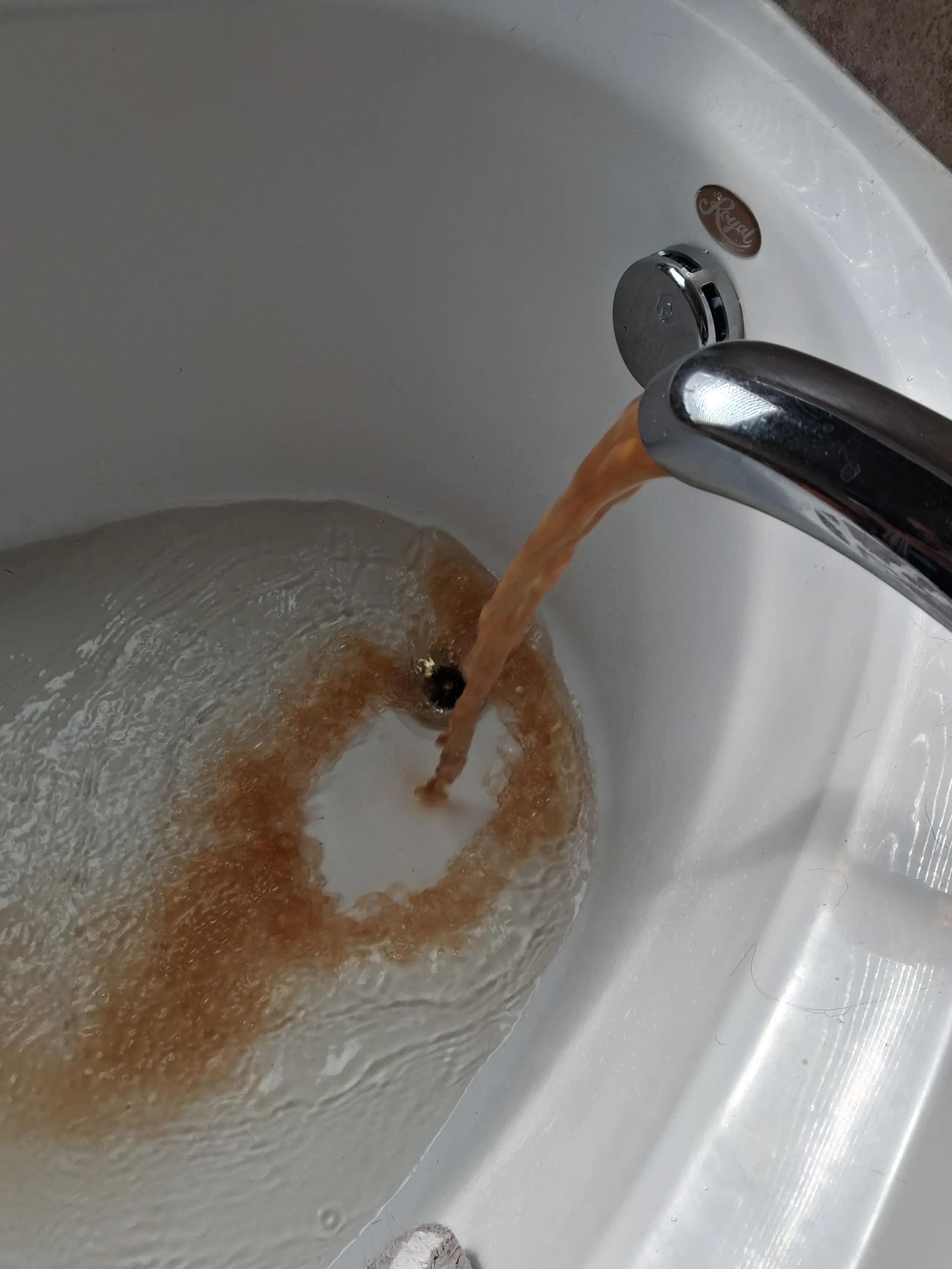 Why is the water dark brown? ENOUGH investigates recurring water complaints (Copyright 2026 by KPRC Click2Houston – All rights reserved.)
“When you see brown water coming out of a tap in someone’s home, does that concern you?” KPRC 2 asked Drew Molly, Houston’s chief water officer.
“Absolutely. Brown water would be … it’s unacceptable to have brown water coming out of somebody’s tap,” Molly said.
KPRC 2 checked 311 complaints and found that Houston had received 92 complaints about brown water so far this year. Last year, the city received 138 complaints.
For residents dealing with the problem, the discoloration is unsettling.
“It’s very unsettling to be bathing, giving the water to our dogs. We don’t know what’s in it. And water is not supposed to be brown,” said Linda Lavallee, a Montgomery County resident.
Sheila Stoll compared the experience to buying bottled water at a store.
“If you bought this at a store — you went and bought a bottle of water — you would return it and get your money back,” Stoll said.
And as water bills continue to rise, residents want to know what is causing the discoloration, when it will be fixed and who is responsible.
What causes brown tap water?
Homeowners sometimes call local news stations after turning on a faucet and seeing brown, rusty, coffee-colored water come out.
Lavallee, who lives in Montgomery County, was recording her bathwater when she noticed the problem.
“I mean, look at that! Oh my God! What the hell? Oh my God,” she said in the video.
Lavallee moved to Texas about a year ago and said she had never experienced anything like it.
KPRC 2 tested samples of brown water at accredited laboratories. The results showed very high levels of iron.
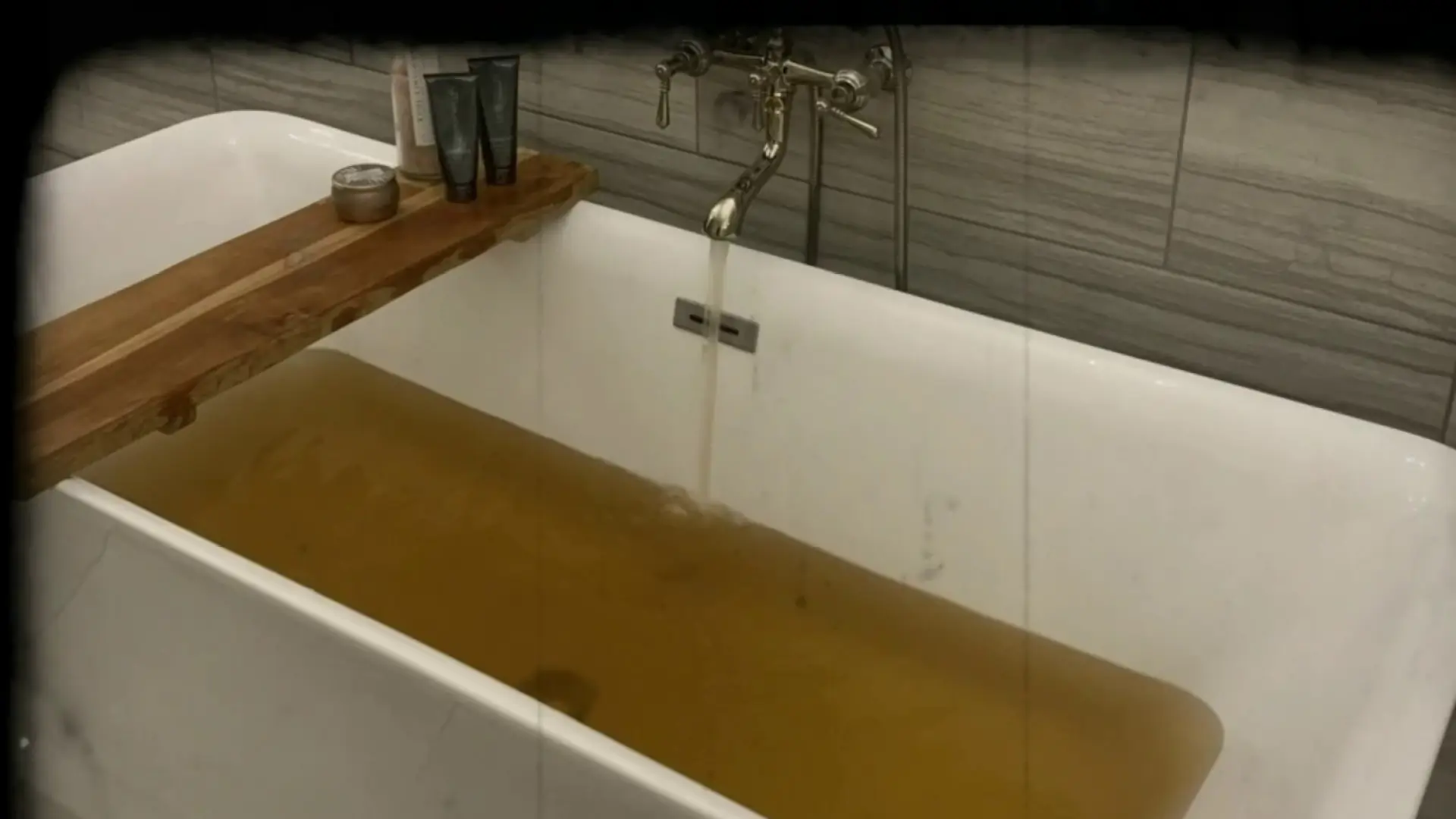 KPRC 2 Investigates murky, brown drinking water in one community
The Environmental Protection Agency and the Texas Commission on Environmental Quality consider iron a contaminant that primarily affects water’s aesthetics, including its taste, color and smell. Doctors and environmental groups told KPRC 2 that iron at these levels is not considered harmful to health.
Most water contains some iron, but it may not be visible until concentrations become high enough that the iron can no longer remain dissolved. That’s when water can appear yellow, rusty, or brown.
So what causes those higher iron levels?
One potential source is iron water pipes — the lines that carry water from a treatment plant to homes. Iron can oxidize and rust inside those pipes.
Who is responsible when the water turns brown?
Lavallee contacted the municipal utility district she pays for water to get answers.
She said the district told her it was aware of the problem and was flushing the lines day after day to try to get the water to run clear again.
Flushing involves opening fire hydrants to release particles and buildup from water lines.
But Lavallee said the problem continued.
“And for three weeks, you know, of this discolored, filthy, dirty water, we’re just supposed to be OK with that? I wouldn’t let my kids bathe in that. I would not let, you know, we’ve filtered water for the dogs. This is unacceptable. It’s just completely unacceptable,” she said.
When KPRC 2 contacted Montgomery County Municipal Utility District 98, the district said it was aware of customers’ water-quality concerns.
“The district receives the entirety of its water supply from the City of Houston,” MUD 98 said in a statement.
That connection can complicate efforts to determine who is responsible for the pipes causing the problem.
Even people who live 40 to 50 miles outside Houston’s city limits may get water from the city through their water company or utility district.
The water travels through Houston’s water mains to a utility district’s pipes and then through service lines to individual homes.
Molly said aging pipes within a utility district’s distribution system could be contributing to Lavallee’s ongoing problems.
“That MUD District, I don’t know what their distribution system looks like, but my guess is that I’m sure they have some cast iron that is probably contributing to this lady’s issues that she has that are ongoing,” Molly said.
That leaves customers caught between different entities when they try to get answers.
A customer may contact their MUD and be told the problem is with the city. The city may then point to pipes within the utility district’s system.
When KPRC 2 asked Molly about that challenge, he said he empathized with Lavallee’s situation.
But Lavallee was looking for answers, not empathy.
KPRC 2 checked and found that MUD 98 does not have iron water pipes. The district has replaced them with more modern PVC pipes, which do not rust like iron pipes.
 ENOUGH Investigates: Dark brown water coming from faucet: Montgomery County residents want answers (Copyright 2026 by KPRC Click2Houston – All rights reserved.)Aging pipes remain a problem across Houston
While MUD 98 has replaced its iron pipes, Houston still has aging infrastructure.
About a quarter of Houston’s water pipes are ductile or cast iron, and some are up to 50 years old. About half of the city’s water lines are PVC, which is now the preferred material.
Molly acknowledged the city has work to do to replace aging pipes.
“We are over time, you know, replacing all of our pipe material. We know that we’ve got a lot of work to do because there’s a lot of pipe material that we just — it’s at or beyond its useful life and we need to replace it,” he said.
Residents of Saddle Creek Farms, about 45 minutes northeast of Houston near Crosby, know that frustration well.
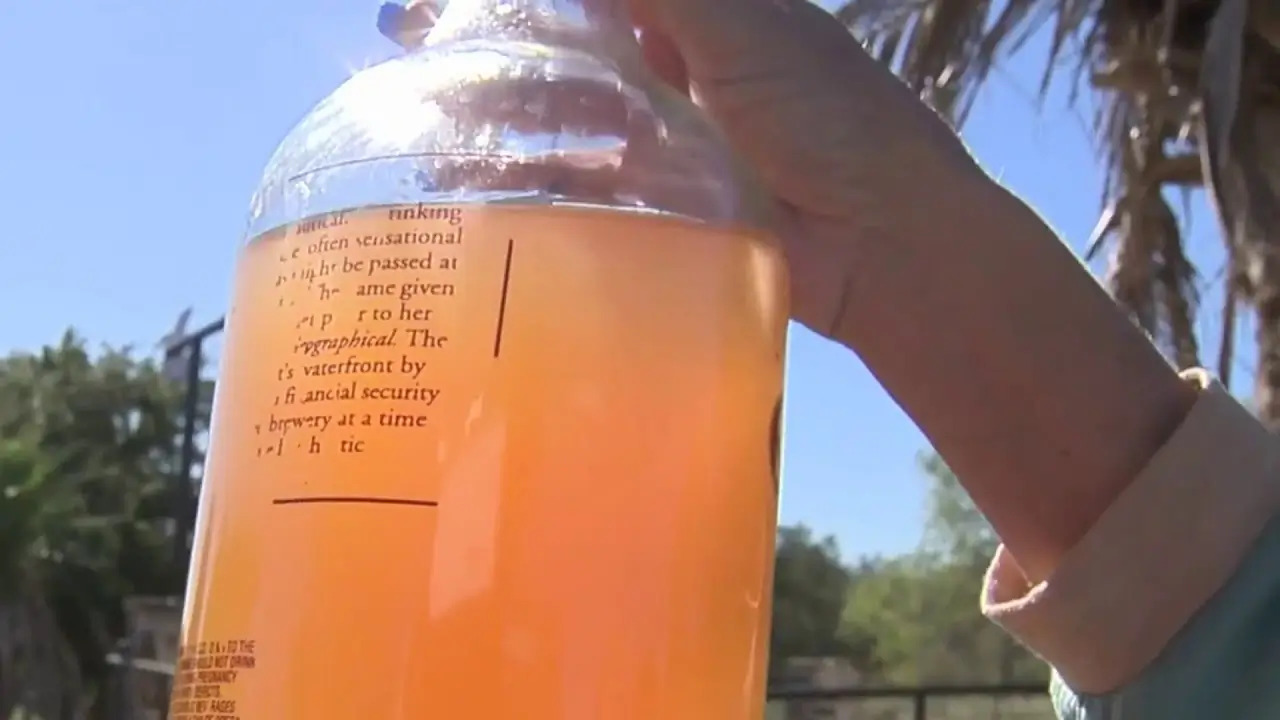 What started as a KSAT story investigating brown water in two Wilson County neighborhoods has since concluded in the creation of two new state laws. (KSAT)
 KPRC 2 Investigates people still dealing with brown water in one neighborhood. (Copyright 2023 by KPRC Click2Houston – All rights reserved.)
KPRC 2 interviewed homeowners there in 2022 after residents complained about murky, sludgy water coming from their faucets, bathtubs and swimming pools. They said the water stained their homes and laundry.
Some residents have spent thousands of dollars on whole-home filtration systems to keep the brown water out of their homes and appliances.
“We just want regular water. We want safe water,” resident Shereece Anderson told KPRC 2.
When reporter Amy Davis asked whether they wanted clear water, the group answered, “Clear water — yes.”
“If anyone tries to tell us that this is normal, we’re not buying it,” another resident said.
KPRC 2 tested water from Saddle Creek Farms. The results showed extremely high levels of iron and manganese.
The Texas Commission on Environmental Quality says drinking water should not have more than 0.3 milligrams of iron per liter. The Saddle Creek Farms sample contained 164 milligrams per liter — 548 times that level.
The state investigated after KPRC 2’s 2022 report
After KPRC 2’s investigation in 2022, TCEQ sent inspectors to Saddle Creek Farms.
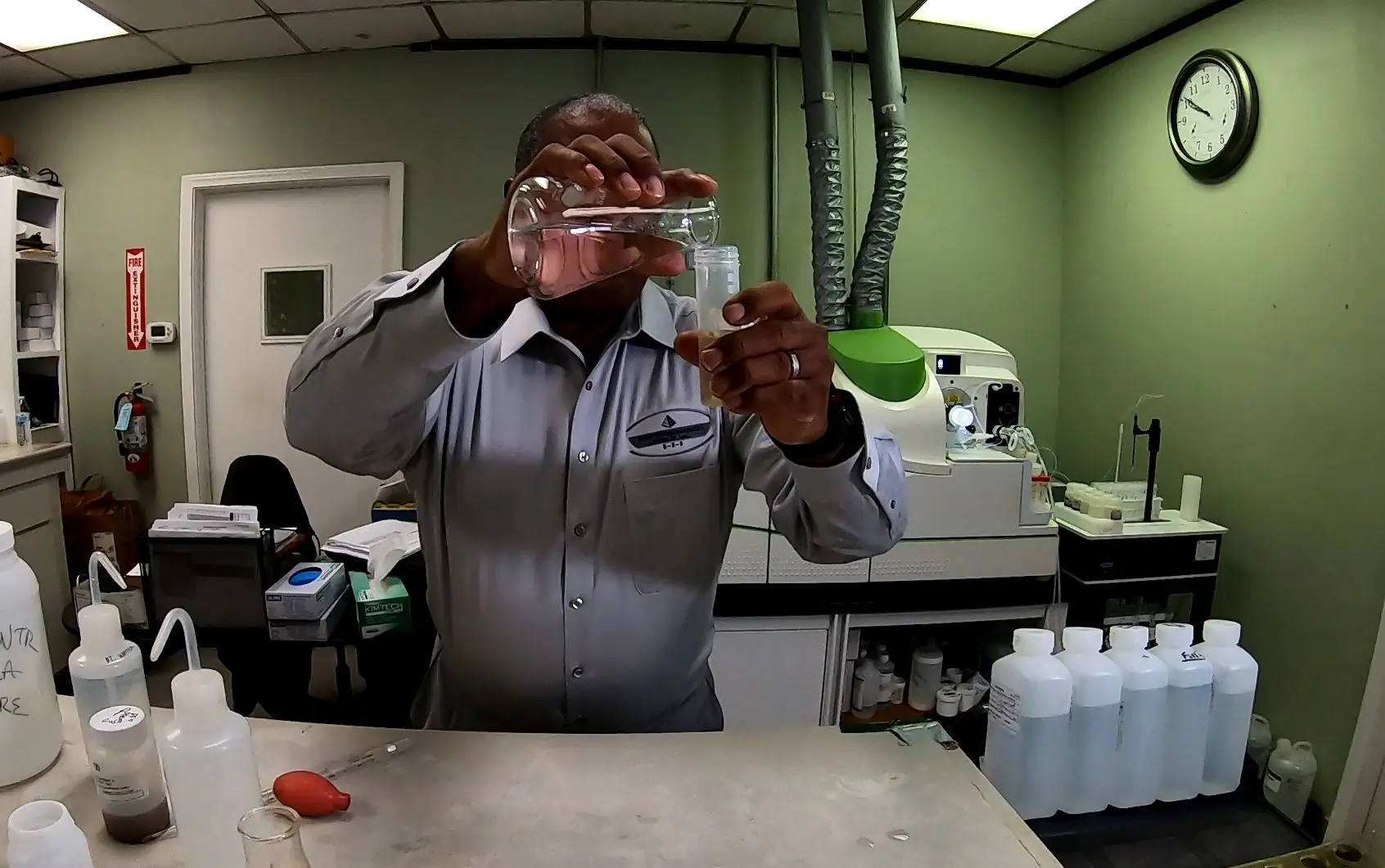 KPRC 2 Investigates water bill issues in the Houston area. People in one neighborhood say they’ve been dealing with brown water for years. We got the water tested to find out why it was brown. (Copyright 2021 by KPRC Click2Houston – All rights reserved.)
Inspectors found iron levels above acceptable limits in water from two of four fire hydrants in the neighborhood. The state issued a violation notice to the City of Houston.
The city later sent the state a photo of clear water from a fire hydrant as evidence that iron levels had been reduced and the water was no longer discolored.
But flushing the lines to remove rust and sediment is a temporary fix, and residents say the brown water keeps coming back.
“You may have brown water. You may not today, and if you don’t today, then you’re definitely gonna have it at the end of the week. You know, it’s that frequent now,” Anderson said.
When Davis asked how many residents had called the city to report the problem, the group responded, “All of us — everybody.”
One resident, Macy, said she had been calling for about four years.
Back in 2022, then-Houston Public Works Director Carol Haddock acknowledged the delays in fixing the problem.
“This has taken longer than it should. It’s taken longer than we would like it to,” Haddock said.
Four years later, the city has tried other temporary fixes, including adding a substance intended to keep iron from flowing through customers’ faucets. Residents say those efforts have not solved the problem.
When will Houston replace the pipes?
Molly told KPRC 2 that Saddle Creek Farms is now on track to have about three miles of cast-iron pipes replaced.
During the interview, Molly said the target was to begin construction in 2029, with construction expected to take 16 to 24 months. He said the city would try to accelerate the schedule if possible.
After that interview, Molly followed up with KPRC 2 to say the neighborhood was now on track to have the pipes replaced in 2028.
Houston has nearly 1,800 miles of iron water lines, according to information provided to KPRC 2.
Waiting six years for three miles of pipes to be replaced can feel slow to residents who have repeatedly reported brown water. Molly said Houston Public Works replaces about 2% to 3% of the city’s water pipes each year.
“If I’m living in a neighborhood that’s dealing with this, it is a long time to wait,” Molly said.
He added that the department is trying to do the best it can with the resources available.
What about the brown water in Montgomery County?
Molly did not give KPRC 2 a timeline for replacing the water lines that feed into Lavallee’s neighborhood in Montgomery County.
Lavallee filed a complaint with TCEQ. The agency sent investigators to two fire hydrants in the area and opened them to check the water. The water was clear during the inspection.
The agency’s 99-page report concluded: “The complaint allegation was unable to be confirmed and no alleged violations were cited.”
Lavallee said the lack of answers has been frustrating.
“It’s so frustrating because we don’t have any answers,” she said.
“And water is not supposed to be brown,” she added.
Molly told KPRC 2 that water testing can show whether water meets federal and state standards, even when it looks discolored.
“If you test that water, that water will meet all the standards that the EPA and TCEQ puts out there,” Molly said. “But the reality is, who’s going to drink brown water? I mean, if it meets all the standards and the water is brown, nobody’s going to drink that water.”
What should you do if your water is brown? ENOUGH Investigates: Dark brown water coming from faucet: Montgomery County residents want answers (Copyright 2026 by KPRC Click2Houston – All rights reserved.)
If you experience brown water at home, contact your water provider and report the problem.
Temporary fixes, such as flushing lines and adding substances to the water, may help, but the water authority needs to know when customers are experiencing the issue.
If you report the problem and your water provider does not address it, you can also file a complaint with the Texas Commission on Environmental Quality.
KPRC 2 is continuing to seek answers about brown water and the timeline for permanent fixes. If you are experiencing this problem in your neighborhood, contact the ENOUGH team.
Full email explanation from Drew Molly:
While not all cast iron or ductile iron (DI) pipe requires immediate replacement before the end of its useful life, DI pipe sometimes performs well beyond its expected 50-year lifespan. In fact, some cities—such as Philadelphia and Buffalo—continue to specify DI pipe unless there’s a compelling reason to use an alternative material.
Cast iron pipe, however, presents more challenges, which is why we prioritize its replacement more aggressively than other materials citywide.
Houston Public Works’ goal is to replace approximately 2–3% of our pipe inventory per year, a notable increase from the past decade, during which annual replacement rates were generally below 1%.
Copyright 2026 by KPRC Click2Houston – All rights reserved.