
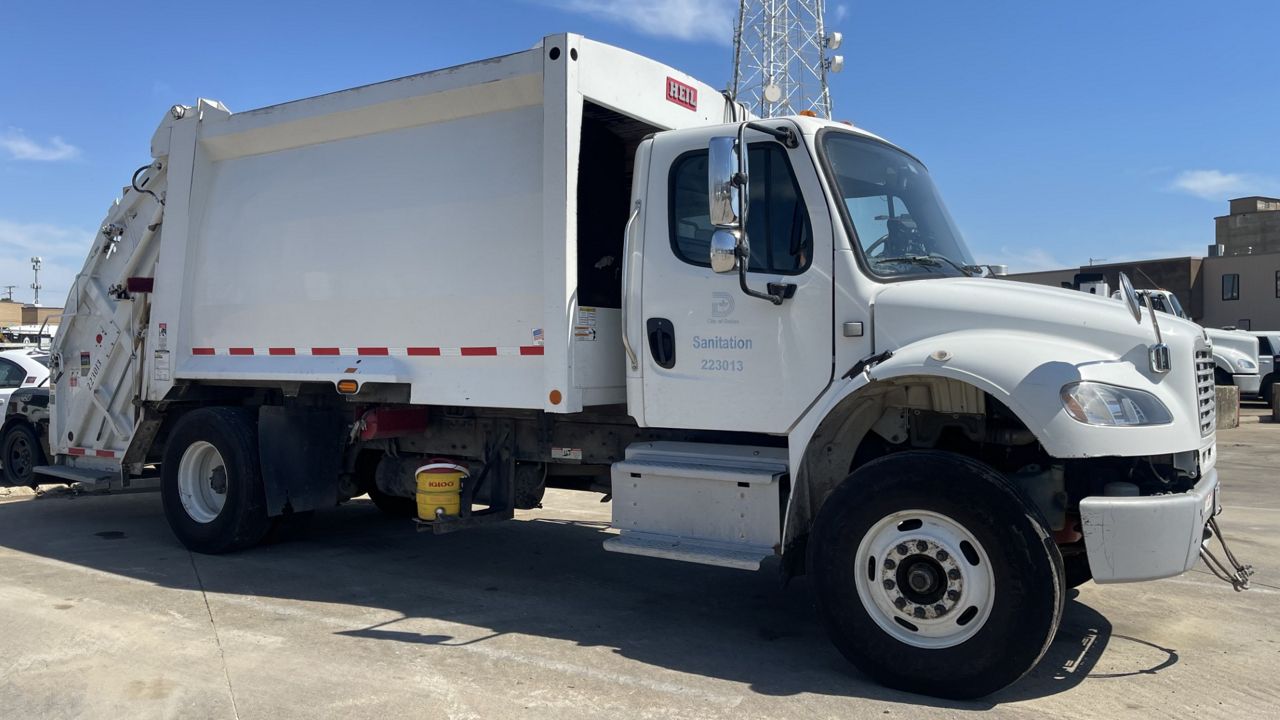
DALLAS — The City of Dallas is using artificial intelligence to help identify potential code violations in neighborhoods, with cameras mounted on trash trucks scanning for issues such as overgrown lots, graffiti and illegal dumping.
The program is drawing support from some residents, who say the technology could help the city improve code compliance while reducing the need for door-to-door inspections.
Tyiesha Ross, a Dallas resident, said she believes the approach could be more efficient than traditional enforcement methods.
“I think that’s cool. It seems to me that that would be more helpful than wasting the people’s time,” Ross said.
Ross also said she supports using AI for specific purposes that benefit the community.
“When it’s used for things like that, I feel like it’s okay,” Ross said.
Tyrin Jackson, another Dallas resident, said he is comfortable with technological advancements and supports the use of AI.
“I’ve never been too afraid of the advancement of our technology,” Jackson said.
The cameras are mounted on city trash trucks and scan neighborhoods for visible issues, including graffiti and abandoned shopping carts. City Detect, the company behind the technology, uses computer vision to identify potential problems that may require attention from city staff.
“As far as AI goes, I’m pro-AI,” Jackson said.
However, a property flagged by the system does not automatically result in a fine. City staff review each detection, and property owners may receive a courtesy notice giving them an opportunity to address the issue.
The courtesy notices do not carry fines. Before a citation can be issued, a code compliance officer must inspect the property in-person.
Ross said the technology could help streamline identifying and addressing violations.
“Instead of having somebody to go out there and be like compliance, compliance, compliance to door-to-door with the camera, they could do it just like that and go and do it and be done with it,” Ross said.
For Jackson, the effectiveness of the program depends on whether the technology helps residents and the city maintain neighborhood standards.
“I feel like if it does help the city to keep our compliances up to par and make sure that we’re doing our part to look like the best city, then, yeah, I’m, I’m okay with that,” Jackson said.
Ross said she believes the city should embrace technology that could help improve its operations.
“Everything else is already technology and everything else, so why not?” Ross said.
According to the city, the program has identified over 20,000 potential issues and resulted in about 1,500 courtesy notices being sent to property owners.
City officials say approximately 80% of property owners address the reported concern after receiving a notice, without requiring further action from the city.
The program remains in its early stages, and city officials say more data is needed to measure its long-term impact.