
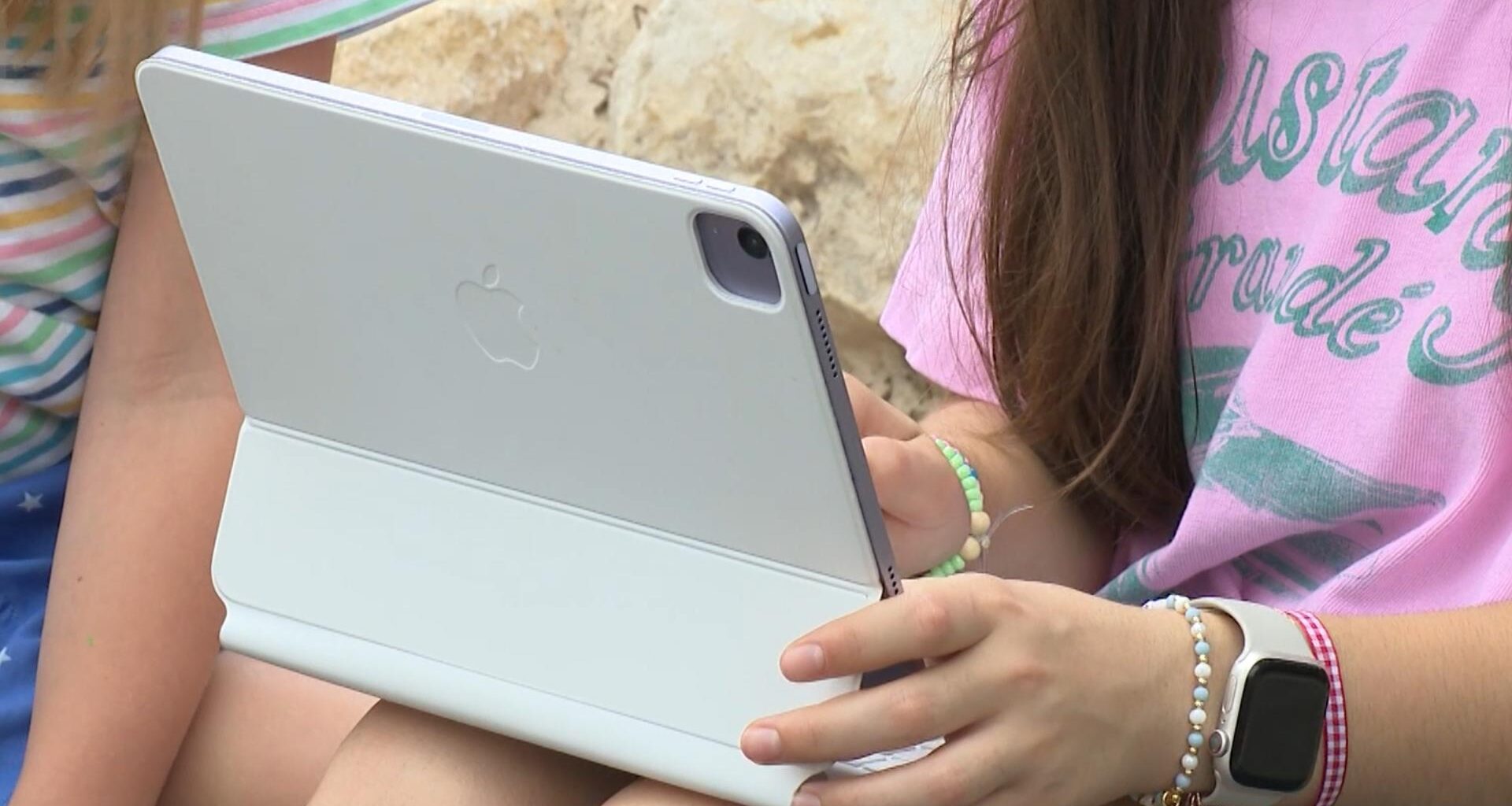
A coalition of parents and educators is pushing for stricter screen time limits, fewer student devices and changes to how technology is used in AISD classrooms.
AUSTIN, Texas — A group of Austin Independent School District parents and educators is calling for changes to classroom technology use, submitting a petition with more than 500 signatures to district leaders.
The coalition, Schools Beyond Screens–Austin, submitted the petition and a set of policy recommendations to the Austin ISD Board of Trustees and superintendent on Oct. 8.

This story continues below.
The group wants to reduce screen time, limit student device use in younger grades and establish stronger safeguards for student privacy. They say their goal is not to eliminate technology from classrooms but to ensure it supports learning rather than replacing traditional teaching methods.
“It’s like an aggregate issue of how screens have, you know, crept their way and infiltrated so many parts of, you know, our lives, but more importantly, our children’s lives, and our children didn’t get a choice when it comes to the screens to which they’re being exposed,” said Flavia de la Fuente, an Austin ISD parent.
What parents are asking for
The petition outlines 10 requests aimed at making technology use more intentional and developmentally appropriate. Among the proposed changes are to remove routine student devices from early education through second grade, with exceptions for required assessments. For older students, parents want to establish enforceable screen time limits by grade level and reduce permanent one-to-one device assignments in grades third through eighth.
The group also wants to pause student-facing generative AI tools until independent research demonstrates they are safe and effective for learning. They are hoping to strengthen protections for student data, provide families with greater transparency and establish meaningful opt-out options.
The coalition is pushing for traditional learning by prioritizing printed materials, handwriting, reading and hands-on instruction while protecting screen-free time during lunch, recess and other breaks.
The group said its recommendations would preserve assistive technology and accommodations for students with disabilities.
Amy Whiteaker, with Schools Beyond Screens–Austin, who is also an AISD educator and parent, said families are concerned about how much time children spend on devices both at school and at home.
“As parents, I think what we have seen a lot at home is our kids are glued to their screens. And it’s been a problem when they’re at home in their free time. But what’s worse is when they’re spending several hours on a computer at school and then coming home and doing some of their free time on a screen, and then furthermore, doing more homework at home on another device,” Whiteaker said.
Whiteaker said the coalition wants to put teachers and students back at the center of classroom instruction.
“I think our biggest focus is our returning learning to be student-centered and human-centered,” Whiteaker said.
De la Fuente said her concerns go beyond how much time students spend using devices. She believes schools should also consider what children gain from face-to-face instruction.
“None of the stories that I hear from kids are about how amazing a certain software program is. It’s about interacting with their teacher and about their classmates, and how that is what made a difference in their day,” De la Fuente added.
What has Austin ISD said about classroom technology?
Austin ISD has already publicly announced plans to reduce its reliance on student devices.
In June, the district announced it would move away from its universal one-to-one student device model as part of its plans for the 2026-27 school year. The district said the change was intended to minimize screen time and prioritize interactive instruction.
The announcement also outlined plans to develop guidelines for device access based on students’ needs and developmental appropriateness.
However, it remains unclear how extensively those changes have been implemented.
KVUE reached out to Austin ISD to ask about its current classroom technology policies, how the district monitors student device use and whether officials are considering additional changes. The district had not responded as of publication.
Whiteaker said she welcomed the district’s previously announced plans but believes more needs to be done.
“It was a great start, but it needs to go so much further,” Whiteaker said,
Schools Beyond Screens-Austin plans to attend the Austin ISD Board Information Session on Thursday, Oct. 15.
The coalition is requesting a formal opportunity to present its recommendations, a public response from district leaders and a timeline for possible policy changes.
The group said its petition remains open for additional signatures.