
Rice University is expanding its academic and research focus on artificial intelligence with 75 faculty hires, a new master’s degree and a dedicated space for industry collaborations in the Ion District, school officials announced Tuesday.
The AI-focused initiative comes during a period of massive growth for Rice, which has already employed more than 200 new tenure-track faculty since 2021 and added 1,500 students to its enrollment. Rice has declared a goal to be a hub for “responsible AI” in its 10-year strategic plan.
The private university near the Texas Medical Center is almost halfway through the AI-focused hiring effort, having brought on 35 such faculty in recent years. The hires are expected to cover disciplines including engineering, computing, natural sciences, social sciences, music, humanities, arts and business, according to a university news release. And they’ll focus on one of four areas: the foundations and theory of AI; its applications in energy, the environment and resilience; its applications in health; and responsible AI, including ethics and its impact on society.
“As Rice grows, we are being intentional about where we invest and how we build,” university President Reginald DesRoches said in a statement. “AI is one of the defining technologies of our time. By bringing together exceptional faculty, a strong interdisciplinary research community, world-class facilities and Houston’s extraordinary innovation ecosystem, Rice has an opportunity not simply to participate in the AI revolution but to help define its future.”
Rice has already embraced AI in several parts of the university, including a Bachelor of Science in AI that launched in fall 2025.
Rice is a member of the NIST Artificial Intelligence Consortium. It also operates the Ken Kennedy Institute for Responsible AI and Computing for Global Impact — a multidisciplinary consortium of 140 faculty members — and the Rice AI Hub to guide students and faculty in their own AI use.
School officials say their existing and future efforts will strengthen research on both the technical and human sides of AI. Those could include advancements for better health outcomes as well as research on AI’s effects on workforce dynamics and public policy.
The university’s new master’s program in AI will open in fall 2027, targeting recent computer science graduates or professionals with technical backgrounds, Rice officials said. The degree program is focused on developing AI engineering skills needed to design and deploy AI systems, according to the university website.
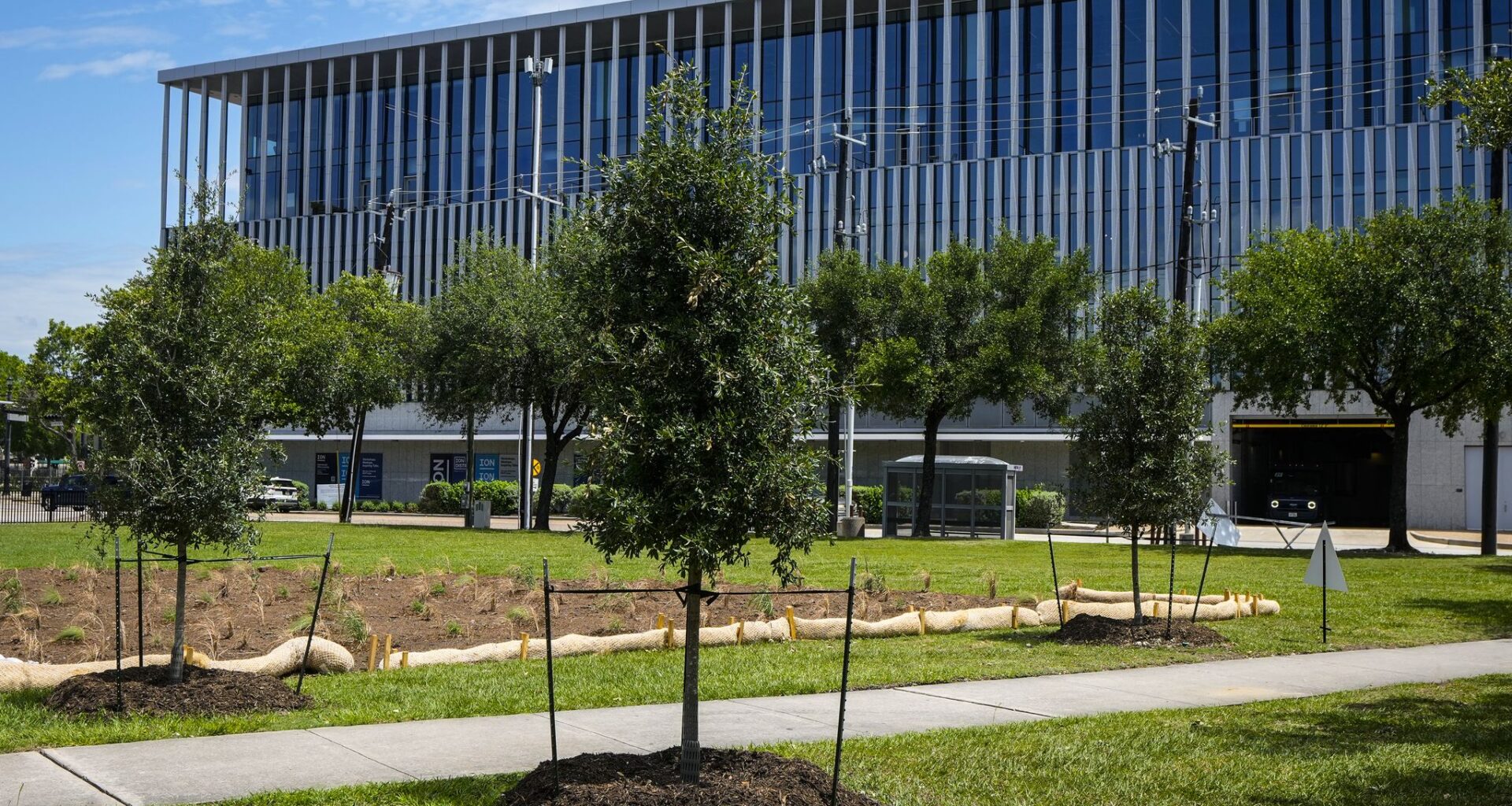
Rice will also start construction this fall on a 200,000-square-foot research and innovation hub called The Arc. Located in the Ion District, it will include office and lab space for research and collaboration with industry partners, according to the university. The Arc will house the “AI Foundry” to foster those partnerships.
“Integrating artificial intelligence across our scientific disciplines allows us to accelerate discovery in ways that were previously unimaginable,” Tom Killian, dean of the Wiess School of Natural Sciences, said in a statement. “Whether we are modeling complex molecules to discover new cancer therapies or analyzing massive datasets to find habitable planets beyond our solar system, these advanced tools empower our researchers and students to tackle some of the most critical foundational and applied challenges in science today.”