
HOUSTON, Texas (KTRK) — The CDC reports that cancer is the leading cause of death for Hispanics and Latinos in the United States.
The data show that Latinas have the second-highest rate of dying from cervical cancer, and barriers to health care are part of the problem.
This Hispanic Heritage Month, ABC13’s Daniela Hurtado is looking into those barriers and the help that’s already available in the Houston area.
“Everybody is asking me if I’m ok,” cancer survivor Juana Reyes said.
Before the worry, Juana Reyes’ story started in May 2016. She was nine months pregnant, expecting her miracle baby, a child she and her husband had long prayed for.
“It was his first child, so he was excited. I was so excited as well because at the beginning I struggled to get pregnant,” said Reyes.
Mia was born strong and healthy that month. But a week later, unexpected news came.
“He tells me, it’s cervical cancer,” Reyes said.
Reyes heard a doctor utter a six-letter word no one ever wants to hear: cancer.
“The whole world went down on me that day. I just had my newborn baby. I had my two other kids, and I want to see them grow,” Reyes said. “Fear is so strong – that paralyzes you.”
Juana’s worries began almost immediately.
“I don’t know how I’m going to afford this,” Reyes said. “I would just go in my room and cry because I didn’t want to worry my family.”
Research from the American Cancer Society finds that Hispanic women and Latinas have 36% higher rates of cervical cancer than white women.
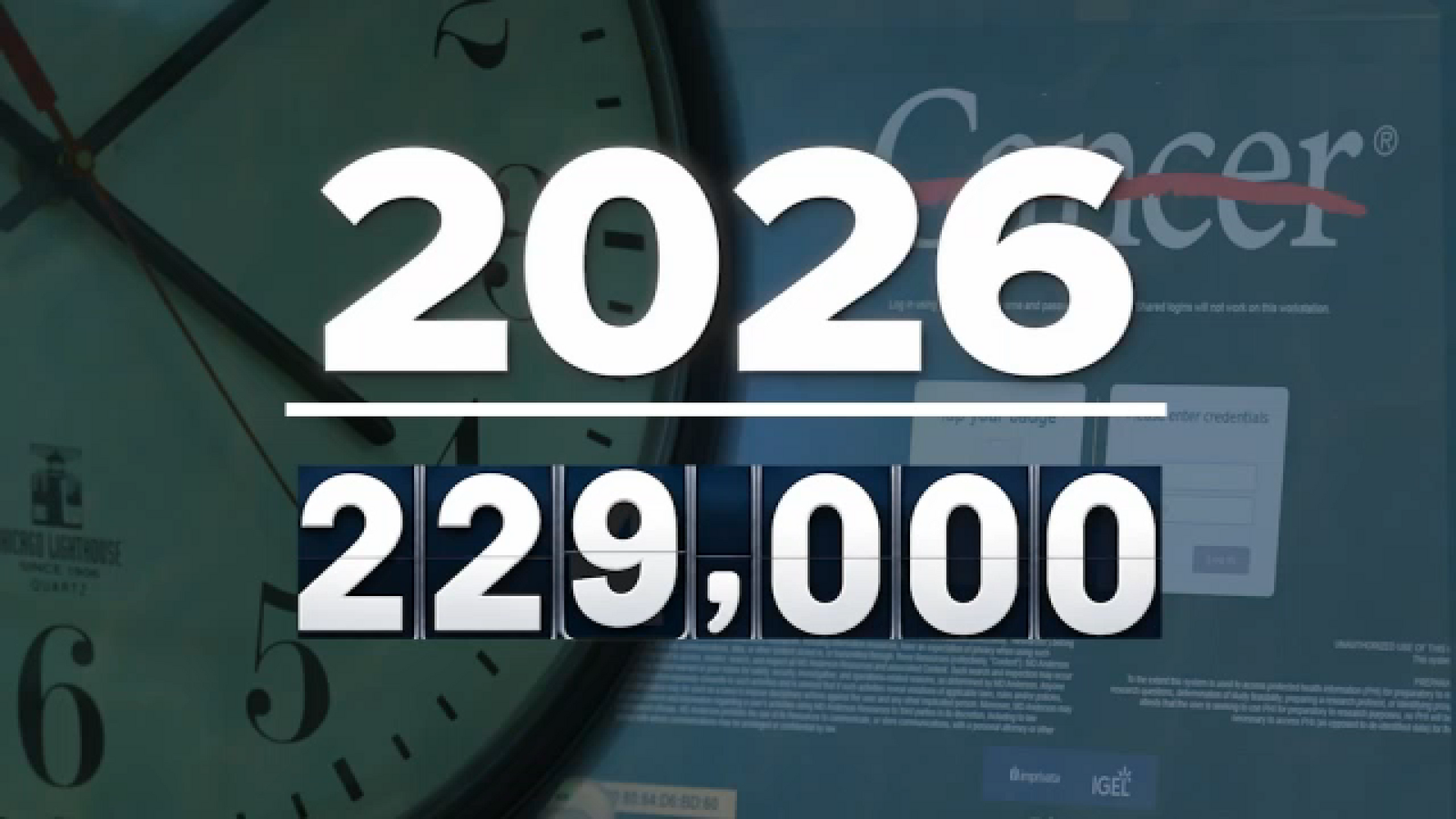
Cancer cases are also rising overall for Hispanic women, according to the data, with an estimated 229,000 cases among Hispanic people in 2026.
“I struggled a lot. I said, ‘Why me?'” Reyes said.
“I put my head up, and I said, ‘God, I’m just going to hold your hand. I’m going to trust you; just don’t let me go.”
According to a report from Planned Parenthood, cervical cancer can be tied to lower rates of routine Pap smears and screenings, often because of the lack of medical insurance.
“At that time, I just had the insurance for my pregnancy… so I was telling the doctor, ‘I don’t have insurance,’ and he was like, ‘Do not worry I’m going to call my friend,'” Reyes said.
She says the friend, UT Health Doctor Joseph Lucci, changed her life and provided free care through something called the PAP program.
“Like PAP smear, but also PAP – prevenir, ayudar, poder. We can prevent this; we’re here to help, and you have the power to do something about it,” Reyes said.
Juana underwent six weeks of aggressive chemo and radiation treatments, all while being postpartum.
“Seeing my daughter I couldn’t hold because of radiation,” Reyes said. “That broke me.”
This September, marked 10 years in remission, and now Juana’s story is helping others through the PAP Project.
“Our goal of the project is to prevent cervical cancer, and in doing so we’re not just providing Pap smears – we’re also providing…specialist care of colposcopy and LEEP, loop electrosurgical excision procedure, diagnoses and management of cervical pre-cancer so it doesn’t become cancer,” UT MD Anderson Gynecologic Oncologist Dr. Abigail Zamorano said.
Monthly pop-up clinics run by volunteer health care providers. The grant-funded program includes monthly pop-up clinics run by volunteer health care providers.
“We don’t ask them to pay anything; we don’t ask them about insurance status or billing – we just take care of them,” Dr. Zamorano said.
She says they’ve helped thousands of women in the Houston area. Their team of volunteers does extensive community outreach at places like churches, washaterias, and even grocery stores to inform people about upcoming clinics and how to sign up.
“Running away from the problem doesn’t fix it,” Dr. Zamorano said.
She told ABC13 that the PAP program was originally designed to reach the Hispanic population in Houston since they realized the struggles of some who couldn’t afford screenings and didn’t have insurance.
But program organizers say it isn’t limited to Hispanics.
Doctor Zamorano says this program has a special place in her heart.
“I would love not to have to treat cancer. I would love to prevent it before it even happens,” Dr. Zamorano said.
Reyes now gives back through her time because of all the help it provided her.
“I didn’t understand it, but when the organization was introduced to me, I was able to be a part of something bigger than what I thought. That’s when I realized it was my purpose in my life,” Reyes said.
It’s a purpose for a greater purpose: helping others feel less alone.
The Houston PAP Project provides no-cost cervical cancer screening to women 21 years old and up. The program also provides no-cost follow-up care for abnormal results, including treatments. There are also appointments in English and Spanish.
The Houston PAP Project can be reached at 713-259-0829 or 281-507-7120 if you’d like to learn more or make an appointment.
UT MD Anderson has now announced a statewide plan to eliminate cervical cancer in Texas. Representatives there say they have built a five-year Texas Lone Star Cervical Cancer elimination plan. Eliminating cervical cancer, according to them, would mean having fewer than four new cases per 100,000 women per year.
In Texas, there are 9.5 new cases per 100,000 women per year. Nationally, it’s 7.5.
“The Lone Star Cervical Cancer Elimination Plan gives us a shared roadmap to vaccinate more of our children, screen more of our women, and make sure every abnormal result leads to care. With innovations like HPV self-collection and the commitment of partners across the state, elimination is within reach,” Dr. Ernest Hawk, vice president and division head of Cancer Prevention and Population Sciences at UT MD Anderson, said.
They plan to increase HPV vaccination, raise the rate of cancer screening, and add primary HPV testing, timely follow-ups, and diagnostic treatments.
Copyright © 2026 KTRK-TV. All Rights Reserved.