
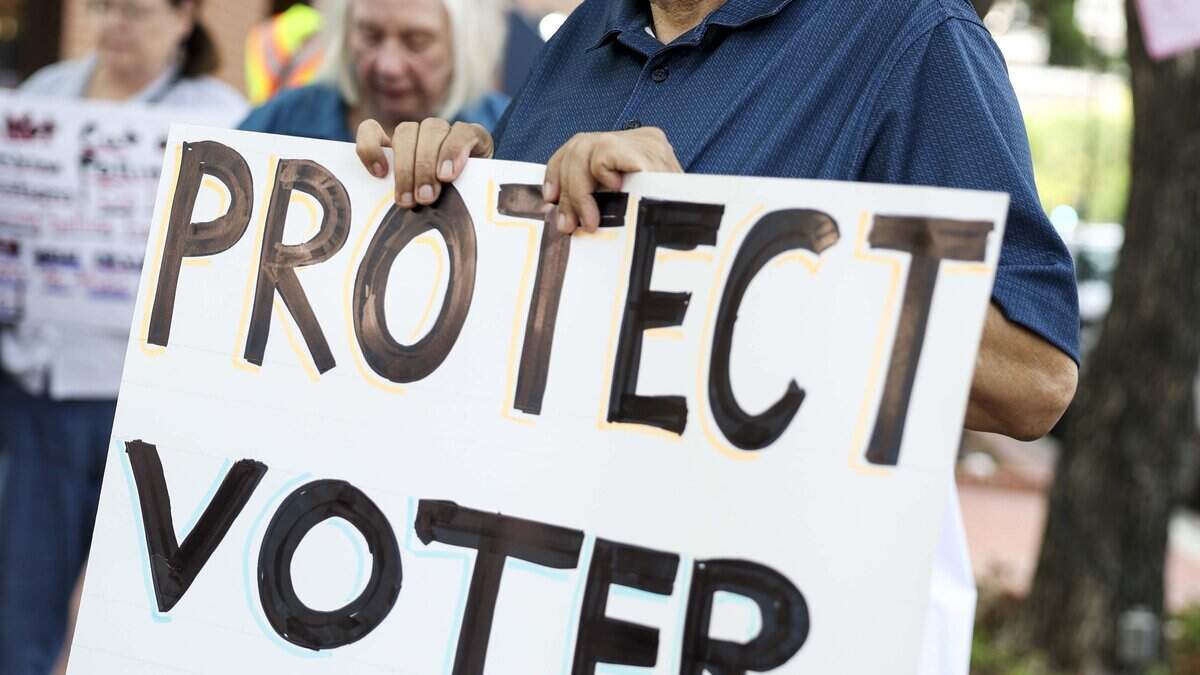
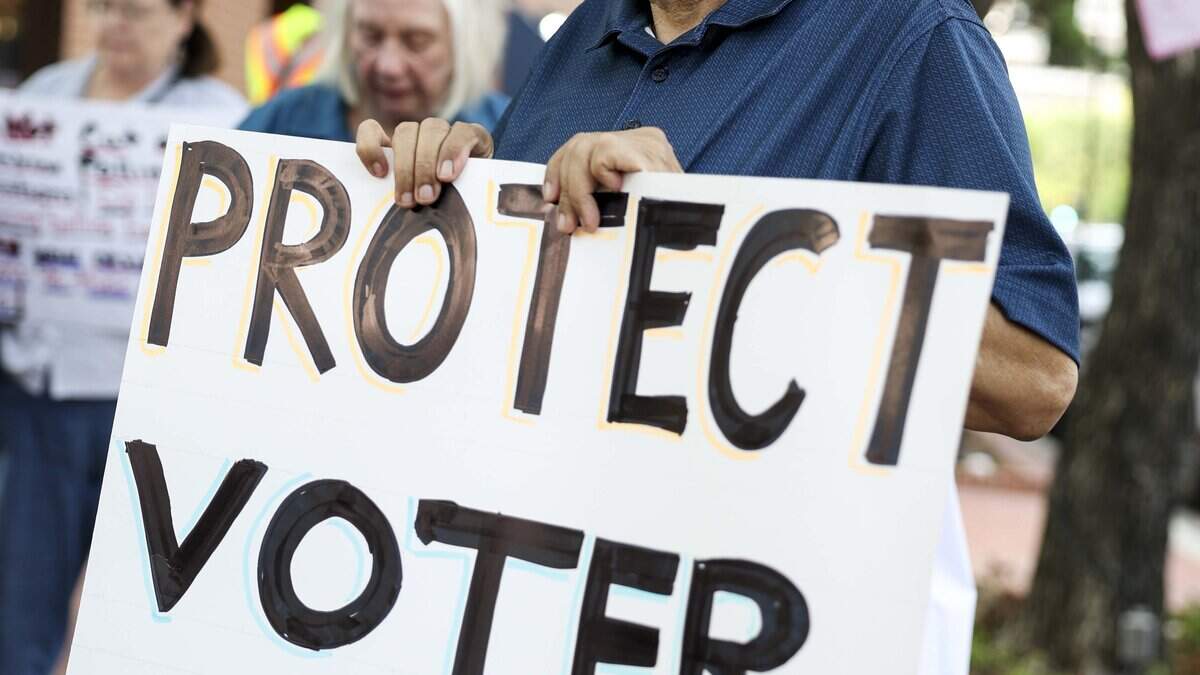
Aftab Siddiqui with the Peace and Justice Center protests outside of the Tarrant County Commissioners Court against the proposed cut of polling places on Tuesday, Aug. 4, 2026 in Fort Worth.
Abigail Dollins
Fort Worth Star-Telegram
Tarrant County officials will not have to reinstate polling locations that were recently eliminated for the Nov. 3 midterm election after a district judge denied a temporary injunction request Tuesday, Oct. 13.
Earlier this month, four plaintiffs sued Tarrant County Judge Tim O’Hare, county commissioners Matt Krause and Manny Ramirez and Elections Administrator Clint Ludwig after commissioners decided to cut 92 of the 316 county polling sites that were used in the 2022 midterm election.
County commissioners Roderick Miles and Alisa Simmons opposed that decision, which came down in September, and were not named as defendants in the suit.
The plaintiffs were Fort Worth City Council member Deborah Peoples (acting outside her capacity as a city leader), former district judge Maryellen Hicks, Kathleen Hicks and Camille Rodriguez, who is a Fort Worth school board trustee.
Their attorney, Susan Hutchison, asked Tarrant County District Judge J. Patrick Gallagher to sign a temporary injunction ordering the county to reopen some, if not all, of the 92 polling places for election day.
Gallagher denied that request.
No explanation was immediately provided, but Assistant Tarrant County District Attorney Steve Lund, who represented the defendants, argued that it would be difficult, if not impossible, to reinstate polling sites with early voting scheduled to begin Monday.
Over the better part of the day, Hutchison argued the reduction in polling locations placed an unequal burden on Black and Hispanic voters. Peoples testified that all three polling places in the majority-minority 76103 ZIP code, where she lives, were closed.
Peoples acknowledged that this will pose an inconvenience for her, but she said she worried more about voters who didn’t have transportation or who were confused about where to vote given the closures.
Other concerns were raised about the potential for larger crowds at remaining voting sites given the expected high turnout this year. Maryellen Hicks, who is 77, said she worried about standing in a long line on election day given her mobility issues.
Initially, the plan was to cut 140 polling places, in large part to save money, but county commissioners pushed back on that number. After a re-evaluation, Ludwig, the county’s elections administrator, came back with a proposal that eliminated 92 sites.
During Tuesday’s hearing, Ludwig testified that neither he nor other county officials examined the potential impact of the cuts on minority communities. Ludwig said he had spoken about the polling place reductions with the League of Women Voters, but not with organizations representing Black or Hispanic voters.
Estella Williams, president of the Tarrant County NAACP, said no one from the county contacted her organization.
Ludwig also testified that he didn’t employ a methodology to ensure equal access for minority voters when deciding which polling sites to keep and which to drop. He said he looked primarily at voter registration numbers in each of Tarrant County’s four precincts and tried to equally distribute polling sites across each geographic area, prioritizing locations that had seen high voter turnout in past elections and working to ensure polling sites weren’t situated too close together. That last point, he said, was the main directive from Judge O’Hare.
Some of the polling sites used in 2022 were eliminated because they didn’t want to serve as polling locations this year, Ludwig said. Others, he added, had issues in the past that precluded them from hosting voters again.
“I believe the evidence presented to the judge showed that communities of color are being denied access to the polls,” People said after the hearing adjourned.
When reached for comment after the judge’s decision came down, Hutchison pointed out that Gallagher did not rule out discrimination when denying the temporary injunction. She said Ludwig’s testimony “raised serious questions about the process and intent of why these voting sites in predominantly minority areas were eliminated.”
Rachel Royster contributed to this report.

Fort Worth Star-Telegram
Matt Adams is a news reporter covering Fort Worth, Tarrant County and surrounding areas. He previously wrote about aviation and travel and enjoys a good weekend road trip. Matt joined the Star-Telegram in January 2025.