
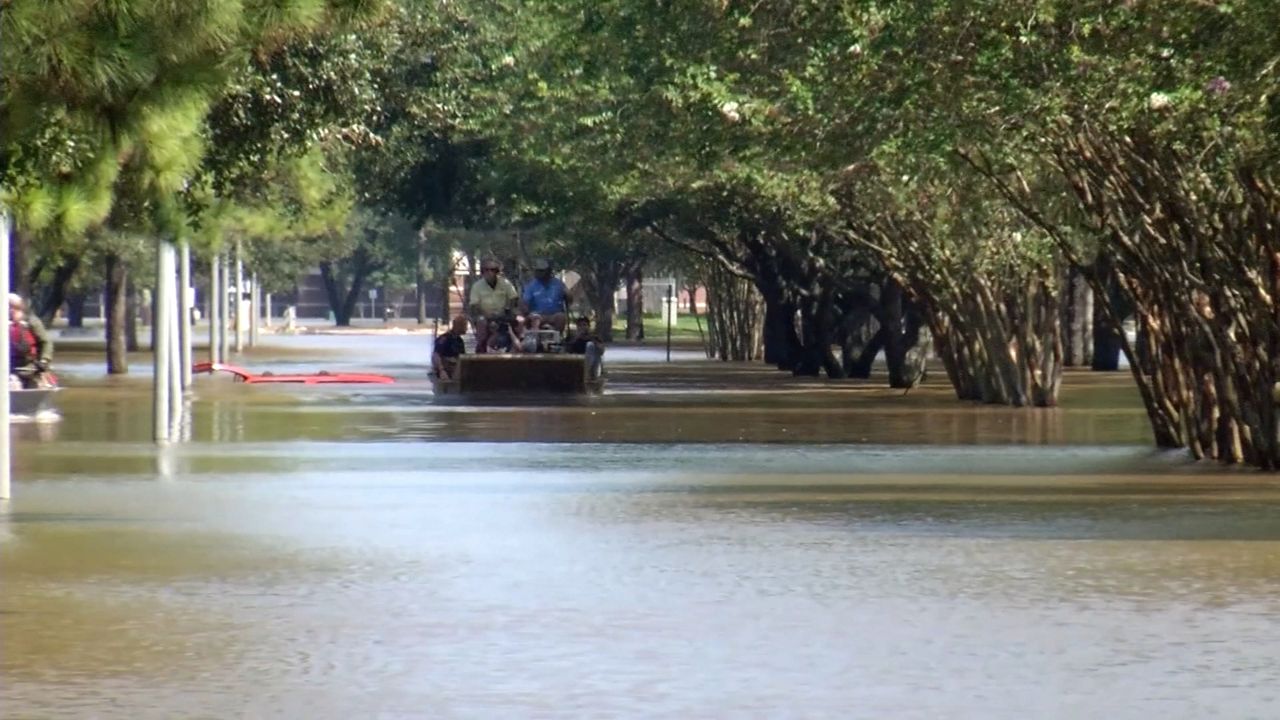
TEXAS — Crime rates may come to mind when considering the safest places to live in the U.S., but a national study shows how well a state is prepared to handle emergencies — like climate disasters — is a major safety issue. Spectrum News looked at where Texas ranks on the list and what Houston-area organizations are doing to promote disaster preparedness.
Devastating storms, flooding and extreme temperatures have generated billions of dollars in losses in Texas over more than a decade, according to the National Centers for Environmental Information. Houston-area organizations like the United Way of Greater Houston are mobilizing ahead of future weather events.
“We hosted a convening with our nonprofit partners that is designed to create a disaster-readiness framework,” said Mary Vazquez, the organization’s vice president and chief impact officer. “In Texas, it’s not a matter of if we will have a disaster. It’s really when we will have a disaster.”
Demand for emergency shelter, food, water and help with evacuations often outpace the resources.
“Over the last 45 years, we have had 28 disasters that affected the greater Houston region,” said Vazquez.
Those disasters include Hurricane Harvey in 2017. With the impact of that storm felt over nine years later, we wanted to know how Texas ranks compared to the rest of the U.S.
We found about 3 million, or 64%, of Harris County residents are more vulnerable to natural disasters than anywhere else in the country, according to the Greater Houston Community Foundation. A study by WalletHub, a personal finance website, puts Texas near the bottom, at No. 48, on the list of the safest states.
“A safe state is one that protects residents from a broad range of risks. It’s not just crime,” said Chip Lupo, a WalletHub analyst. “We compared all 50 states across 52 relevant metrics under five dimensions.”
Lupo said WalletHub compared all 50 states across 52 metrics under the following five dimensions:
Personal and residential safety
Financial safety
Road safety
Workplace safety
Emergency preparedness
WalletHub based the emergency preparedness dimension on national data from the National Oceanic and Atmospheric Administration, which shows Texas leads all states with the highest number of billion-dollar natural disaster events.
“You can’t always rely on [the Federal Emergency Management Agency], the federal government, to come in and basically bail your area out. There has to be a statewide plan,” Lupo said.
Vazquez says United Way of Greater Houston is part of a larger collaborative effort.
“We formed the Greater Houston Disaster Alliance with our partners, Greater Houston Community Foundation, to really develop a coordinated response to help our community recover faster from any disaster that comes our way,” she said.
It’s a framework she says they are sharing across Texas and nationally, relying on public and private dollars to fund more resources and help those in need.
“Our 2-1-1 Texas United Way Help Line is a 24-hour-a-day help line that’s always available,” said Vazquez.
They are also encouraging Texas households to prepare well before a disaster strikes.