
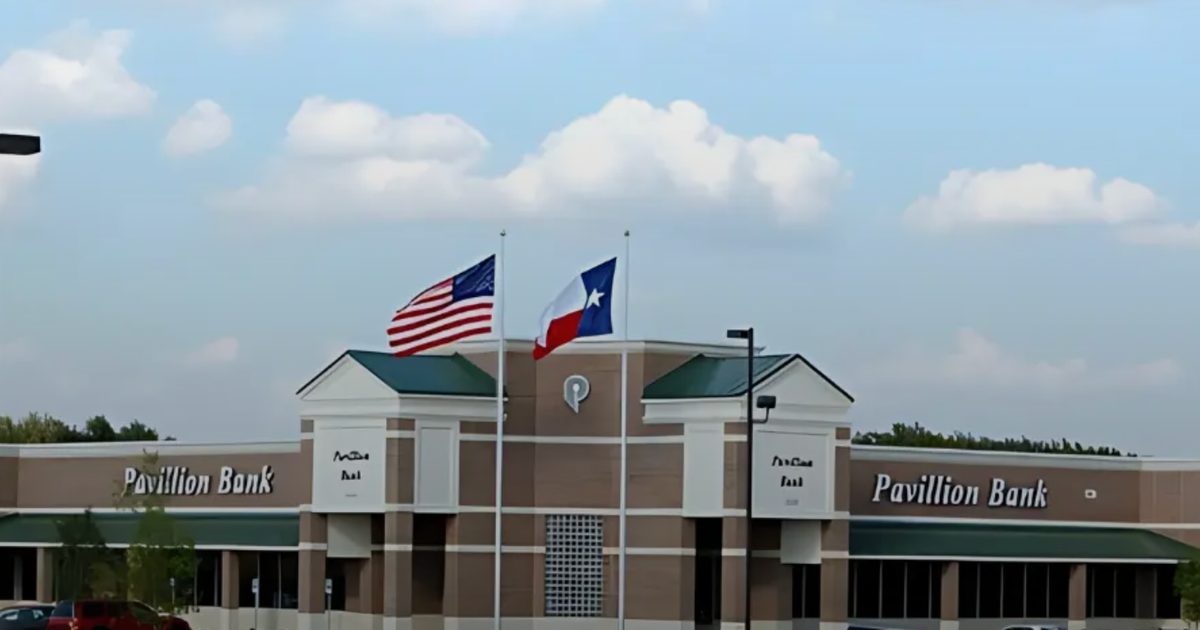
In today’s highly digital world, financial scams have become increasingly frequent and convincing. While many assume scammers primarily target vulnerable populations, such as the elderly, the reality is that anyone, from tech-savvy individuals to experienced business owners, can fall victim.
At Pavillion Bank, protecting customers from financial crime is a top priority. Bank leaders emphasize that understanding how scammers operate and adopting proactive security habits are the most effective ways to safeguard personal and business finances.
What are the most common banking scams today?
Financial scammers often text pretending to be credit card fraud departments or send emails masquerading as vendors, bosses or colleagues. These types of scams are becoming more common along with traditional financial scams like check and debit card fraud.
Pavillion Bank’s Portfolio Manager Andrew Halphen experienced one of these scams firsthand when he received a text message, supposedly from his credit card company, asking if he had made a $200 purchase at a specific store. He replied, “No,” and received a call from a different phone number.
“They asked me about the transaction, and they had limited details of my personal information. [For example], they had the first part of my address and asked me to confirm the second part. Then the red flags started going off [in my head], and I called the 800 number on my credit card. That’s when the credit card company confirmed they would never text me,” Halphen said.
 Andrew Halphen
In business settings, fake email threads trick employees into issuing wire transfers or paying fake invoices.
“There are scams where people are impersonated through their email, text or through artificial intelligence trying to convince the bank to release funds,” said Pavillion Bank President and CEO Brad Rejebian.
Scammers also commonly use AI for voice impersonation, replicating a customer’s voice when calling financial institutions, so bankers might think they are actually speaking to the customer. This is one reason banks perform thorough identity verification when customers call.
“When your banker asks for information to verify your identity and what you’re asking for, it’s not because they don’t trust you, and it’s not because they don’t trust the customer. It’s because they don’t trust the people who try to scam customers,” Rejebian said.
 Brad RejebianHow can you spot fraud before it’s too late?
Scammers rely on rushing you so you act before thinking. Look out for grammatical errors, unfamiliar email addresses, unexpected attachments, out-of-area phone numbers or requests that demand immediate action.
Always remember that Pavillion Bank will never call you out of the blue requesting personal identifying information, such as your Social Security number, driver’s license, birthdate or passwords. If you ever doubt a call or text, hang up and dial the bank directly on a known number.
Pavillion Bank’s Managing Director of Operations Dawn Jackson emphasized the importance of staying calm and applying basic security checks.
“This is the same training that we give to our staff: Slow down and [carefully review] any email that’s pushing you to make a quick decision. It could be a fraudulent email trying to get you to act before you think about what you’re doing,” Jackson said.
To quickly evaluate emails, individuals can use the SLAM framework:
S (sender): Check the email address for any typos or incorrect domains.
L (links): Check destinations by hovering over the URL before clicking.
A (attachments): Never open or download suspicious files.
M (message): Watch for urgency or high pressure.
 What habits and actions best protect your accounts?
Daily vigilance drastically reduces your risk of being scammed. Log into online or mobile banking daily to monitor transactions, and use debit card management features to lock your cards when they aren’t in use.
Practice strong password hygiene by creating long passwords with numbers and symbols, using unique passwords for every account, updating them regularly and utilizing a password manager. Additionally, never share information such as Social Security numbers, driver’s license numbers, or passwords via email or text.
If you click a malicious link or notice an unauthorized charge:
Lock your cards: Immediately freeze your debit/credit card via your mobile app.
Contact your bank: Report the suspicious activity directly so the bank can assist and investigate.
Secure your identity: Change all passwords, run device malware scans and lock your credit.
Notify IT: Businesses should immediately report incidents to their internal IT department.
Fighting financial fraud requires awareness and partnership between customers and their bank. While technology continues to make scams more believable, simple habitats such as slowing down, double-checking senders and monitoring accounts gives you the upper hand. Remember that Pavillion Bank is always here to help keep your information and accounts secure. If anything ever feels wrong or suspicious, don’t hesitate to reach out to the bank directly.
Those interested in learning more about Pavillion Bank can find information here:
Website: https://www.pavillionbank.com/
Phone number: 972-380-0700
Address: 1200 W. Campbell Rd., Richardson
Lobby hours: Monday-Friday, 8:30 a.m. to 4:30 p.m.
 Frequently asked questionsWho do financial scammers target?
While people often assume scammers only target vulnerable groups like the elderly, they use tactics that can also deceive tech-savvy individuals and experienced business owners alike.
What are the most common banking scams today?
Text scams: Scammers text posing as credit card fraud departments to confirm fake charges, then call to steal personal information.
Business email scams: Scammers impersonate insiders to convince employees to move or transfer money.
AI voice impersonation: Scammers use AI technology to copy a customer’s voice when calling banks.
Check fraud: Traditional methods of check washing, check alteration and account number theft.
What is the “SLAM” rule for spotting fake emails?
SLAM is a 4-step checklist to evaluate suspicious emails:
S (sender): Check the sender’s full email address for misspellings or odd domains.
L (links): Hover over URLs to check where the link leads before clicking.
A (attachments): Never open or download unexpected or unknown attachments.
M (message): Watch for high-pressure language demanding immediate action.

The above story was produced by Senior Multi-Platform Journalist Sydney Heller of Community Impact’s Storytelling team, with information solely provided by the local business as part of their “sponsored content” purchase through our advertising team.