
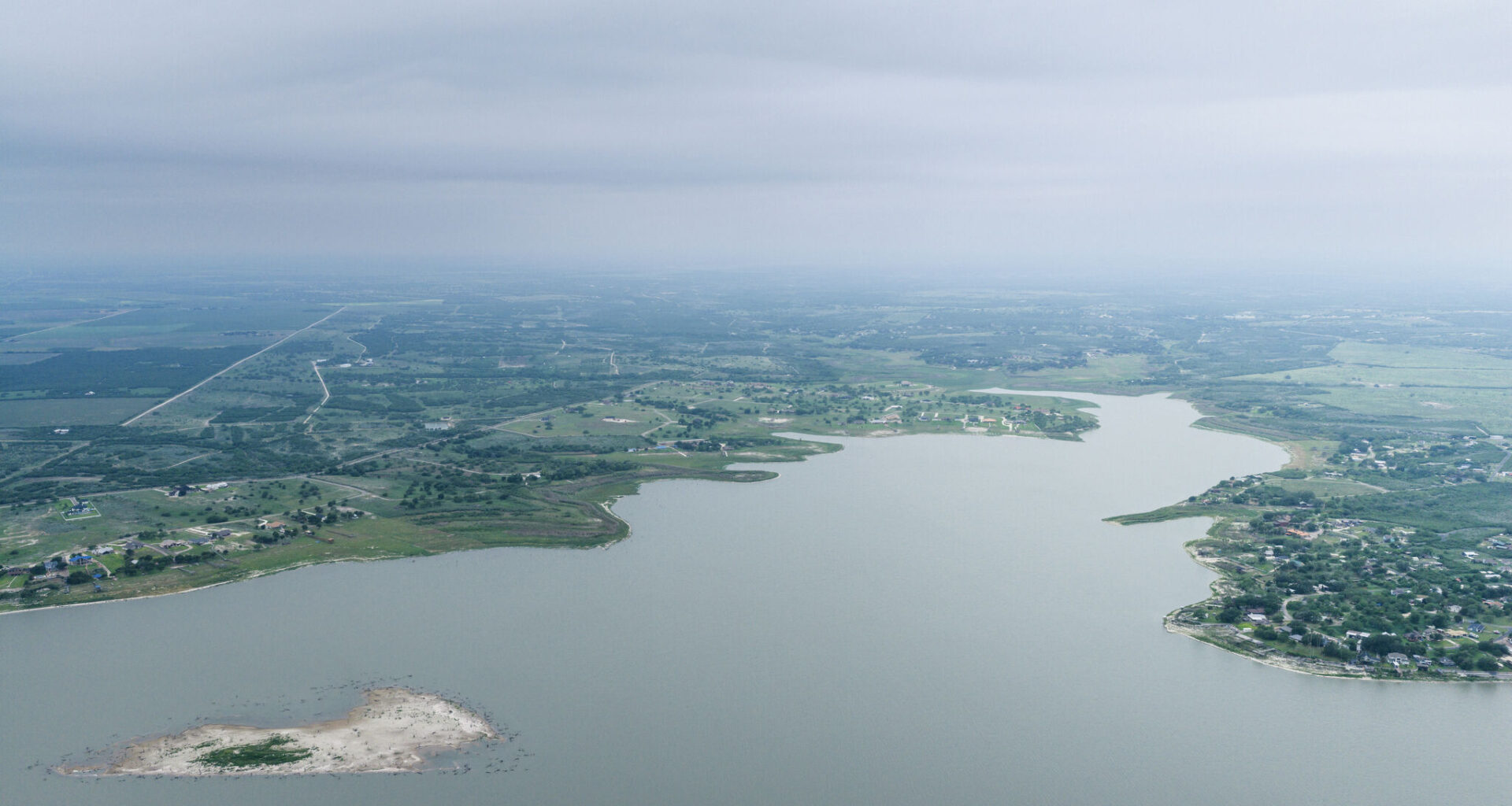
After heavy rains inundated South Central Texas in July, hundreds of millions of gallons of stormwater runoff flowed down the Nueces and Frio rivers to replenish the Coastal Bend’s reservoirs, which had been on the brink of running dry. The sudden influx was enough for officials in Corpus Christi to lift the stringent water restrictions that had been in place since December 2024.
On August 4, Corpus Christi City Manager Peter Zanoni officially lifted Stage 3 restrictions. About three weeks later, as water levels continued to hold steady at the region’s two largest reservoirs — Choke Canyon Reservoir and Lake Corpus Christi — Zanoni further eased restrictions. Since August 25, nearly half-a-million people across seven counties who rely on the city for water have remained under Stage 1 water restrictions. But the two reservoirs are still about as full as they were in August, so why are some water restrictions still in place?
Before the July rains, Corpus Christi had been about a month away from declaring a Level 1 water emergency. That would have marked the moment the city was six months away from being unable to meet the demand for water. And it would have put Corpus Christi on track to becoming the first city in modern-day America to run out of water. While the rains provided a reprieve from the crisis, they did not solve the Coastal Bend’s long-term water woes. And eventually, water levels at the reservoirs will again plummet.
According to Water Data for Texas, a water tracking tool managed by the Texas Water Development Board, Choke Canyon Reservoir, the region’s largest, was about 21.6% full as of Friday, October 16. That’s a decrease of about 3.3% compared to the peak of the August rebound.
Meanwhile, Lake Corpus Christi, which has about two-fifths the capacity of Choke Canyon, was 81.9% full. That’s a nearly 10% drop from the August peak of 91.7%. And the Coastal Bend’s smallest reservoir, Lake Texana, was 87.7% full — down from 100% in mid-July.
In August, Zanoni told reporters that officials expected water levels at Choke Canyon and Lake Corpus Christi to fall below a combined 30% by next spring, but remain above 20% “through the fall of 2027.” Corpus Christi Water, the public utility that manages the city’s water, now predicts that the reservoirs’ water levels will fall below the 30% threshold sometime in April 2027, according to the utility’s online water supply dashboard.
Falling below 30% will again trigger Stage 2 water restrictions, while falling below 20% will trigger Stage 3 restrictions, according to the city’s drought contingency plan.
Yes, Corpus Christi and the Coastal Bend are still at risk of reaching a Level 1 water emergency. However, the July rains, along with several ongoing projects meant to allow the city to diversify its water supply, have pushed that emergency back by at least two years.
“The recent rains have benefited us tremendously and have pushed back this Level 1 water emergency to September of 2028,” Zanoni said in August.