
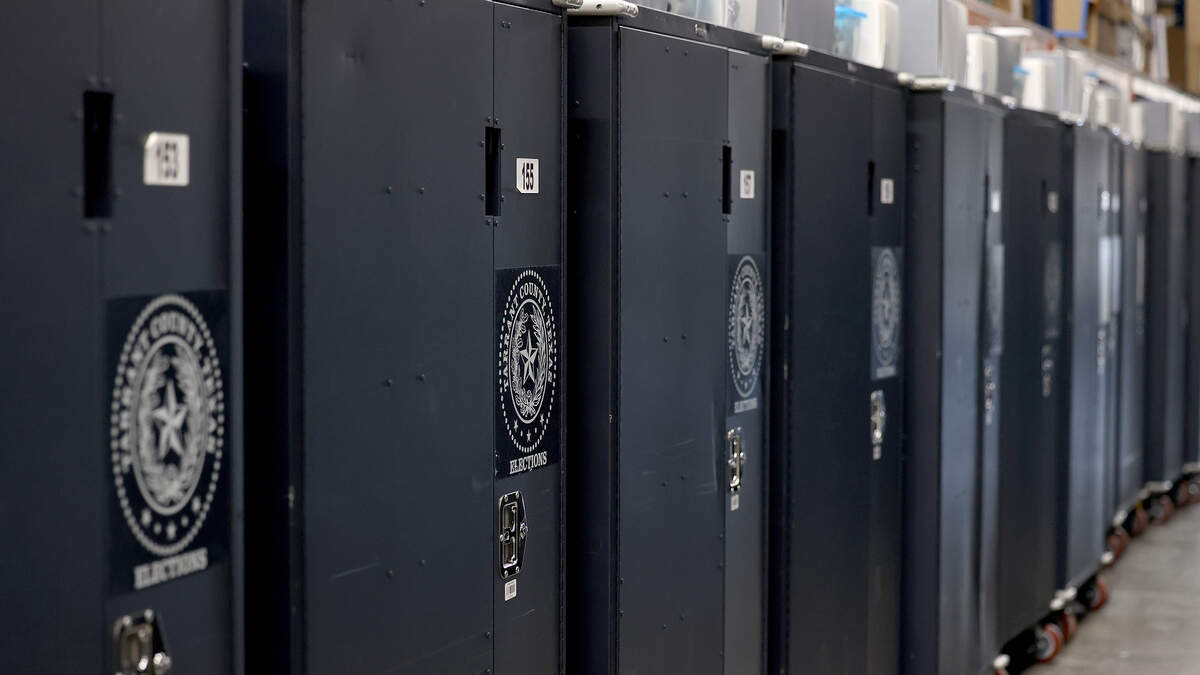
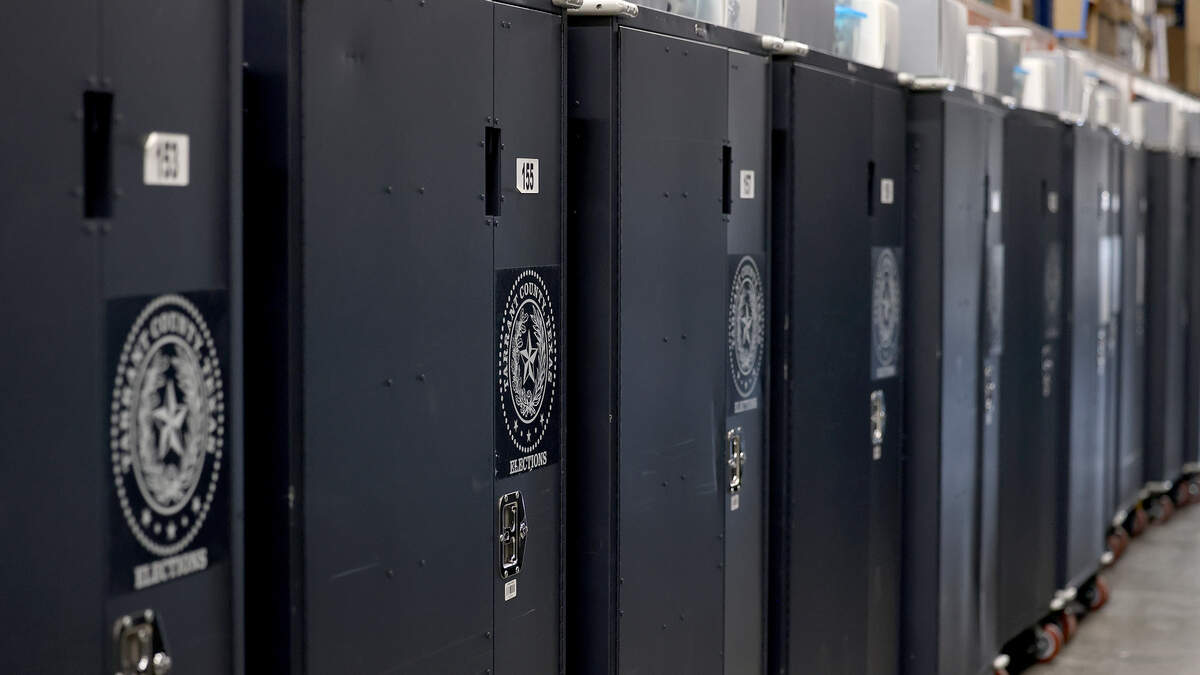
Election cabinets are stored Tarrant County Elections Warehouse on Monday, Aug. 31, 2026.
Amanda McCoy
FORT WORTH STAR-TELEGRAM
In Tarrant County, the Precinct 4 commissioner race is between Republican incumbent Manny Ramirez and Democratic challenger Nydia Cardenas.
Four commissioners sit on the Tarrant County Commissioners Court along with the county judge as the governing body of the county. Precinct 4 largely represents northwest Tarrant including Azle, Blue Mound, Fort Worth, Haltom City, Lake Worth, Lakeside, Pelican Bay, Reno, River Oaks, Saginaw, Sansom Park, Watauga, Westover Hills, Westworth Village and White Settlement.
Election Day is Nov. 3 and early voting runs from Oct. 19-30.
Here’s how both candidates responded to the Star-Telegram’s questionnaire ahead of the election.
Manny Ramirez
City of residence: Unincorporated Tarrant County
Campaign website: www.mannyramirez.org
Best way for voters to reach you: manny@mannyramirez.org
Occupation: Tarrant County Commissioner
Education: Master of Business Administration, Texas Christian University
Have you run for elected office before? Incumbent Tarrant County Commissioner
Please list the highlights of your civic involvement/activism in Tarrant County.
I have dedicated my life to public service in Tarrant County. I served more than 15 years as a Fort Worth Police Officer and as president of the Fort Worth Police Officers Association. During that time, we operated multiple 501(c)(3) nonprofits that put resources in the hands of our most vulnerable community members. Governor Greg Abbott has appointed me multiple times to help lead Texas state agencies, and I currently serve as Chairman of the Board for the Texas Juvenile Justice Department, a billion-dollar agency. In addition to those official roles, I have served on the boards of the Salvation Army of North Texas and Methodist Justice Ministries. For decades I have worked to keep Tarrant County families safe, and it is the honor of my lifetime to continue serving this community as County Commissioner.
Have you ever been arrested, charged with a crime or otherwise been part of a criminal proceeding? If yes, please explain. N/a
Have you been involved in a civil lawsuit or bankruptcy proceeding? If yes, please explain. N/a
Who are your top three campaign contributors?
I am proud to have thousands of supporters who have provided financial contributions to our campaign. My top three donors are all successful North Texas business owners who have been outstanding members of our community for decades.
Why are you seeking this office?
Tarrant County deserves leadership that focuses on producing real results for our community members. We are proud of the work we have done over the past three years to position Tarrant County as one of the most efficient and effective local governments in America. I am running for re-election because I love this community. My wife and I are raising our three young daughters here, and I want Tarrant County to remain one of the greatest places in the world to live, work, and raise a family.
If elected, what would your top 3 policy priorities be?
Our priorities are clear: public safety, better roads, and lower taxes. We have made historic investments in Tarrant County law enforcement, including a new training academy and wage increases that make our deputies among the highest paid in the state. Crime is down, and staffing is the highest it has been in a decade. I will keep prioritizing the public safety workforce that protects our communities. As President of the Tarrant Regional Transportation Coalition and a member of the Regional Transportation Council, I have helped secure more than $500 million in roadway investments. Working with TxDOT and federal partners, we have accelerated major projects by providing local match funding to get them shovel-ready. We will keep turning that investment into roads delivered on the ground. For the past three years we have lowered taxes on Tarrant County residents. We will continue cutting taxes and reducing barriers to homeownership.
How will you measure your success as commissioner?
Success in any leadership position should be measured by the impact you have on someone’s life and the value you create for others. By staying focused on our priorities, we are improving daily life for Tarrant County residents. By adopting policies that have strengthened public safety and helped reduce the crime rate by more than 10%, we are holding criminals accountable and ensuring fewer of our neighbors are victimized. By bringing hundreds of millions of dollars in road and bridge improvements, we are easing congestion so people spend less time in traffic and more time with their families. By cutting taxes and government waste and unnecessary spending, we are getting government out of the way and making it easier for Tarrant County families to afford the rest of life. In short, the measure of success is how much value we add back to the daily lives of our communities.
Why should voters choose you over your opponent?
The office of County Commissioner in Texas is an elected executive position, not simply a representative role. Commissioners are directly accountable for multi-million-dollar budgets and the management of hundreds of employees. Over the past three years, we have run one of the most efficient and effective Commissioners offices in Texas: delivering and maintaining roads and bridges, and leading a disciplined, motivated workforce. Before my election as County Commissioner in 2023, I built and operated successful businesses that created hundreds of jobs for Texans. I also served more than 15 years as a Fort Worth Police Officer and as president of the Fort Worth Police Officers Association, representing roughly 2,000 members. For decades I have worked to keep Tarrant County families safe. It is the honor of my lifetime to continue serving our community as your County Commissioner.
What is the main issue facing Precinct 4? How do you plan to resolve it?
The main issue facing our community is affordability. Residents are dealing with mounting inflation and costs that affect their daily lives. In Tarrant County, we are addressing these challenges by cutting taxes and reducing the cost burden on our residents. We are focusing on the core functions of government: public safety, improved infrastructure, and cutting red tape. For the economic pressures we cannot control on our own, we are partnering with private businesses and state and federal leaders to bring more resources to our communities. We also have a remarkable network of nonprofits that provide assistance to seniors and our most vulnerable neighbors.
Should the county redistrict following the 2030 census? Why or why not?
The redistricting process that the county went through in 2025 was specifically for County Commissioners precincts. We also have precinct boundaries for Justice of the Peace and Constables that we did not evaluate. In 2030 I believe we should evaluate the population balance between each of those precincts and make a decision at that time. We may be required by law to redistrict if the census data shows that we must.
How should the county and hospital budgets be run?
County Commissioners Courts in Texas are constitutionally an extension of the State of Texas’ authority. We should operate a budget that prioritizes the core functions of government rather than pursue unsustainable growth.Each of the past three years I have voted to lower taxes for Tarrant County residents and reduce our operating budget. We achieved this by focusing strictly on the core responsibilities of county government. My county budget priorities are simple: improve public safety, improve our roads and bridges, and limit the tax burden on our citizens. As for the JPS Hospital budget, we should trust the Board of Managers and hospital leadership to provide their recommendations and priorities. We must trust those experts to tell us what they need to continue delivering the world-class service JPS is known for. I was born at JPS, and I will always work to ensure they have the resources necessary to serve our communities.
What is your philosophy on setting the tax rate?
My philosophy on setting tax rates is that tax dollars belong to the citizens of Tarrant County. Any tax should be limited to what is absolutely necessary to perform the basic functions of county government.We should always strive to keep the tax rate below the no-new-revenue rate. The budget should grow only when growth in the tax base requires additional county services, not through higher rates that place a heavier burden on homeowners and working families.
Nydia Cardenas
City of residence: Fort Worth
Campaign website: Www.vote4nydia.com
Best way for voters to reach you: Vote4nydia on all social media; info@vote4nydia.com
Occupation: Leadership coach and organizational development consultant
Education: Bachelor of Science in Mechanical Engineering from Stanford University and a Masters in Business Administration at the University of Michigan
Have you run for elected office before? First time
Please list the highlights of your civic involvement/activism in Tarrant County.
I learned to be involved in my community at a young age. My high school service earned me recognition as Fort Worth’s Young Woman Volunteer of the Year. Those experiences taught me that leadership means weaving people together and strengthening bonds.
As co-founder of the 817 Gather, I have helped lead Fort Worth coalitions to get city council to initiate a 90-day moratorium on data centers and restore public comment at every meeting. I am actively involved in the People’s Commissioners Court which has fought for polling locations and to end the deaths in the county jail.
I have served as an election clerk since 2020 and participated as a poll watcher and ballot board observer, spending over 50 hours observing the processing of mail-in ballots.
I am running because I know firsthand that civic engagement works. When leaders listen, when communities organize, and when government is held accountable, we build stronger and more resilient communities.
Have you ever been arrested, charged with a crime or otherwise been part of a criminal proceeding? If yes, please explain. No
Have you been involved in a civil lawsuit or bankruptcy proceeding? If yes, please explain. No
Who are your top three campaign contributors?
Walter Horton
Ann Zadeh
Mariame Bahmane
Why are you seeking this office?
Over the past year, I’ve consistently attended Commissioners Court meetings. I saw a powerful body making consequential decisions with limited accountability, alongside a culture of fear among county staff who are discouraged from speaking openly with their expertise. I realized that meaningful change requires new leadership. I’m running to change whose voices shape our policies: for too long, decisions have been driven by wealthy interests while the people most affected are shut out. I want to rebuild trust in county government and ensure residents know their voices matter. Tarrant County manages an $820+ million operation, and this role requires someone who can navigate complex systems, improve organizational culture, and demand accountability. My background as an engineer, business advisor, and community builder has prepared me to lead with rigor, humility, and a willingness to listen.
If elected, what would your top 3 policy priorities be?
1 | MAKE THE ESSENTIAL MORE AFFORDABLE
I’ll advocate for fair property taxes so we can increase healthcare access and invest in child care. Homes under $500,000 were taxed at 88 – 105% of their value while homes over $1M were taxed at 70%. The future we deserve is possible when everyone pays their fair share.
2 | A GOVERNMENT THAT WORKS FOR YOU
I’ll protect your voting access and stop the pay to play politics that is the norm in Tarrant County. Closing 30% of polling locations is unacceptable. You deserve a government that listens and respects your input. Democracy should serve residents, not donors.
3 | SOLUTIONS ROOTED IN COMPASSION, NOT CRUELTY
I’ll fight for independent oversight of the jail while expanding mental health and community prevention programs. Tarrant County sends the most young people to state prison. Mentorship costs $311 a week, detention $2,000+. Compassion and care produces safety and savings.
How will you measure your success as commissioner?
Success means both measurable outcomes and meaningful shifts in how county government operates. Quantitatively, I’ll track whether we reduce preventable in-custody deaths, lower youth incarceration, keep families in their homes amid rising property values, and increase voter access and participation. I’ll measure whether constituent concerns are being resolved, not just acknowledged.
Qualitatively, success means residents feel heard and respected, and county staff feel safe sharing their expertise without fear of retaliation. It means public input demonstrably shapes policy, with transparent documentation showing how decisions were influenced.
Success also requires collaboration. I will work with colleagues to prioritize residents, build coalitions, and solve problems productively.
Ultimately, success means the government works for everyone and accountability is proven through results people can see and feel.
Why should voters choose you over your opponent?
I will center community input in my decision-making. My opponent has held one public meeting in Precinct 4 in the past 18 months and did not attend it himself. I will host community conversations across our precinct, because government should come to residents, not expect them to come downtown.
As the former president of the Fort Worth Police Officers Association, my opponent’s job was to advocate for his fellow officers. As commissioner, his job is to be the best steward of our tax dollars. Instead, 82 people have now died in our jail, Tarrant sends more young people to state prison than any county in Texas, and he has refused to question any of it. In 18 months attending Commissioners Court, I have rarely seen him ask a question.
As your Commissioner, I will protect and respect the dignity of every resident, no matter how they look, what they believe, or where they came from.
What is the main issue facing Precinct 4? How do you plan to resolve it?
The main issue is growth that raises costs without strengthening neighborhoods. Door to door, homeowners tell the same story: property taxes keep rising while our homes, streets, and services are no better. Rapid development lifts property values long before residents feel any benefit, while roads, drainage, and water lag for years. Appraisals amplify the squeeze. Tarrant Appraisal District’s own chief appraiser concedes our tax roll is “less uniform and more regressive,” yet the board kept it.
I will require infrastructure to come with development, pursue impact fee reform so growth pays its share, push TAD to restore annual and corrective reappraisals, maximize homestead exemptions, and push the Legislature for lasting reform.
I will center community voices in redevelopment decisions and demand transparency and clear public benefit when developers seek incentives. Growth should strengthen our communities, not destabilize them.
Should the county redistrict following the 2030 census? Why or why not?
When it comes to redistricting, what the law commands is equality, not change: the four precincts must remain substantially equal in population, and after every census the court must confirm that balance and redraw only when growth has broken it. Tarrant County Commissioners did exactly that after the 2020 census. Across a month of public sessions, it found the largest and smallest precincts just 2 percent apart and voted 4 to 1 in November 2021 to keep the 2011 lines.
The 2025 mid-decade redraw a political choice, not a necessity. Mid-decade, the only official population data available is years old, which is exactly why redistricting belongs on the census calendar.
A change is not just paperwork: it reassigns which commissioner maintains your roads and facilities, reshuffles justice precincts, and moves voters. If lines ever change again, it should be on the census schedule, from verified population data, with criteria adopted first and real hearings in affected neighborhoods.
How should the county and hospital budgets be run?
A budget is a moral document, and it turns on two decisions: what we spend and what we collect. Tarrant can improve both.
Spend upstream. An emergency room is not a doctor’s office, and a jail cell is not a mental health clinic. We pay $2,207 a week to detain a young person, $311 to mentor one. At any given time we have hundreds of neighbors waiting for competency restoration inside our jail, we are paying more for worse results.
Collect fairly. Residents are not the county’s only revenue source. Corporations and developers receive tax breaks without enforceable promises. Require a public benefit, wage standards, and clawbacks before any abatement.
Be transparent and accountable. I will hold town halls before the budget is written, publish a plain-language budget, and hold our departments accountable to deliver on results. That starts with accountability for the 53 cents of every dollar we spend on the jail, court and sheriff’s office which has led to ongoing deaths in the jail.
What is your philosophy on setting the tax rate?
We should be judged by what residents actually pay, which is driven far more by valuations than by the rate line. Simply cutting the rate does not solve rising property values that force people out of their homes; it just leaves families with fewer supports in a crisis. I will maximize homestead exemptions and protections for longtime residents, push Tarrant Appraisal District toward fair, accurate, uniform appraisals, and advocate at the state level for appraisal reform.
Keeping the rate below the no-new-revenue rate sounds like discipline, but when it starves services and drains reserves, working families lose the supports that keep them housed, healthy, and safe. My philosophy: the rate should fund the county’s obligations honestly: public safety, health care, elections, and infrastructure.
The test: are our tax dollars benefiting our communities, or just a wealthy few? A budget for all of Tarrant County is how we weave a better future, together.
Fort Worth Star-Telegram
Rachel Royster is a news and government reporter for the Fort Worth Star-Telegram, specifically focused on Tarrant County. She joined the newsroom after interning at the Austin American-Statesman, the Waco Tribune-Herald and Capital Community News in DC. A Houston native and Baylor grad, Rachel enjoys traveling, reading and being outside. She welcomes any and all news tips to her email.