
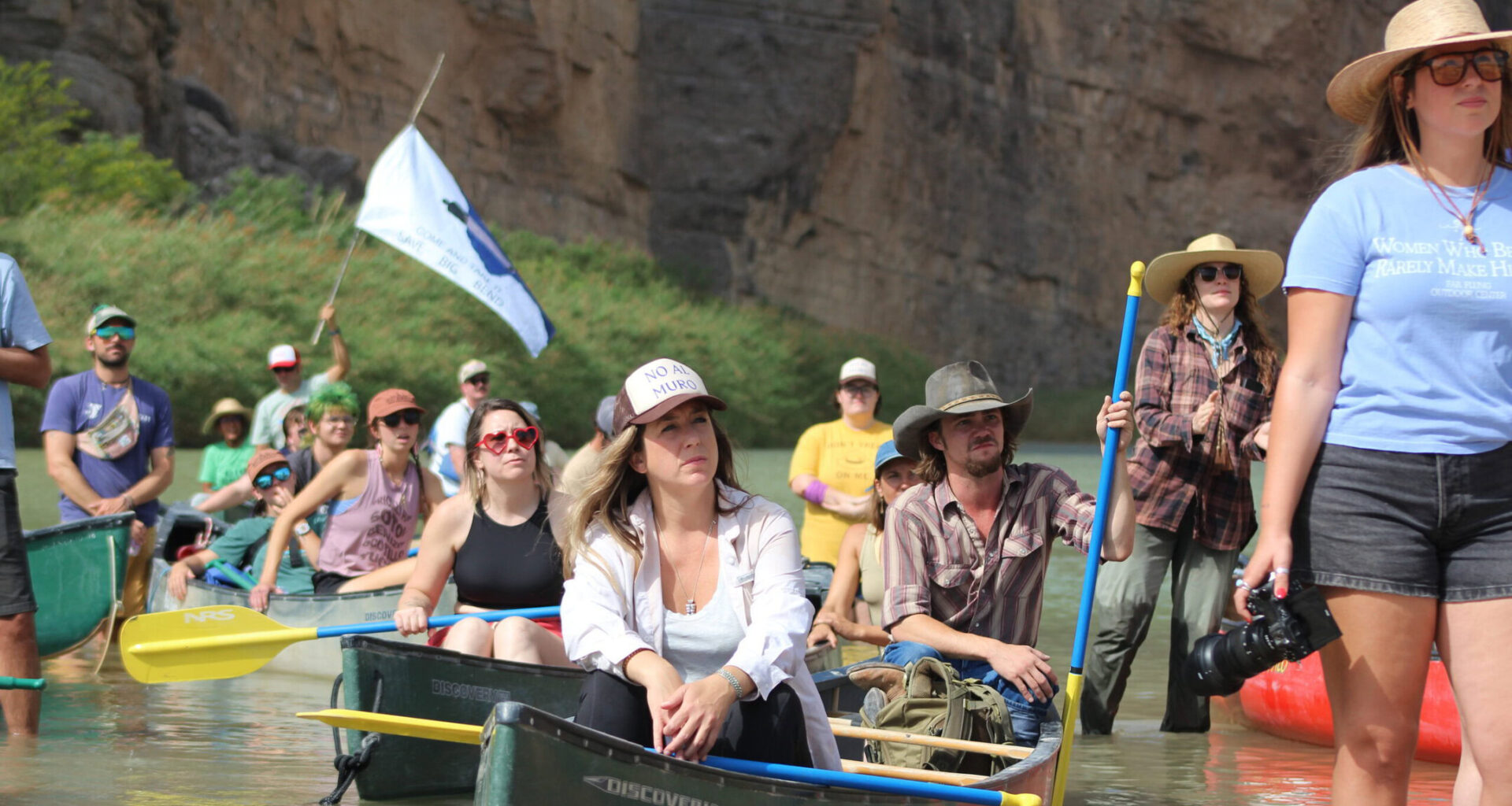
Other folks have rallied to support business owners who took a hit turning down business from wall contractors, who tried to rent places in town for workers during the off season and were refused. (The contractors, increasingly desperate, threw out offers of up to $3 million to buy properties outright.)
In TX-28, a sprawling congressional district that stretches from San Antonio to El Paso, a showdown is unfolding between two candidates who couldn’t be more different — but have both made opposing the wall a key part of their platform: Democrat Katy Padilla Stout, a former teacher and attorney who has spent much of the past decade advocating for kids in crisis, and Brandon Herrera, a far-right YouTube personality with a penchant for high-caliber firearms. “Democrats don’t want this wall in Big Bend,” Herrera told the crowd at a rally in Austin that drew thousands. “Republicans don’t want this wall in Big Bend. Independents don’t want this wall in Big Bend. Sheriffs don’t want this wall in Big Bend. The tourists don’t want this wall in Big Bend. Nobody wants this wall in Big Bend.”
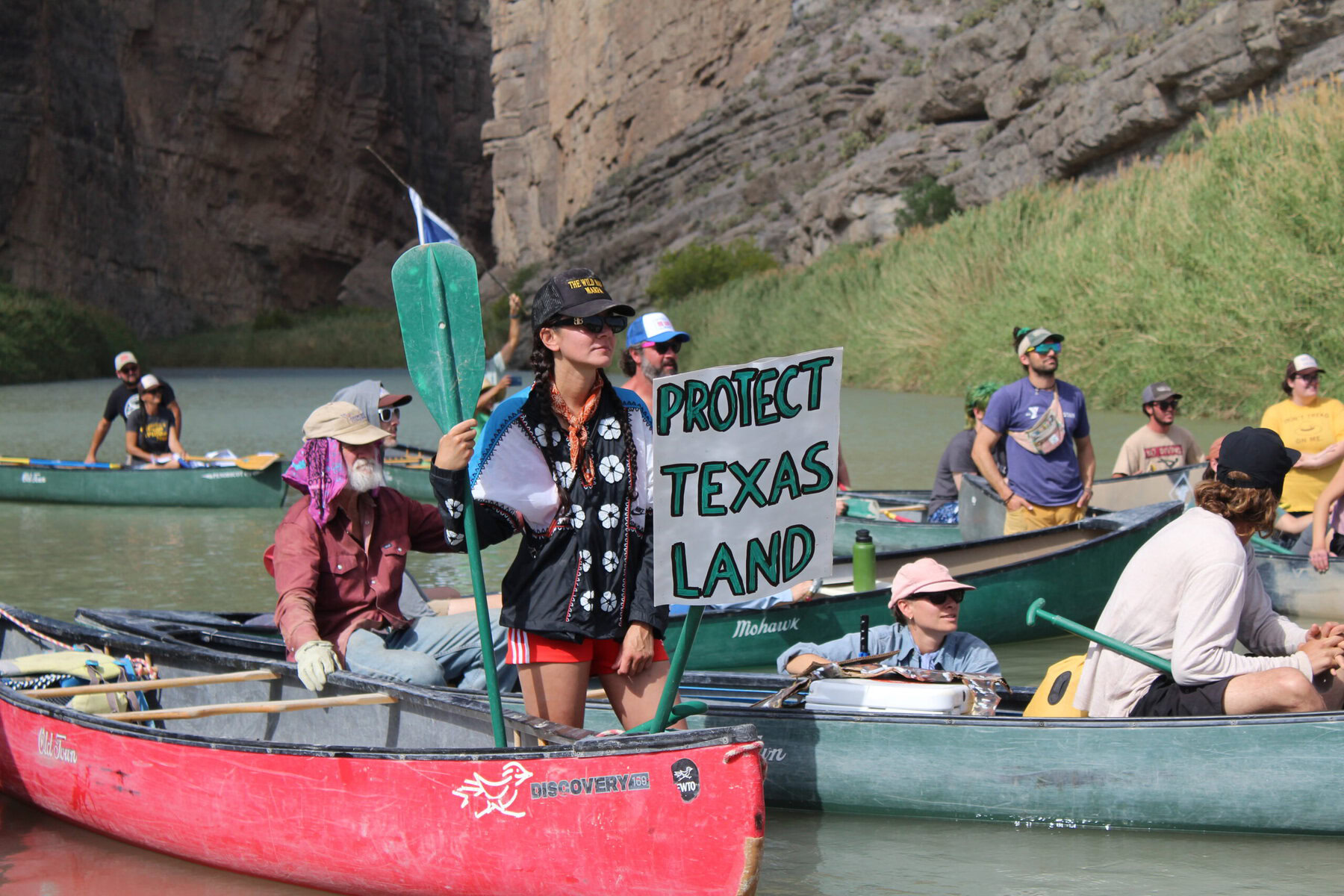 Protesters in Santa Elena Canyon. Credit: Sam Karas
Stout gave stump speeches on the issue throughout the summer, and even stopped by a rally outside the federal courthouse in San Antonio to support an Indigenous-led group, the People of La Junta for Preservation, who filed suit against the Trump administration alongside Terlingua-based river outfitter Far Flung Outdoor Center. “[The judge] has called a pause, and that’s a reflection of the power of the people when we use our voice,” she said. “They are scared of our voice when we use it, so we have to keep the pressure up.”
Jerry Patterson, a former Texas Land Commissioner who has been rallying fellow Republicans to the cause, said that he’d won folks over by educating them about the historically low levels of crossings in the area — around one percent of CBP’s annual apprehensions — as well discussing logistical challenges the wall could pose. In Texas, where the border is a river, barrier infrastructure must be built apart from the actual border, effectively creating a long strip of “no-man’s land” inaccessible to the public.
CBP has repeatedly promised that recreational access and impacts to wildlife will be kept to a minimum with a system of gates and keypads, but Patterson wasn’t convinced. “Wildlife hasn’t adapted to keypads,” he quipped.