
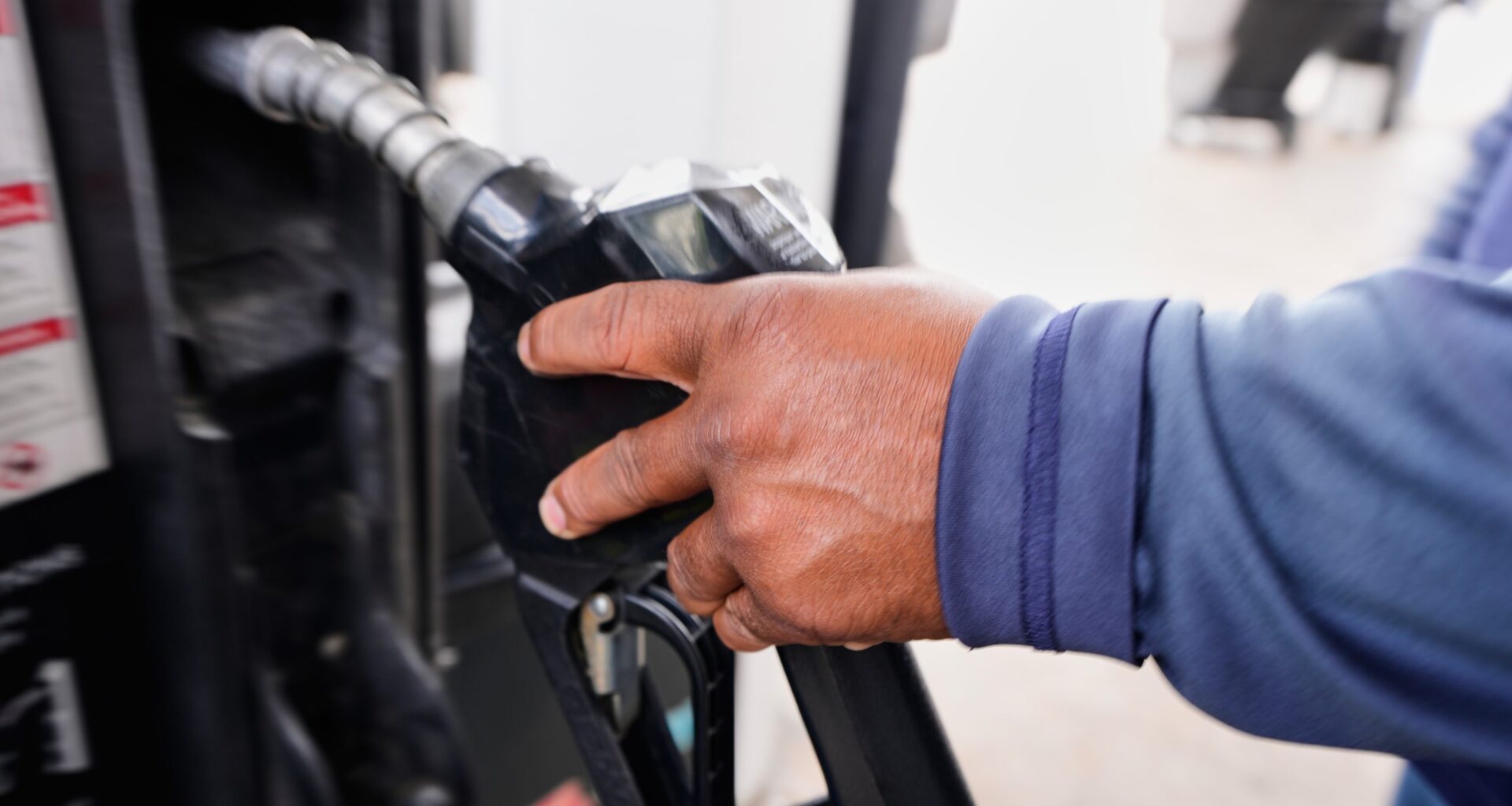
High fuel costs are likely to persist through 2027 as energy companies increased their projections for the price of diesel and planned strict budgets ahead of geopolitical turmoil in Europe and the Middle East.
Rey Trevino, president of Pecos Energy, an oil and gas exploration company based in Fort Worth, said most oil companies have planned their budgets for the end of the year and are anticipating high fuel costs for next year.
“Everyone has their plans in place, so we do expect oil and natural gas prices to stay high, especially during the remainder of the Iranian conflict, but also during the remainder of the Russia-Ukraine conflict,” he said, adding that his company has stayed “capital-disciplined, along with majors like ExxonMobile and Chevron.”
Economists at the Federal Reserve Bank of Dallas also reached the same conclusion. In an analysis published Oct. 8, the Bank said “escalating violence in the Middle East, the Russian-Ukraine war, the closure of shipping routes like the Strait of Hormuz and restriction of exports from China and Russia”, which have led to a 10% decrease in global refinery capacity, have all contributed to uncertainty.
For consumers, that means higher price volatility and higher fuel costs.
In Fort Worth-Arlington, regular fuel costs around $3.71 a gallon and diesel fuel costs around $5.77, according to AAA data on Thursday. A year ago, those prices averaged $2.65 and $3.13, respectively. Though fuel costs fell on a daily or weekly basis, the overall data showed an uncertain market.
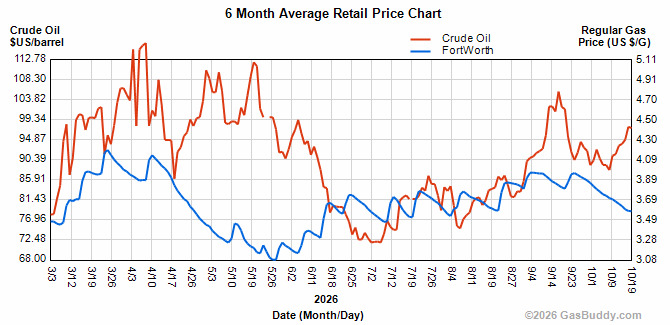 The average price of gas in Fort Worth over the past six months compared with the price of crude oil over the same period. (Courtesy | Gas Buddy)
Oil companies are also paying more for crude oil than normal. The cost of a barrel of oil typically ranges from $70 to $85. It reached a high of over $100 a barrel Thursday, the first time it had reached that level since September, according to the Energy Information Administration.
“There’s been a tremendous pressure on oil refineries,” said Patrick De Hann, head of Petroleum Analysis at Gas Buddy, a tech platform that helps drivers find cheap nearby fuel. “Right now, the world is essentially short on having enough refining capacity to meet demand.”
The Iranian conflict has made insurers nervous, despite the Trump Administration’s efforts to mitigate the situation, said Steve Cotton, president of Cotton Wealth Management.
“There are still sufficient oil price premiums on top of what would be the normal price because of the risks and I don’t see that going down anytime soon,” he said.
Both Trevino and Cotton viewed the administration’s deal on production in Venezuela positively, giving rise to opportunities to scout for more oil. But it might take time to refurbish the country’s oil fields.
Cotton said the deals are great as a long-term strategy, but not in the short-term.
“There are still sufficient oil price premiums on top of what would be the normal price because of the risks,and I don’t see that going down anytime soon,” he said.
The analysis by the Dallas Fed also found geopolitical tensions have caused nearly unprecedented crack spreads, referring to the difference between the price difference between a barrel of crude oil and the petroleum products, such as gasoline and diesel, refined from it. That has helped lead to high prices for diesel fuel, key for the trucking and transportation industries.
Gas Buddy’s De Hann said crack spreads measure the value of a barrel of oil compared to the products that come out of it, using an analogy that in every barrel of oil, 45% comes out in the form of gasoline, 25% comes out as diesel, and around 9% is used for jet fuel.
“So what does that mean for the economy? Well, that means we’re, at least where we are now, we’re kind of stuck in this geopolitical situation, in which gasoline and diesel prices probably will continue to be elevated until there’s a resolution that unlocks, or helps improve the balance of supply and demand,” De Hann said.
With demand low, suppliers normally prioritize gasoline over diesel, leading to the higher costs and crackspreads. Industries that demand the alternative fuel — such as trucking and logistics, manufacturing and airlines — are most likely to be impacted.
“There’s a ripple effect,” Cotton said. “You can’t pick one particular industry or consumer segment that’s not going to be affected by these elevated petroleum prices, and diesel is more transportation specific. People paying at the gas pump, you can see that quickly. What’s much more subtle is the ripple effect through consumer products.”
Rebecca Heliot is a freelance reporter who previously served as a business reporter for The Oklahoman. She specializes in general assignment business reporting, features and breaking news. Her work has been published in The Oklahoman, USA Today, Community Impact, Houston Chronicle and more. Contact her at rebecca.heliot@fortworthreport.org.
This <a target=”_blank” href=”https://fortworthreport.org/2026/10/19/fuel-prices-face-a-long-road-back-to-normal/”>article</a> first appeared on <a target=”_blank” href=”https://fortworthreport.org”>Fort Worth Report</a> and is republished here under a <a target=”_blank” href=”https://creativecommons.org/licenses/by-nd/4.0/”>Creative Commons Attribution-NoDerivatives 4.0 International License</a>.<img src=”https://i0.wp.com/fortworthreport.org/wp-content/uploads/2021/04/cropped-favicon.png?resize=150%2C150&ssl=1″ style=”width:1em;height:1em;margin-left:10px;”>
<img id=”republication-tracker-tool-source” src=”https://fortworthreport.org/?republication-pixel=true&post=838275&ga4=2820184429″ style=”width:1px;height:1px;”><script> PARSELY = { autotrack: false, onload: function() { PARSELY.beacon.trackPageView({ url: “https://fortworthreport.org/2026/10/19/fuel-prices-face-a-long-road-back-to-normal/”, urlref: window.location.href }); } } </script> <script id=”parsely-cfg” src=”//cdn.parsely.com/keys/fortworthreport.org/p.js”></script>