
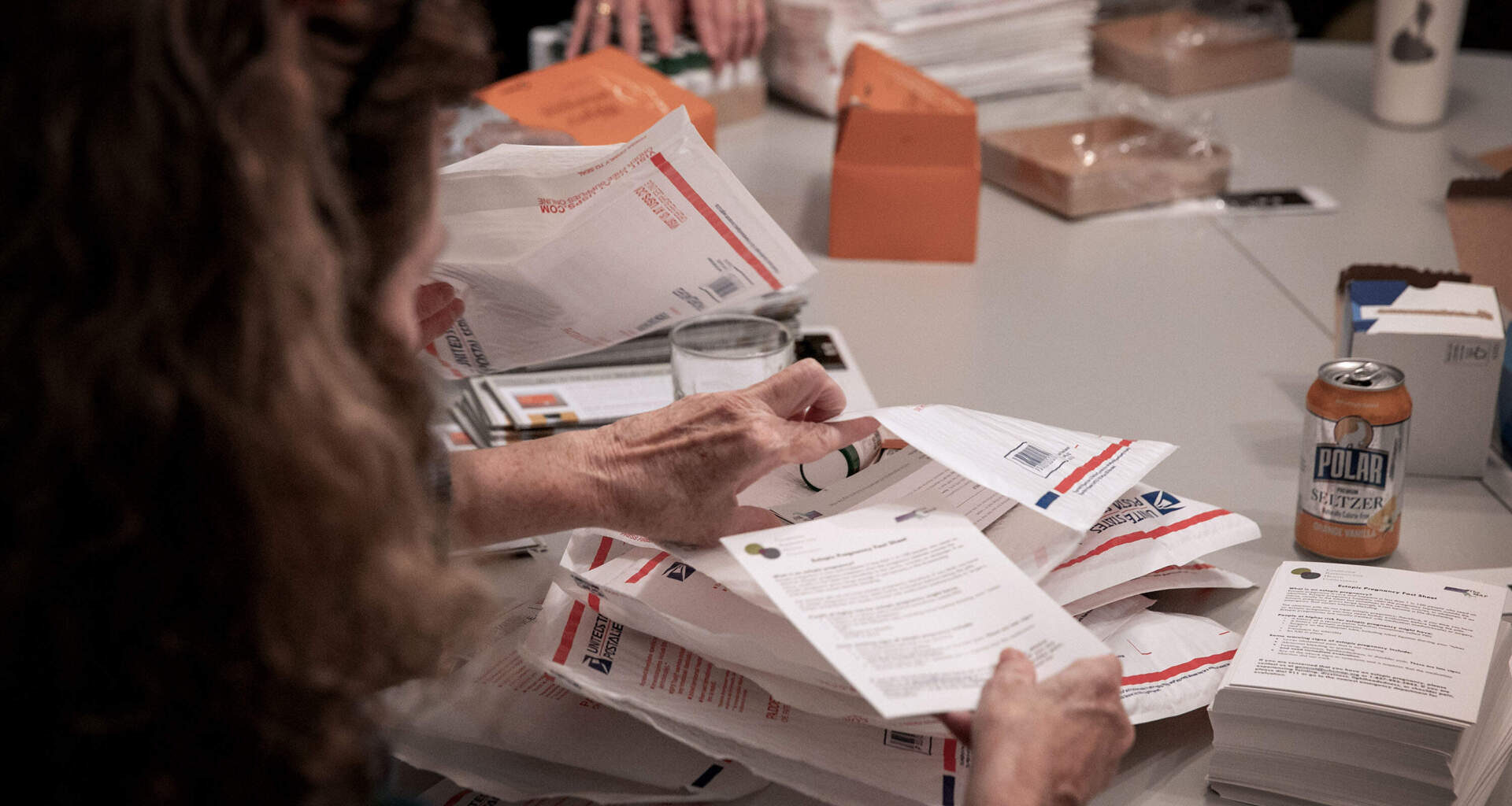
Three Massachusetts organizations and four staffers who prescribe and mail abortion pills to patients in states where the practice is restricted are facing their first legal challenge since the Supreme Court struck down the national right to an abortion in 2022.
They are among 30 telehealth providers named in a federal lawsuit filed by the attorneys general of Louisiana, Arkansas and Alabama. The Massachusetts shield law, which was passed to protect abortion providers against legal action from other states, is not expected to apply in this federal case.
The complaint, filed in Louisiana in late September, alleges the “advertising, selling, prescribing and mailing of abortion drugs” creates a public nuisance that interferes with health and safety in the three states, where abortion is banned with only limited exceptions.
“We will not allow activist states, activist providers or distributors profiting from killing babies to threaten Louisiana’s sovereignty, violate Louisiana’s laws and endanger Louisiana women and Louisiana babies,” said the state’s attorney general, Liz Murrill, during a news conference after filing the lawsuit. “These are not healthcare providers, they are illegal drug traffickers.”
The groups named in the lawsuit include The Massachusetts Medication Abortion Access Project, or The MAP, Ishani Village and Abuzz. Murrill said public statements from these groups and others indicate they are collectively shipping at least 1,600 abortion pill packages every month to addresses in Louisiana, Alabama and Arkansas. Massachusetts records show a spike in medication prescriptions to patients outside the state following the Supreme Court’s decision in Dobbs v. Jackson Women’s Health Organization which allowed states to restrict abortions.
Attorneys for the Massachusetts abortion providers named in the lawsuit did not respond or declined requests for comment. They are required to file a response to the complaint in federal court.
Abortion is legal in Massachusetts, and federal drug policy allows abortion medications to be prescribed through telehealth and mailed to patients. While the state’s shield law adds protection against prosecution outside Massachusetts for doctors, nurse practitioners and physician assistants who write legal abortion prescriptions here, legal experts say the law has limits.
“The shield law in Massachusetts can’t protect the providers from a lawsuit in federal court,” said Nicole Huberfeld, co-director of Boston University’s Program on Reproductive Justice. “It only applies to state courts. Likewise, the shield law can’t protect providers beyond the boundaries of the state.”
Massachusetts public officials, using the shield law, may refuse to assist with records requests in the Louisiana federal court case, if it proceeds.
Huberfeld, a BU law professor, said calling abortion pills a public nuisance is an unusual legal strategy. The claim is more typically raised in cases of environmental damage, she said.
In a separate legal action, Murrill and the attorneys general of Arkansas and Alabama are also challenging the constitutionality of the shield law in Massachusetts, as well as those in New York and California. On the same day they filed the complaint against the abortion providers, they asked the U.S. Supreme Court to decide if these laws are constitutional.
Alabama Attorney General Steve Marshal said the shield laws undermine “state sovereignty.”
“This is a coordinated scheme by bad actors from out of state to defy Alabama law and harm people in our state,” Marshall said in a statement.
Massachusetts Attorney General Andrea Campbell defended the commonwealth’s legal position.
“Massachusetts’ Shield Law sends a clear message that we protect the privacy of our patients and providers, and that we will not use state resources to punish people for personal health care decisions that are protected under Massachusetts law,” she said in a statement.
The high court is expected to decide early next year whether to hear the challenge from Louisiana and others — or rule that it must be heard by a lower court first.
Louisiana has filed a separate lawsuit that aims to end telehealth prescribing of mifepristone, one of the two pills commonly used in medication-assisted abortions. It claims the Food and Drug Administration erred in allowing the drug to be prescribed without an in-person medical appointment.