
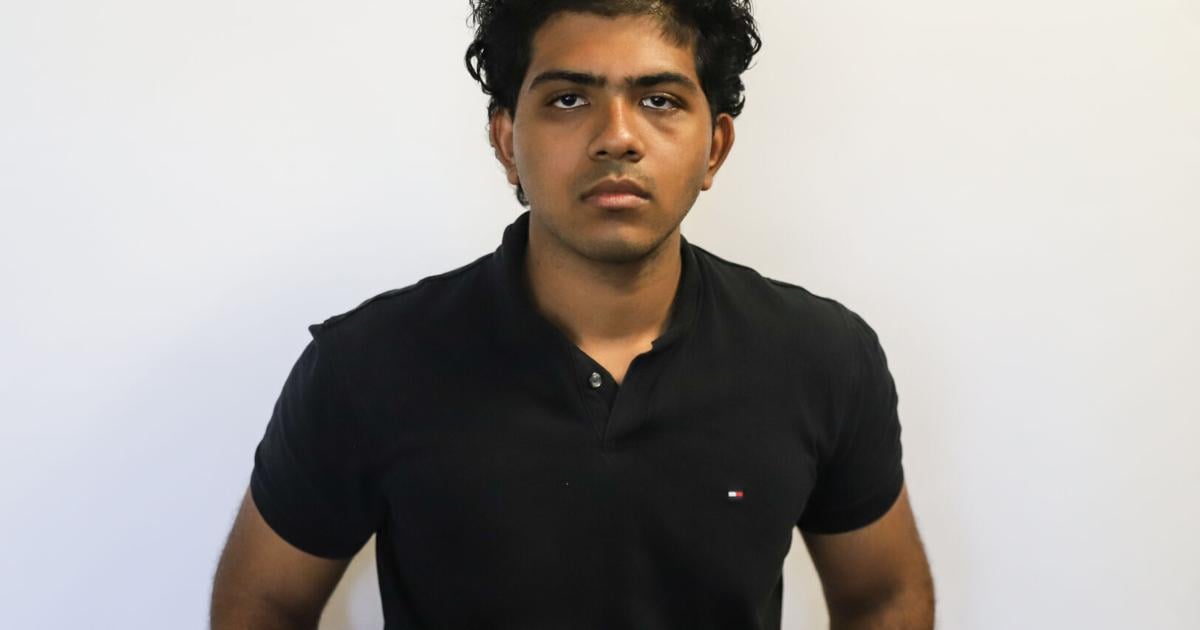

Pradeep Muraliram is a business management freshman at UTA. Muraliram built an artificial intelligence tool called SocriaAI.
At a time when some people rely on artificial intelligence tools for decision-making, business management freshman Pradeep Muraliram wants to leverage AI to enhance human cognitive skills.
“It’s doing a lot of great things, saving a lot of people. But the direction of it, where it’s going right now, is going towards ‘we want to replace humans,’ rather than just actually help us,” Muraliram said. “So Socria is a company that actually wants to help humans rather than just outsourcing them to AI.”
Muraliram built an AI tool, SocriaAI, using Claude Code and GitHub. He said Socria is a human-first AI.
Muraliram compared Meta’s new personal AI agent, Muse, to Jarvis from Iron Man as an example of complete AI dependence. On its website, Meta describes Muse as a tool that gets to know people and their goals, allowing them to connect applications like email, calendar and Instagram so it can perform tasks for them.
“It takes every task from you, integrates everything, like Google, it sets up your calendar,” he said. “You should be the one that sets up your account, not some AI assistant, or manages your personal finances. That should be you.”
He said Socria’s main motive, on the other hand, is human enhancement.
“Meta or Anthropic or Claude, you give them a situation, AI analyzes it, AI recommends or persuades you to do a decision and then kind of makes the AI execute it for you,” Muraliram said. “Socria, you give it a situation, it kind of figures out what kind of involvement is appropriate.”
SocriaAI might question, challenge or provide structure to the user’s own reasoning, or just explain the answer when it’s appropriate. Humans are still responsible for meaningful judgment, Muraliram said.
As part of an experimental user case, when asked the prompt “What internships should I apply for?” ChatGPT gave direct links to positions in accordance with user history.
However, SocriaAI responded with more questions for the user, including what kind of industry the user is interested in and what skills they enjoy using.
Vivan Nguyen, AI for business freshman and a SocriaAI user, said the model has potential but she believes that Muraliram needs a specialist to make sure the tool is operating logically and reasonably.
She said she uses the tool to review previously learned material but questioned its ability to address specialized topics in fields such as mathematics and engineering.
“SocriaAI is more like an AI that asks you questions again,” Nguyen said. “For example, if you already get lost in calculus and you use the software, and it just keeps asking you again and again, sometimes it makes people just getting more lost.”
In addition to its inquisitive trait, Muraliram is working on adding improvements to SocriaAI.
Its newest features include a mind graph, which is the memory itself.
“One of the techniques we did is that the AI kind of maps out everything you talk about with it,” he said. “You can kind of see how everything connects.”
Muraliram held his first SocriaAI workshop Oct. 5.
When James Galvan, software engineering freshman and event attendee, first heard about the student-made AI tool, he thought it had to be different from big tech companies.
Galvan said he loves the product idea of the human-first AI and hopes the company works out.
Communication freshman Madison Carby handles the creative and branding aspects of SocriaAI and said the team consists of just Muraliram and her for now.
She said she likes the idea of SocriaAI helping humans think for themselves and wants to use her creativity to help SocriaAI reach its audience.
The application is based on the Socratic questioning method, which encourages users to ask repeated questions to develop answers.
It also incorporates other techniques, including metacognition and first-principles thinking, Muraliram said.
The software application, named after the Greek philosopher Socrates, now has approximately 300 users and is free for the first month for UTA students.
@nanda.ach_