
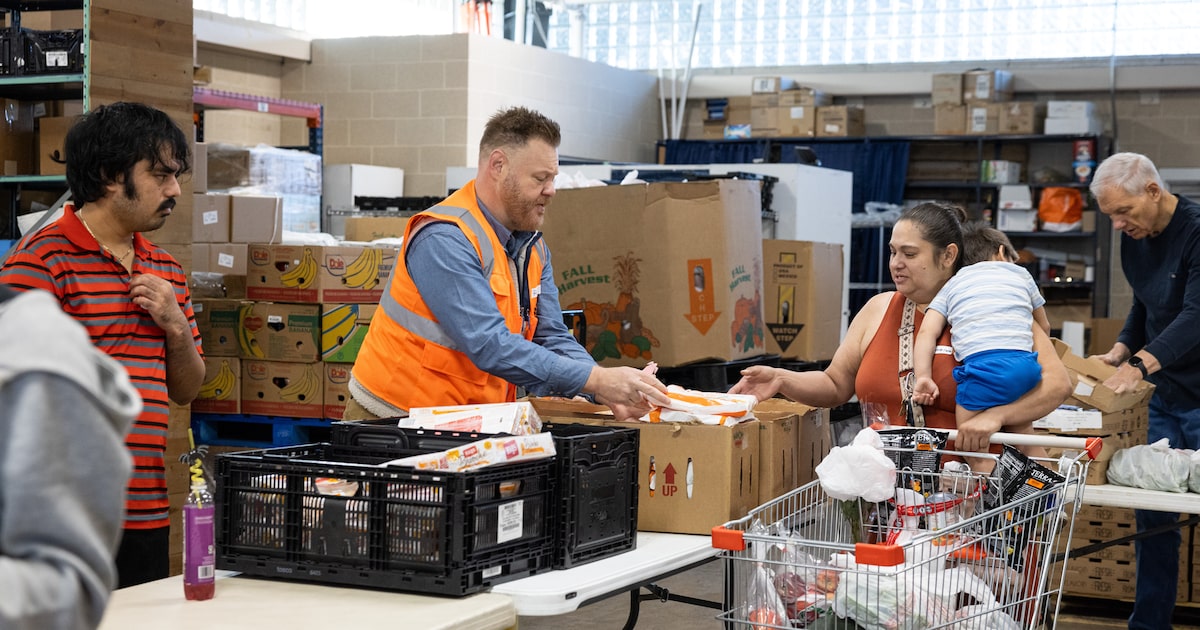
Dallas is funding emergency food assistance for those impacted by the federal government shutdown and interruptions to SNAP benefits, with up to $1 million going to the North Texas Food Bank as families head into the holiday season.
While a few council members entertained delaying funding to see how the situation pans out nationwide or ensure the funding is used properly, several stressed a need for immediacy. Members noted the need they’ve seen in their communities and a lack of clarity around when impacts might resolve and how families might financially recover.
“If we can help, people are hungry today,” said council member Lorie Blair, who represents the city’s southernmost district.“I do not want to be a city that lets people go hungry.”
As representatives in the nation’s capital worked to end the shutdown, the Dallas City Council voted to give the food bank a boost. The city joins the county in supporting efforts to curb hunger. Federal workers have gone without pay. Hundreds of thousands in North Texas depend on the Supplemental Nutrition Assistance Program, informally known as food stamps, which became a point of tension during the shutdown.
Breaking News
Texas has the highest food insecurity rate in the U.S., according to nonprofit Feeding America. In Dallas County, the southern half experiences a larger share of insecurity. Pantries were already feeling a strain, with some operating at full-tilt before the shutdown and food insecurity rates rising since the pandemic. The cost of living hasn’t let up, and the North Texas Food Bank lost millions through funding program cuts.
The million from the city will support special distributions from the food bank for those impacted by the shutdown. It’s a small price to pay, Blair said.
“Even when SNAP starts, it’s not going to be funded tomorrow,” Blair said. “By the time the money comes to the resident, it will be either after Thanksgiving or before the first of December.”
Related
Laura Cadena, a representative in northwest Dallas, noted that Brother Bill’s Helping Hand, a large pantry operation serving families in West and South Dallas, saw increased need before the shutdown. She added that it was fundraising and the community was stepping up, “but we definitely need to do our part.”
Some, however, questioned if the funding should be given right away, with a delay giving the council a chance to ensure how the funds are being allocated. Cara Mendelsohn, representing far North Dallas, said she herself was a donor to the food bank and residents should help pantries.
However, she said she was concerned the city was “reacting when there might not be a need for us to spend a million dollars.” She questioned whether the money should go toward other issues the city handles, adding that it’s a season where “it’s very easy” for the pantry to get food and money and she was open to waiting to understand where there was an emergency need.
“I hate that I’m even saying this, in some ways, but we have to say that because … it is our job to be very conscious and fiscally prudent with our tax dollars,” Mendelsohn said.
Adam Bazaldua, who represents South Dallas, said he was confused why members would consider a delay. The funding comes during a time when kids are heading into a holiday break and won’t be getting meals at school.
“Delaying this would prevent food from being on the table,” Bazaldua said. “This is absolutely a function of our government, especially when we have other forms of government who aren’t even willing to come to work to do their job right now.”
This reporting is part of the Future of North Texas, a community-funded journalism initiative supported by the Commit Partnership, Communities Foundation of Texas, The Dallas Foundation, the Dallas Mavericks, the Dallas Regional Chamber, Deedie Rose, Lisa and Charles Siegel, the McCune-Losinger Family Fund, The Meadows Foundation, the Perot Foundation, the United Way of Metropolitan Dallas and the University of Texas at Dallas. The News retains full editorial control of this coverage.