
Among Texas hospitals and ambulatory surgery centers, one facility stood out with an unusually high number of surgical “never event” errors.
That facility also happens to be the No. 1 hospital in Dallas-Fort Worth, according to U.S. News & World Report’s rankings, and No. 2 in the state of Texas.
Over the most recent 18 months of reporting — from July 2024 through December 2025 — UT Southwestern Medical Center reported 19 “never events.” That included 18 reports of objects left in a patient after surgery. That’s an average of one unintentionally retained object per month.
Article continues below this ad
UT Southwestern spokesperson Russell Rian did not respond to repeated requests for an interview with a representative of the medical center. He did send an emailed comment about the medical center’s retained object reports.
“UT Southwestern considers patient safety of paramount concern,” Rian wrote. The comment then explained UT Southwestern’s reporting process — which it believes is more expansive than other institutions’ — and whittled down the reported number to account for mistaken reports.
Retained objects — when a surgical team accidentally leaves behind a sponge or an instrument or another surgical item — are in a category of errors sometimes referred to as “never events.” Surgical never events, including retained object as well as wrong site, wrong surgery and wrong patient errors, were the focus of a months-long investigation from The Dallas Morning News, which looked into why these errors happen and how patients fare after the fact.
That investigation included analysis of state data on “preventable adverse events,” which includes these four surgical never events.
Of the Texas facilities that filed reports, UT Southwestern had the highest number of surgical never events in the state. One of those errors was a wrong surgery error. The rest were retained objects.
Article continues below this ad
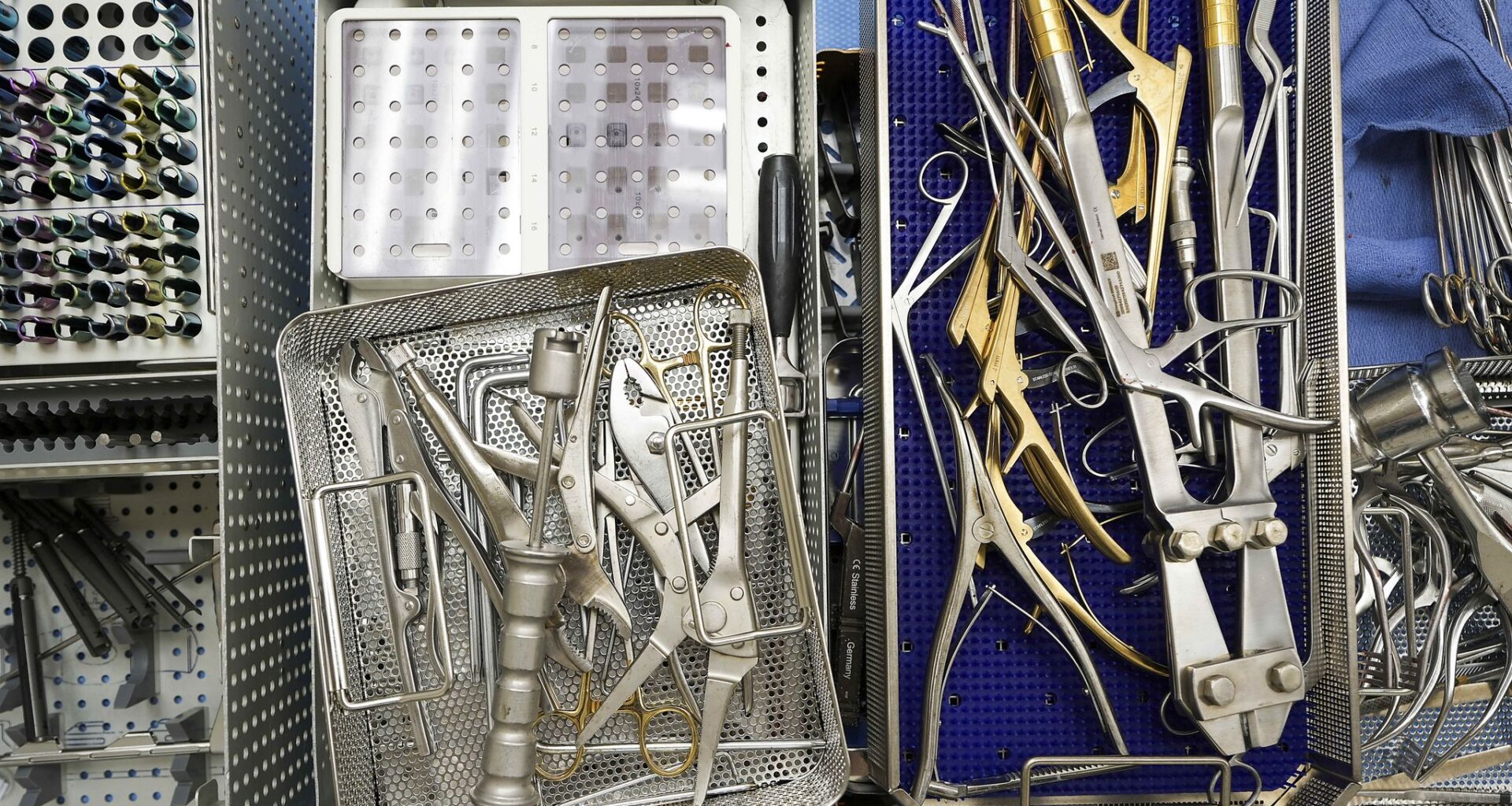
Needles are removed from packaging during a spinal surgery in North Texas, Tuesday, June 30, 2026.
Smiley N. Pool/The Dallas Morning News
A total of five of the 18 retained object reports, Rian wrote, were erroneous — three were duplicates and two were clerical errors. Rian did not respond to a follow-up question about whether the medical center submitted corrected data to the state after identifying the duplicates and clerical errors.
Of the remaining 13 reports, Rian wrote, 11 were “no harm events.” All involved patients, Rian wrote, were informed and made aware.
Over the course of the 18 months, Rian wrote, UT Southwestern performed more than 86,000 surgeries — meaning the retained object incidents were a tiny fraction of the overall surgery count.
Other large hospitals in Texas — Memorial Hermann-Texas Medical Center in Houston, Houston Methodist Hospital, Methodist Hospital in San Antonio and University Hospital in San Antonio — each reported one-third or less of the number of never events in the same time period.
Article continues below this ad
Statewide, the facility with the second-highest count was Texas Health Harris Methodist Hospital in Fort Worth with 12 never events reported over the 18-month period. The third-highest was CHRISTUS Mother Frances Hospital in Tyler with 11 never events reported.
The health systems for both of those hospitals, in separate statements, described error reporting as a step toward improved patient safety.
“Our goal is to prevent safety events from ever occurring and we take them very seriously when they do,” Texas Health spokesperson Kimberly Walton wrote in a statement. “These events are self-reported and evaluated to identify opportunities for improvement.”
“We encourage our caregivers to speak up and report concerns,” CHRISTUS Health spokesperson C.C. Gonzalez-Kurz wrote in a statement, “because that is how safe systems are built.”
Data issues
The News’ analysis of never events in Texas covered only the last 18 months. There’s a reason.
Article continues below this ad
The Texas Department of State Health Services, which collects and maintains the preventable adverse event data hospitals and surgery centers submit every six months, told The News over email it only retains publicly releasable facility-specific reports for the most recent 18 months.
That means the public cannot compare facilities to one another over a longer stretch of time. It also means it’s impossible to know if UT Southwestern Medical Center’s most recent retained object numbers are a fluke or part of a larger trend.
In addition to the lack of public-facing facility-specific data, the dataset also does not include every hospital and surgery center in the state.
Most Texas hospitals and ambulatory surgery centers are required to file reports with the state, detailing preventable adverse events. A large chunk of facilities don’t submit their data.
The state’s two most recent annual reports show 65% of facilities turned in their reports in 2024 and 46% did so in 2023.
Article continues below this ad
That means UT Southwestern Medical Center has the highest number of retained objects only among facilities that did report. (Because the 2025 annual report had not been posted by the state as of early October, it’s not clear what percentage of facilities filed their data during the timeframe.)
Even the higher percentage in the most recent report — 65% of facilities in 2024 — still leaves more than a third of health care facilities failing to respond.
The News requested an interview with the Texas Department of State Health Services, to discuss the response rate. A spokesperson for the agency initially acknowledged the request but then did not respond to follow-up emails.
There’s a final data concern UT Southwestern raised in Rian’s email comment. The hospital system believes, Rian wrote, other hospitals are less thorough in reporting retained objects.
Article continues below this ad
If there is variation in the way facilities report their errors, it makes it difficult — or impossible — to compare numbers across the dataset.
Why does data matter?
Between facilities failing to report entirely and broader concerns about the consistency of the data, patient safety experts say the actual number of preventable surgical errors is likely significantly higher than what’s reported.
Lillee Gelinas, the patient safety director at the Texas College of Osteopathic Medicine in Fort Worth, said reporting in outpatient areas, including ambulatory surgery centers, is particularly spotty. As a result, no one knows how many patients are harmed by preventable errors each year.
“That’s the scary part,” Gelinas said. “It’s terribly underreported.”
Michael Ramsay, a retired Dallas-based anesthesiologist and the CEO of the Patient Safety Movement Foundation, said real-time, complete data is a necessity if healthcare facilities are going to improve.
Without reliable and complete data, “People don’t react,” Ramsay said. “In other words, they don’t correct the problem.”
Dr. Bryan Alsip is the chief medical officer at University Health, the public hospital system for Bexar County. Under his watch, the health system has focused extensively on patient safety. University Hospital is among the facilities reporting adverse events to the state, according to the publicly available reports. Alsip said that type of transparency is a necessity.
“We need to be accountable for errors,” Alsip said, “simply because we cannot get better if we’re not transparent internally as well as externally.”
Leaders at Houston Methodist had a similar view of transparency as a prerequisite of patient safety.
“We know that quality without transparency doesn’t exist,” said Dr. A. Osama Gaber, the surgery chair at Houston Methodist Hospital. “If somebody wants to hide their errors … they’re going to make more.”
The Dallas Morning News’ Under the Knife investigation is part of the Association of Health Care Journalists’ U.S. Health System Reporting Fellowship, supported by The Commonwealth Fund.