
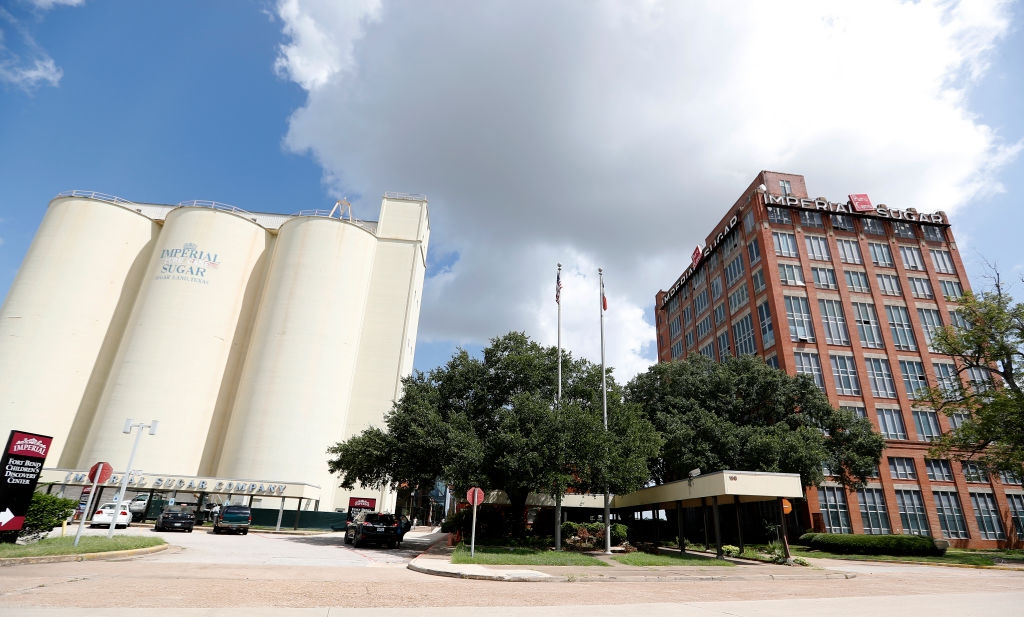
Sugar Land officials first acquired the Imperial Historic District in June 2025 after the property sat vacant for more than 20 years and started deteriorating. The area was also ripe for trespassing, according to local police, despite repeated advisories, patrols and arrests.
Now, the city is moving ahead with a $15 million preservation project for the century-old Char House, with work expected to begin later this year and wrap up in 2028.
Sugar Land City Council approved the project Oct. 20, which will stabilize and protect the building while preparing it for future redevelopment and adaptive reuse, according to the city.
The planned work includes a new permanent roof, structural repairs to the exterior walls and rear liquor gallery, selective steel and masonry repairs, mechanical and electrical improvements and restoration of the building’s windows. The city’s iconic Imperial signage will also be restored and moved back to its historic location on the building.
A groundbreaking is expected Nov. 5, with construction mobilization planned for December and completion estimated for March 2028.
The Char House was built in 1925 and was part of the Imperial Sugar refinery that helped define Sugar Land’s identity. The refinery portion of the campus closed in 2003, and the property remained vacant as multiple redevelopment plans fell through.
One of the biggest proposals came in 2023, when PUMA Development unveiled plans for a $1 billion mixed-use redevelopment of the 20-acre Imperial Historic District, including residential, retail, office and restaurant space. The developer ultimately abandoned the project after failing to secure financing.
Now, the city says the preservation work is intended to address some of the problems that have stalled redevelopment while keeping the building eligible for future historic tax credits.
“More than an iconic building, the Char House is a physical connection to Sugar Land’s history and the origins of our community,” Mayor Carol K. McCutcheon said. “This investment allows us to protect an irreplaceable landmark while creating new possibilities for how it can contribute to Sugar Land’s future.”
The city said the restored building could eventually accommodate office, commercial, retail or restaurant uses as redevelopment plans move forward.