
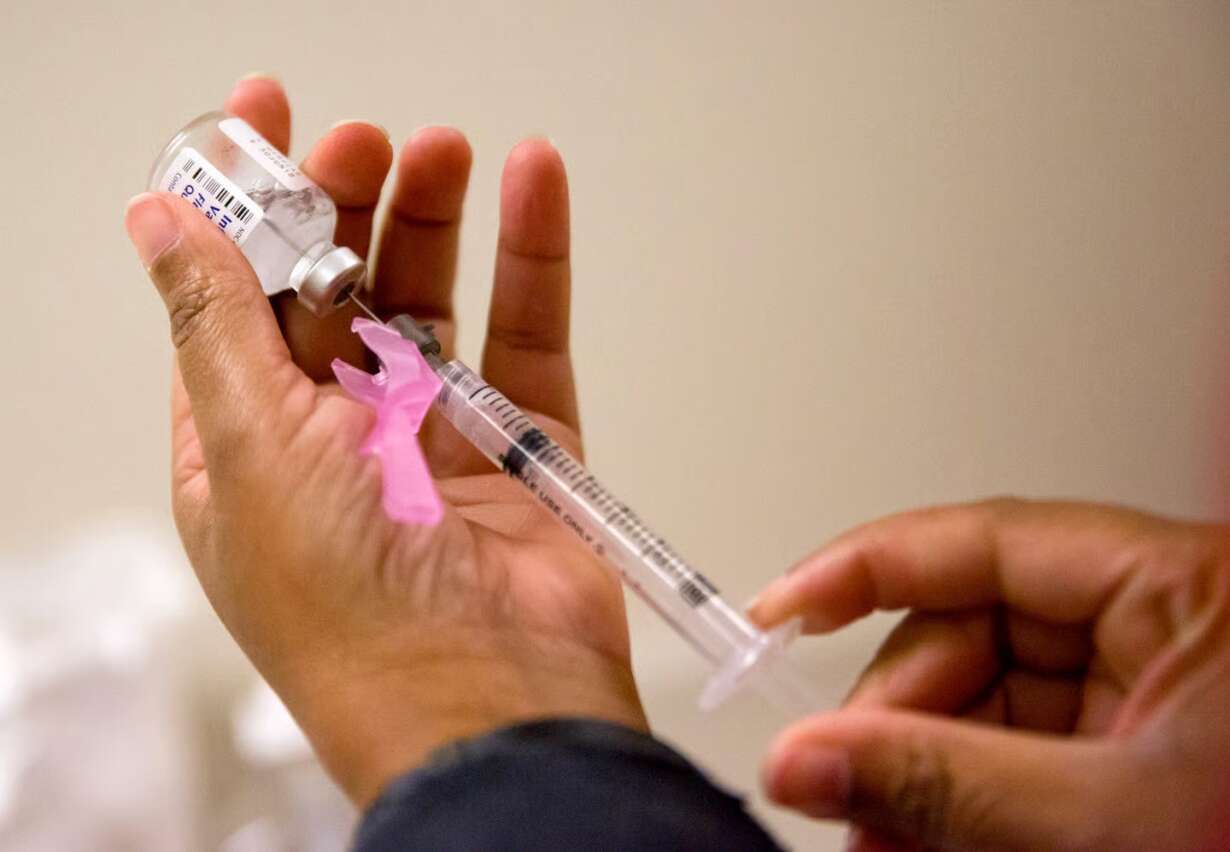
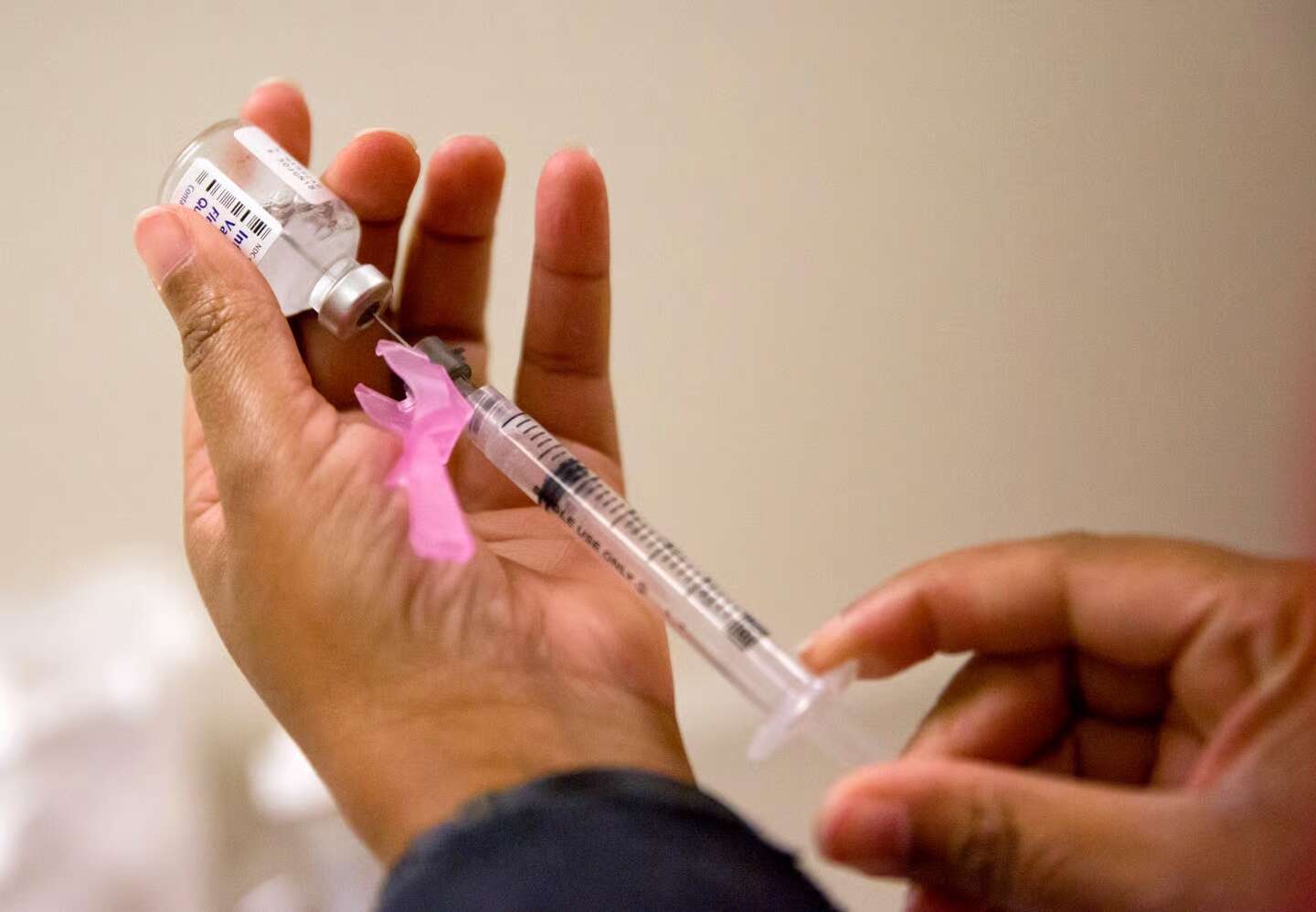
 A nurse prepares a flu shot at the Salvation Army in Atlanta. (David Goldman/Associated Press file)
Flu activity is increasing earlier than usual in El Paso County. The most recent data shows 11 flu-related hospitalizations in El Paso County, all involving adult patients. In addition to influenza, public health officials are also tracking active cases of COVID-19 and pertussis, commonly known as whooping cough.
Haley Zachary, communicable disease division manager for El Paso County Public Health, said flu cases typically begin increasing around Thanksgiving before peaking in late December or January. This year, however, officials are seeing activity pick up weeks earlier than expected.
“The only predictable thing about flu is that it’s unpredictable,” she said.
While the early increase may raise concerns, Zachary said it remains too soon to determine what the trend means for the remainder of the season.
“It just kind of is up in the air,” she said. “We tend to hope for the best and prepare for the worst in our world.”
Despite the uptick in flu cases, public health officials note one encouraging sign: No pediatric flu hospitalizations have been reported in El Paso County so far this season. Last year, Colorado experienced a particularly severe flu season among children.
Earlier this year, El Paso County Department of Public Health launched an expanded public health dashboard designed to give residents a more detailed, real-time look at diseases circulating within the community.
“We really wanted to show the community more real-time local data,” Zachary said.
The online tool tracks a wide range of health indicators, including respiratory illnesses, outbreaks, vaccine-preventable diseases and other public health concerns. She said local data can help residents better understand what is happening in their own community rather than relying solely on statewide information.
“Statewide data doesn’t necessarily speak to our community,” she said.
As respiratory illnesses continue to circulate, public health officials encourage residents to take simple steps to protect themselves and others. Zachary said staying up to date on vaccinations, washing hands frequently, covering coughs and sneezes, and staying home when sick remain some of the most effective ways to slow the spread of illness.
“If you don’t feel well, stay home. Don’t share those germs,” she said.
She added that these preventive measures benefit the wider community as much as the individual.
Colorado Public Radio: To read more stories from Colorado Public Radio, visit www.cpr.org.