
In July, Lisa Dixon returned to her classroom at Keller ISD’s Hillwood Middle School to prepare for the new school year and found that the temperature inside was 87 degrees.
For several months before then, the eighth-grade history teacher and her students dealt with a failing air-conditioning system. She packed up her classroom supplies and relocated her students to other classrooms when the heat became too much to bear. A portable air conditioner helped, but its noise made it challenging for her to teach.
The air conditioning stopped working entirely in February, she said. By the beginning of the new school year in August, the problem was still unresolved.
“I believe our students and teachers deserve safe, functional schools,” Dixon told Keller ISD trustees in August. “And right now, that basic expectation is not being met in every classroom.”
Keller ISD leaders cite problems like Dixon’s as examples of why the district requires a five-part $828 million bond package to repair aging schools. Voters are considering those bonds in the Nov. 3 election.
The proposed funds would be used to make repairs and renovations to aging school buildings, purchase new technology devices, upgrade the district’s natatorium — where students practice and compete in swim meets — and improve other athletic facilities.
The package is Keller ISD’s first bond proposal since 2019. For several years now, a backlog of deferred maintenance has caused the district to spend millions of dollars on those problems from the same operating budget that could otherwise go toward paying teachers and purchasing classroom supplies, according to district officials.
Early voting ends Oct. 30. Election Day is Nov. 3.
What’s included in the bond?
The five propositions total $828,107,815. Voters will decide whether to pass each individual proposition separately.
Proposition A: $756.3 million
The largest proposition would provide funding for upkeep, repair and renovation of 34 campuses.
Projects include replacing heating and cooling systems, fixing roofs, updating plumbing and electrical equipment, and upgrading safety and security systems.
The proposition would also pay for partially rebuilding Keller Middle School. Some parts of the campus date to 1966, and the school has more than 20 entries and exits, which Superintendent Cory Wilson said makes the building hard to keep safe.
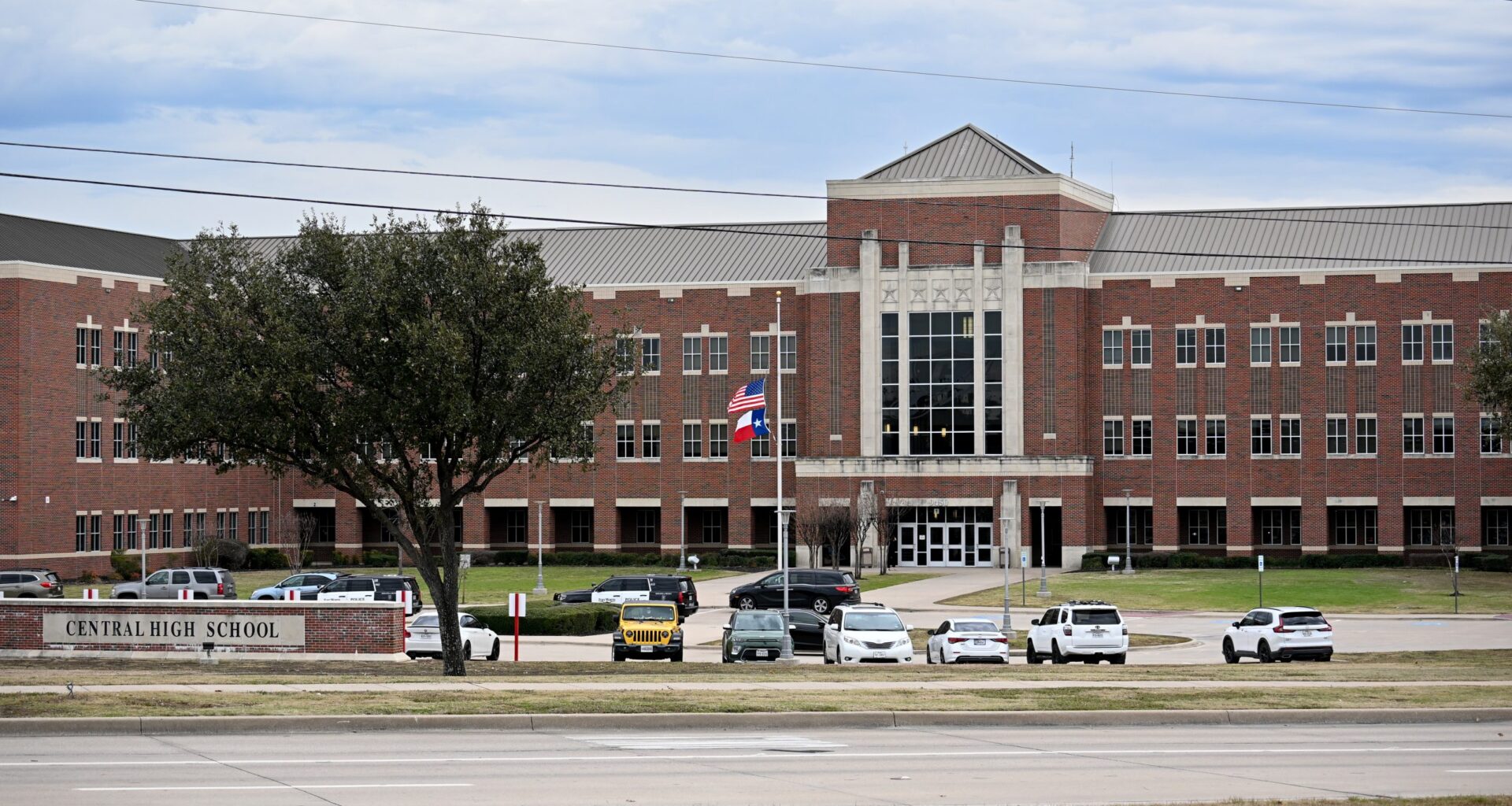
The project would preserve the newer portions of the campus constructed under the district’s 2019 bond. Major renovations at Central, Fossil Ridge and Timber Creek high schools are also included.
Proposition B: $28 million
The second proposition would fund new devices, such as tablets and laptops, for students and staff.
The district currently spends about $6 million per year from its general fund to purchase new technology. Proposition B would allow Keller ISD to borrow up to $28 million for those purchases instead, repaying the money plus interest over time through its debt-service fund, which is supported by property taxes.
Proposition C: $8.9 million
This proposition would pay for repairs to the Keller ISD natatorium. Work would include replacement of water filtration systems and repair of dehumidifiers and air-conditioning units.
The district closed the facility during the summer because of equipment failures. Student-athletes needed to go to neighboring districts to use other facilities until repairs could be made.
Proposition D: $11 million
The fourth proposition covers repairs at the Keller ISD Athletics Complex and renovations to the nearby Keller High School Fieldhouse.
Proposed renovations include restrooms, replacement of existing light fixtures, tracks and artificial grass and repair of mechanical, electrical and plumbing systems.
Proposition E: $23.9 million
The final proposition would fund the installation of artificial grass at middle school fields and high school baseball and softball fields across Keller ISD.
Three of the district’s middle school grass fields are not available to host competitions this school year, according to district officials.
Why is Keller ISD asking for the money now?
Many Keller ISD schools were constructed between 2000 and 2010, when the district was growing rapidly. Major building systems installed during that period are now approaching or exceeding their expected lifespans.
The failure of air-conditioning systems created an environment where the temperature in some classrooms reached 90 degrees, Superintendent Cory Wilson said in written responses to questions from the Fort Worth Report. Outdated plumbing has also resulted in sewage backups, limiting students’ ability to use restrooms at some campuses.
The district spends about $1 million each year to rent temporary spot coolers when permanent air-conditioning systems fail, Wilson said.
At the Aug. 27 board meeting, Deputy Superintendent John Allison said that, at the start of the school year, Keller ISD had 650 uncompleted air-conditioning repair requests — which dropped to approximately 380 by the time of the meeting.
The cost of using about 180 temporary spot coolers throughout the district was roughly $550 per device each week, before any applicable discounts, Allison said.
“Spot coolers will help reduce the temperature in the room,” Allison told trustees. “They are not a replacement for HVAC.”
Using bond money to replace these major systems would reduce the amount of operating funds spent on temporary repairs, as well as potentially lowering utility costs due to more energy-efficient equipment, Wilson said.
The district cannot directly fund teachers’ salaries through bond proceeds. But the district could redirect operating money currently spent on maintaining aging equipment toward employees and student programs, Wilson said.
He also argued that waiting would make the work more expensive.
Construction and equipment costs increase at least 6% each year, and district projections show that completing the work now may save close to $50 million compared to delaying it, Wilson said.
How was the package developed?
More than 65 people served on Keller ISD’s Citizens Bond Advisory Committee. Those individuals included Keller ISD parents, students, school staff, local business owners and other Keller-area residents.
The committee met during the first six months of the year to study school finances, review facility assessments, tour campuses and vote on potential projects.
Committee member Gavin Sullivan, a Central High School student, told trustees July 23 that members considered the entire school district as opposed to favoring individual schools or attendance areas.
“We built and rebuilt these packages multiple times to ensure we got it right,” he said.
But not everyone agreed with the size of the package.
Trustee Chris Coker — who is seeking reelection — cast the dissenting vote against putting the bond proposal on the ballot. The district should have prioritized urgent repairs, he said.
“My issue is not with the bond,” Coker said. “In general, my issue is with the amount of the bond.”
He questioned combining so many projects into Proposition A, arguing that residents who support a $200 million to $300 million proposal to fix air conditioning, plumbing and electrical problems might reject the larger amount.
Wilson defended the structure of Proposition A in his written responses. Texas law requires certain types of projects, such as technology, natatoriums and athletic facilities, to be presented on the ballot in individual propositions, he said.
Other building repairs are grouped together since the projects are related, he said.
“When the roof, the air conditioning under it and the security system in the same building are planned and bid together, the district can complete the work more efficiently and stop paying for temporary fixes,” Wilson wrote.
Some residents also expressed concern at whether the bond funds will be used properly.
Stewart Rennie, who spoke during public comment Aug. 13, wanted to know whether the proposed borrowing would actually resolve the air-conditioning problems teachers have experienced for years.
“I want to make sure that we’re using that money efficiently,” Rennie said.
A Citizens Bond Oversight Committee would monitor spending and the completion of projects if voters approve the package, Wilson said. Keller ISD completed its previous bond program on schedule and within budget, he said.
Would the bond increase property taxes?
All five propositions could be financed without raising the district’s adopted property tax rate, Keller ISD officials said.
Trustees set a rate of $1.052 per $100 of taxable property value in September, the district’s lowest tax in 38 years, according to officials.
Rising property values and paying off existing bond debt have created room within the district’s current tax rate to cover repayment of the proposed bonds, Wilson said.
What happens if voters reject the bonds?
Keller ISD would need to use its current operating budget to keep up with maintenance on aging buildings if voters reject some or all of the propositions, Wilson said.
The district would continue to pay for temporary cooling equipment and other repairs from the budget that also funds salaries and student services, he said.
Wilson did not say which projects would take priority and how they would be funded if Proposition A failed. Delaying replacements would result in increased costs, he said.
If the bonds are approved, the district plans to begin carrying out projects in 2027 on a staggered schedule over approximately three to five years.
Matthew Sgroi is an education reporter for the Fort Worth Report. Contact him at matthew.sgroi@fortworthreport.org or @matthewsgroi1.
News decisions are made independently of our board members and financial supporters. Read more about our editorial independence policy here.
This <a target=”_blank” href=”https://fortworthreport.org/2026/10/23/whats-in-keller-isds-828m-bond-heres-what-voters-should-know/”>article</a> first appeared on <a target=”_blank” href=”https://fortworthreport.org”>Fort Worth Report</a> and is republished here under a <a target=”_blank” href=”https://creativecommons.org/licenses/by-nd/4.0/”>Creative Commons Attribution-NoDerivatives 4.0 International License</a>.<img src=”https://i0.wp.com/fortworthreport.org/wp-content/uploads/2021/04/cropped-favicon.png?resize=150%2C150&ssl=1″ style=”width:1em;height:1em;margin-left:10px;”>
<img id=”republication-tracker-tool-source” src=”https://fortworthreport.org/?republication-pixel=true&post=844876&ga4=2820184429″ style=”width:1px;height:1px;”><script> PARSELY = { autotrack: false, onload: function() { PARSELY.beacon.trackPageView({ url: “https://fortworthreport.org/2026/10/23/whats-in-keller-isds-828m-bond-heres-what-voters-should-know/”, urlref: window.location.href }); } } </script> <script id=”parsely-cfg” src=”//cdn.parsely.com/keys/fortworthreport.org/p.js”></script>