

In early January, Jacob LaGrone, his brown hair swept up and back from his forehead, stood in a state district courtroom in Tarrant County and entered guilty pleas to three counts of aggravated assault of a public servant.
Eight months after he fired shots at a Westworth Village police officer and at two Westover Hills officers, LaGrone was married in France in an opulent wedding that involved a stay at the Palace of Versailles.
LaGrone, who was 31, left Criminal District Court No. 4 having avoided an adjudication of guilt in an outcome that was widely regarded as unusually lenient.
Judge Andy Porter placed him under a term of deferred adjudication probation.
The event that brought LaGrone to the courtroom occurred two years and nine months earlier when LaGrone, at a Westworth Village house with a circular driveway in a gated community, fired upon the officers, who were not injured. The house is owned by his father-in-law, Robert Brockway, who owned a group of Mercedes-Benz dealerships in the Miami metropolitan area.
The terms of the plea were seven years of deferred adjudication probation and a $700 fine. LaGrone was directed not to possess weapons, alcohol or drugs and remain under the care of a person whose initials are noted in a document. The office said it would pursue adjudication if LaGrone violates the terms.
The case was handled by Allenna Bangs, a deputy criminal division chief at the Tarrant County Criminal District Attorney’s Office. In August 2023, Bangs offered LaGrone an earlier plea agreement under which he would have been sentenced to 25 years in prison, according to a record in the district clerk’s file. The punishment range for the offense to which LaGrone pleaded guilty is five to 99 years, or life, in prison.
Cases in which a civilian shot at the police that are resolved with a negotiated plea typically involve a firm, severe punishment.
The LaGrone case was, like all state criminal matters in the county, the responsibility of Phil Sorrells, the Tarrant County district attorney.
“When that case came in, I thought, “Well, this is [going to] be a trial,” Sorrells said in an interview with a reporter this week. “And that’s how we prepared that case. It was going to go to trial. And as we work through the case, and you examine the evidence, and you examine the admissibility of evidence and where you think this case is [going to] wind up in trial, we wound up with this plea.”
“And the defense is satisfied with the plea, my office is satisfied with the plea, and the police department is satisfied with the plea,” Sorrells said.
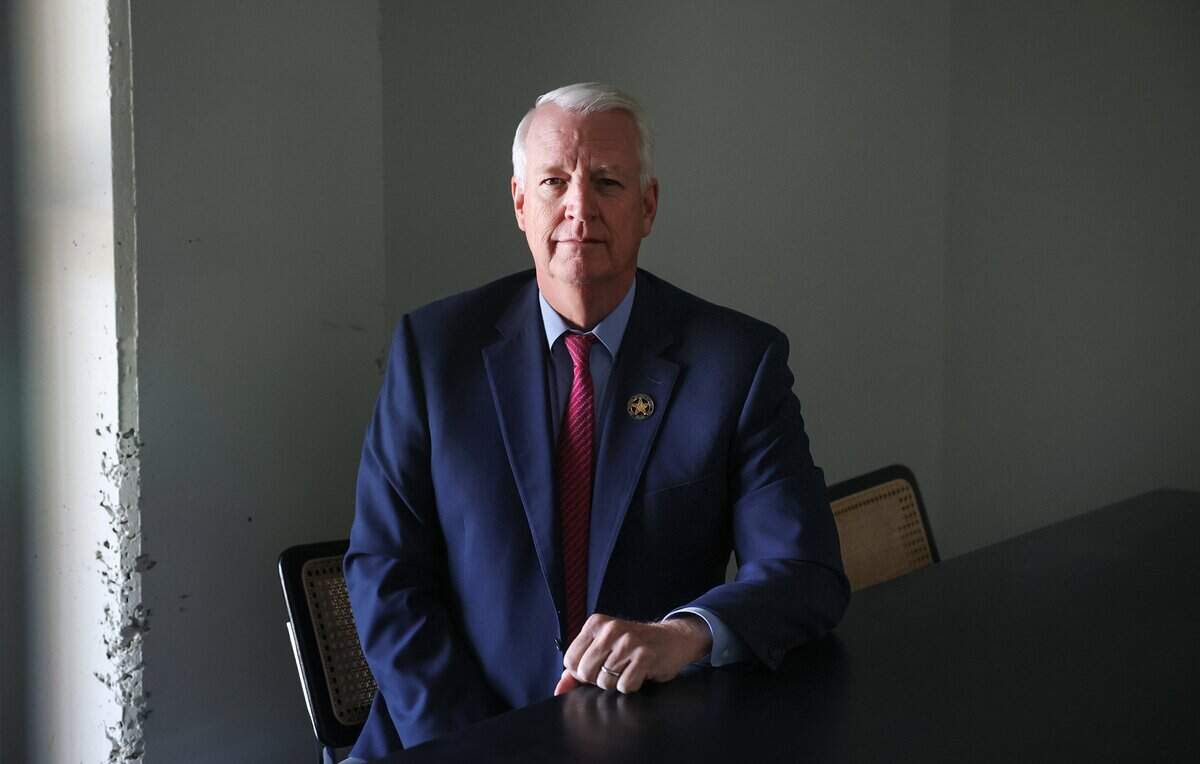 Tarrant County District Attorney Phil Sorrells on Monday, Oct. 19, 2026. Incumbent Sorrells faces Tiffany Burks in the Tarrant County district attorney race. Amanda McCoy FORT WORTH STAR-TELEGRAM
An attorney who represents LaGrone had filed a motion to suppress the search of the home. The motion noted that Brockway gave an officer a residence key that was later given to another officer who presumed it to imply consent for entry.
Tiffany Burks, who is, for a second time, challenging Sorrells to become Tarrant County’s top law enforcement officer in an election for which early voting is underway, said that her chief criticism of Sorrells’ handling of the case was that his office offered insufficient public explanation at the time LaGrone entered his pleas.
“I don’t have access to the file,” Burks acknowledged as she said in an interview with a reporter in January that she could not fully evaluate the outcome.
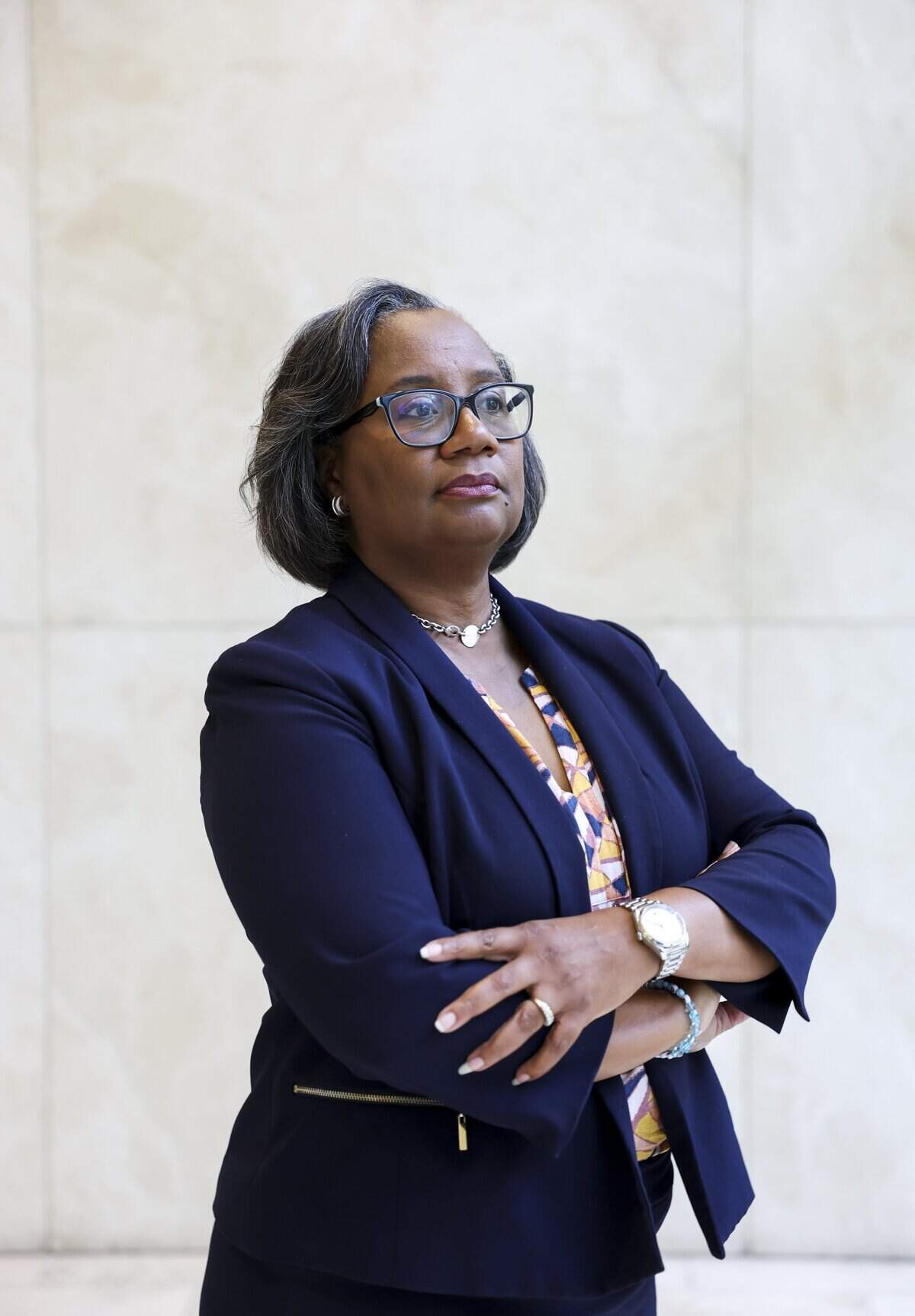 Tiffany Burks is running for Tarrant County district attorney. Abigail Dollins FORT WORTH STAR-TELEGRAM
No single factor proves any favoritism or improper influence, but the totality of the circumstances understandably fuels public suspicion, she said.
“It is not the norm,” Burks said.
Sorrells said that his opponent’s assessment is Ill-informed.
“It’s ’cause she doesn’t know the facts. I mean, but that doesn’t keep her from talking,” Sorrells said. “That’s what she wants to, again, throw things at my office that she doesn’t have anything to do with or know about.”
Sorrells, a Republican who grew up in Lubbock and who has deep ties to Texas Tech University, is running for election to a second term. Burks, a Democrat who spent her youth in Dallas’ Oak Cliff neighborhood, is a former prosecutor and deputy criminal division chief at the office she hopes to wrest from Sorrells, who defeated Burks by 6.5 percentage points in 2022.
Sorrells points to reduced crime rates
In an interview, Sorrells, a former county criminal court judge, suggested that his office was a significant contributor to a reduction in crime in Tarrant County during the three most recent consecutive years. If he is reelected, the decrease would persist, Sorrells said.
In 2025, 150 murder cases were filed with the office. As of mid-September this year, 73 had been filed. At that pace, murder filings would finish the year about 33% lower than last year.
Three homicide detective sources who at times early on in Sorrells’ term felt their cases were short sold, said that more recently they have been satisfied with how the criminal killings that they worked are being handled. In some instances a victim’s extraneous activity has made a prosecutor’s task more difficult.
“There’s some that you just can’t help look good when everyone involved has a rap sheet a mile long,” a Fort Worth Police Department homicide source said.
In January, Sorrells created a cold case task force that is using advances in DNA technology to try to identify suspects in dormant homicide investigations.
In June, the district attorney’s office filed public nuisance lawsuits intended to shut down two motels, Super 7 Inn and Delux Inn, on South Freeway in Fort Worth that are beset by crime.
Beyond criminal matters, the office is involved in other efforts.
“We have lawyers that work at JPS (Hospital.) And people don’t always pay their bills at JPS, and so we work on those collections, and we’ve collected over $8 million for JPS,” Sorrells said.
Both candidates believe violent crime should be the priority at the district attorney’s office.
“Not to say that other crimes aren’t important because they certainly are,” Burks said. “But crimes of violence against our children, against our elderly, against, you know, whomever are the cases that I want to make sure our office gets right.”
For most of the time that Burks was in the district attorney’s office, she prosecuted capital murder, murder and aggravated robbery.
Burks contends morale is low in DA’s office
Burks, in the interview, pledged to correct what she considers office supervision errors.
Under Sorrells, morale at the office is bleak and has resulted in an exodus, according to two veteran prosecutors who left the office and spoke on the condition they not be identified. Many of the office’s attorneys, particularly in its misdemeanor corps, work with basement-level spirits, according to one of the sources. Sorrells has been unwilling to seek adequate budget funding from the Commissioners Court, leaving the office understaffed, according to one of the sources.
There is “a lack of ethics in prosecution currently,” the source said.
Burks said that leadership blunders are at the problem’s crux.
“There’s no real guidance in the office. There’s no real training in the office. And the people, from what I’ve been told at least, who are in the top positions of leadership, who are making a lot of money, aren’t doing any work.
“And so if your leadership team isn’t making themselves available to try cases, to train lawyers, mentor lawyers, give them guidance, you basically have a sea of prosecutors who are running around and not really sure about what they’re doing,” Burks said. “And they end up making decisions that, not because they don’t [want to] make good decisions, because they don’t know what decisions they should be making.”
Since Sorrells was sworn in, at least 79 assistant district attorneys have resigned, according to a source familiar with the departures. The figure appears to be higher than for Sorrells’ predecessors. To be sure, the exiting attorneys were motivated to depart by a range of reasons. Some have gone to other counties that offer higher salaries.
The office’s misdemeanor section is a development ground and steppingstone for young prosecutors who take mostly DWIs and assault causing bodily injury to a family member cases to trial. Under Sorrells, attorneys representing the state often rely on equally inexperienced colleagues or, in some instances, opposing counsel, for training, sources said.
Early on in Sorrells’ term, attorneys at the office who were waiting for help in the form of a hiring blitz experienced restlessness not unlike the experience of standing by for an elevator on the plaza level at the justice center on any weekday morning. Eventually, an edict from the top came that existing attorneys should not anticipate additions to the court teams, according to one source.
“When there’s no relief coming, it gets depressing real fast,” the source said.
Burks said much of the frustration is connected to top leaders who provide insufficient training.
“I’ve had prosecutors currently come to me in back rooms and cry, literally cry. And I’m, I’m not saying complaining, crying because the office is in such bad shape,” Burks said.
Sorrells’ budget allocation decisions are flawed, Burks said.
“You know, you’ve got all this money at the top, and the people that are doing the worker bees and the soldiers that are doing the work aren’t given the tools they need to get their work done. And it gets overwhelming.”
Seven people left the office in one week about a month ago.
“So that’s got to change. That absolutely has to change because you — you can’t keep a community safe if you can’t keep your staff,” Burks said.
Sorrells says he empowers attorneys to learn
Sorrells rejected the assessment that there is widespread disillusionment among the people who work on the fourth floor at the Tim Curry Criminal Justice Center.
“I think morale’s great in my office. We have a great office and a great environment where lawyers can learn and lawyers can work,” Sorrells said.
Sorrells said that he empowers his attorneys to make decisions and wants them to feel the freedom to act, which the district attorney said he thinks enhances morale.
“And that’s what I tell them. You know, ‘I hired you to be a lawyer, and I want you to be a lawyer and make decisions,’” Sorrells said.
Ten people who left the office went on to the judiciary, Sorrells said.
“Three of them are district judges. You have magistrates, and you have associate judges. We have five people that moved and went on to the federal system.
“You think, ‘Well, people are leaving.’ Well, yeah, people are leaving, but they’re leaving because they’re good at what they’re doing, and they’re a commodity that people want,” Sorrells said.
For a time early last year, it appeared to many people in the county’s legal community that Sorrells himself may leave.
Multiple sources believed that Sorrells was on the short list to be nominated by President Donald Trump to be U.S. Attorney in the Northern District of Texas. The nomination went to Ryan Raybould, a former federal prosecutor and litigation partner at Kirkland & Ellis.
At the time, Sorrells told his staff that he was not seeking the appointment. He told a reporter then that he had not been in contact with the offices of Sens. Cornyn or Cruz and would seek re-election.
“I’ve never applied for that position. Was not interested in that position,” Sorrells said. “I think it’s just a natural reaction that when the US attorney’s position becomes open, OK, who is the president [going to] appoint? Well, you’ve got the Dallas DA, you’ve got the Tarrant County DA. The Dallas County DA is a Democrat. I’m a Republican. So I would be a natural potential choice for that office. But I committed to this position, and this is where I [want to] stay.”
Where the candidates stand on the death penalty
Burks, in an interview last week in her office at Varghese Summersett, the law firm where she took a job after her loss in the 2022 race and where she leads its criminal division, said that as district attorney she would consider seeking a death sentence.
There are brutal acts that warrant the most punitive of punishments, she suggested. Burks personally prosecuted five capital murder death penalty cases during her time at the district attorney’s office.
Over Sorrells’ four years, he has sought the death penalty for nine of the 154 defendants whose cases the office considered for death.
Three of those defendants, in agreements, pleaded guilty to capital murder and were sentenced to life without parole. A jury returned a verdict of death for one of the defendants, Valerian O’Steen.
Trials in four other cases in which Sorrells’ predecessor, Sharen Wilson, decided to seek the death penalty, have occurred during Sorrells term. Juries returned a verdict of death for Paige Lawyer, Christopher Turner and Jason Thornburg. A jury returned a verdict of life without parole for Lamont Cousins.
“Any time that the defense has come to my office and said, ‘Look, we’d like to plead guilty to capital murder if you will offer life without parole,’ and we’ve done that,” Sorrells said.
The district attorney said that the arrangement would not necessarily be offered in every death penalty case.
“I don’t think [with] Jason Thornburg it would’ve made any difference,” Sorrells said.
Thornburg killed five people over four and a half years, cut three of the bodies into pieces and sexually abused the dismembered corpse of one of his victims in a motel bathtub.
Thornburg butchered three of the people over seven days in September 2021 at the Mid City Inn in Euless. Thornburg said he ate a piece of the heart of his third victim.
Sorrells said seeking death is a sobering decision. A group of prosecutors meet to go over cases in which the death penalty is under consideration.
“There’s one vote in the room, and it’s mine,” he said. “Because it’s my name on the door, and if we’re [going to] seek the death penalty, then I’m [going to] be the one making that decision.
“So we are not saying, ‘Hey, let’s go to trial and let’s seek death on every case that we can.’ It’s reserved for the worst of the worst. … I mean, when somebody cuts up bodies and burns them and tries to hide them, I mean, that’s, that’s horrendous.”
This story was originally published October 23, 2026 at 8:59 PM.
Related Stories from Fort Worth Star-Telegram

Fort Worth Star-Telegram
Emerson Clarridge covers crime and other breaking news for the Fort Worth Star-Telegram. He works days and reports on law enforcement affairs in Tarrant County. He previously was a reporter at the Omaha World-Herald and the Observer-Dispatch in Utica, New York.