
Dominic Anthony Walsh / Houston Public Media
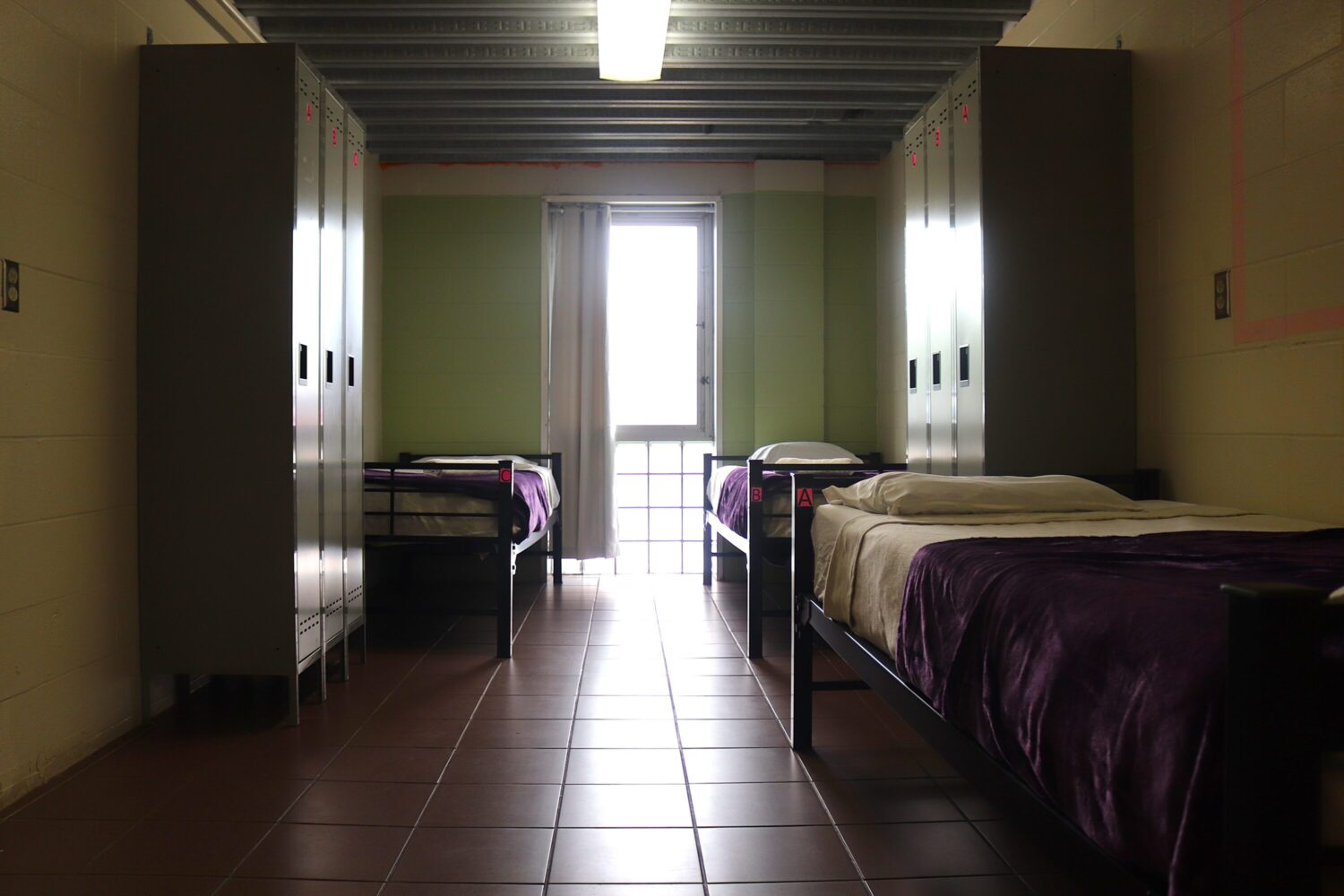
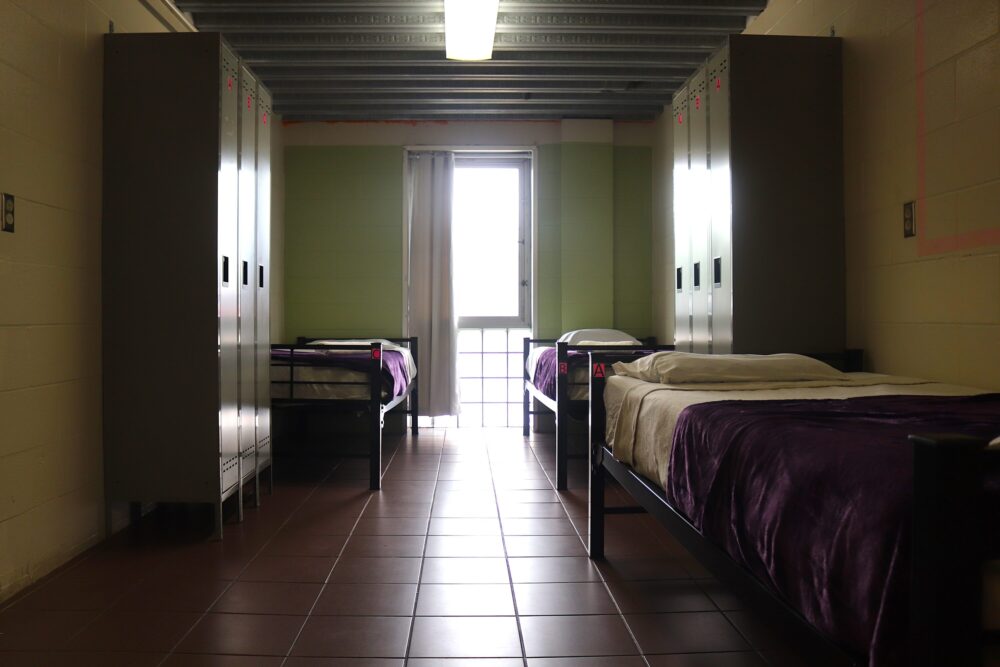
Each room at 419 Emancipation Avenue contains three beds and a set of lockers.
On Oct. 11, a man was found dead at the city of Houston’s new residential service center for homeless people in East Downtown.
A spokesperson for the Houston Fire Department said first responders were dispatched to 419 Emancipation Avenue at 10:17 p.m. for a “possible cardiac arrest, non-responsive.” The man was dead when they arrived.
The death raises questions about how effectively the center triages and responds to medical issues — questions the city and facility operator have refused to answer.
Sign up for the Hello, Houston! daily newsletter to get local reports like this delivered directly to your inbox.
A former resident of the facility, who requested anonymity because they feared retaliation from service providers, told Houston Public Media the man was 44-year-old Mark Estelle. The Harris County Medical Examiner’s office listed the time Estelle was declared dead as 10:24 p.m. The primary cause of death was not yet determined.
Houston Public Media’s attempts to reach Estelle’s family were unsuccessful.
A spokesperson for the city’s housing department referred Houston Public Media to the Harris Center, the mental health authority for Harris County operating the facility on a three-year, $39.1 million contract with the city. In a statement, a spokesperson for the Harris Center said the organization is “unable to provide any comment due to state and federal confidentiality laws.”
In a brief phone interview, Houston Housing Department Director Mike Nichols declined to answer specific questions about the incident or ongoing investigation. He expressed confidence in the Harris Center.
“They were chosen because of their expertise — their expertise in healthcare and in dealing with people who have serious mental health issues,” Nichols said. “I feel very confident in them that they are a healthcare provider, which means that health and safety are their first priorities, and they have excellent protocols. So, I’m very confident in the way they handle these very difficult situations and deal with people who are ill.”
Do you have a story or tip about homelessness to share? Email dominic@houstonpublicmedia.org
During a tour of the 222-bed facility in April before it opened, Houston Public Safety Director Larry Satterwhite told Houston Public Media residents would go through “triage just to make sure that there’s nothing significantly wrong, that they don’t need some sort of emergent medical attention.”
“We do want to keep a safe, healthy environment,” Satterwhite said.
After the tour, Harris Center CEO Wayne Young said the facility was ready to serve people with a range of medical issues, including “very serious mental health and probably physical health needs — so as long as it’s below that kind of hospital acute crisis level, then we envision being able to help support those needs here in this center.”
According to documents obtained through a public records request, the Harris Center’s approximately 80 employees at the facility are required to undergo annual CPR and first aid training. They’re expected to interact with residents on a daily basis.
Residents are subject to a 10 p.m. to 6 a.m. curfew, according to the documents. The emergency call to first responders was placed after the curfew took effect on Oct. 11.
Representatives for the Harris Center and the city did not answer questions about when staff members last interacted with Estelle before he was found unresponsive. A Harris Center spokesperson said in a statement they were “unable to provide any specific information” due to state and federal confidentiality laws.
Catherine Villarreal, vice president of public affairs for the Coalition for the Homeless of Houston and Harris County, said in a statement the organization wasn’t familiar with the specific case and doesn’t have a formal role at the facility.
“But generally speaking, as it relates to people who have experienced unsheltered homelessness coming into a residential setting: Having people pass away is sad but not unusual,” Villarreal wrote. “It’s a part of caring for people who are vulnerable.”
As of early October, Houston Housing Director Mike Nichols said more than 420 people had been served at the center since it opened in late May. About 110 of them had moved onto “positive placements,” according to Nichols, while about 150 people had “unknown” outcomes — leaving the facility instead of entering a treatment program or getting on the path to permanent housing. On average, people had stayed at the facility for more than 60 days.