
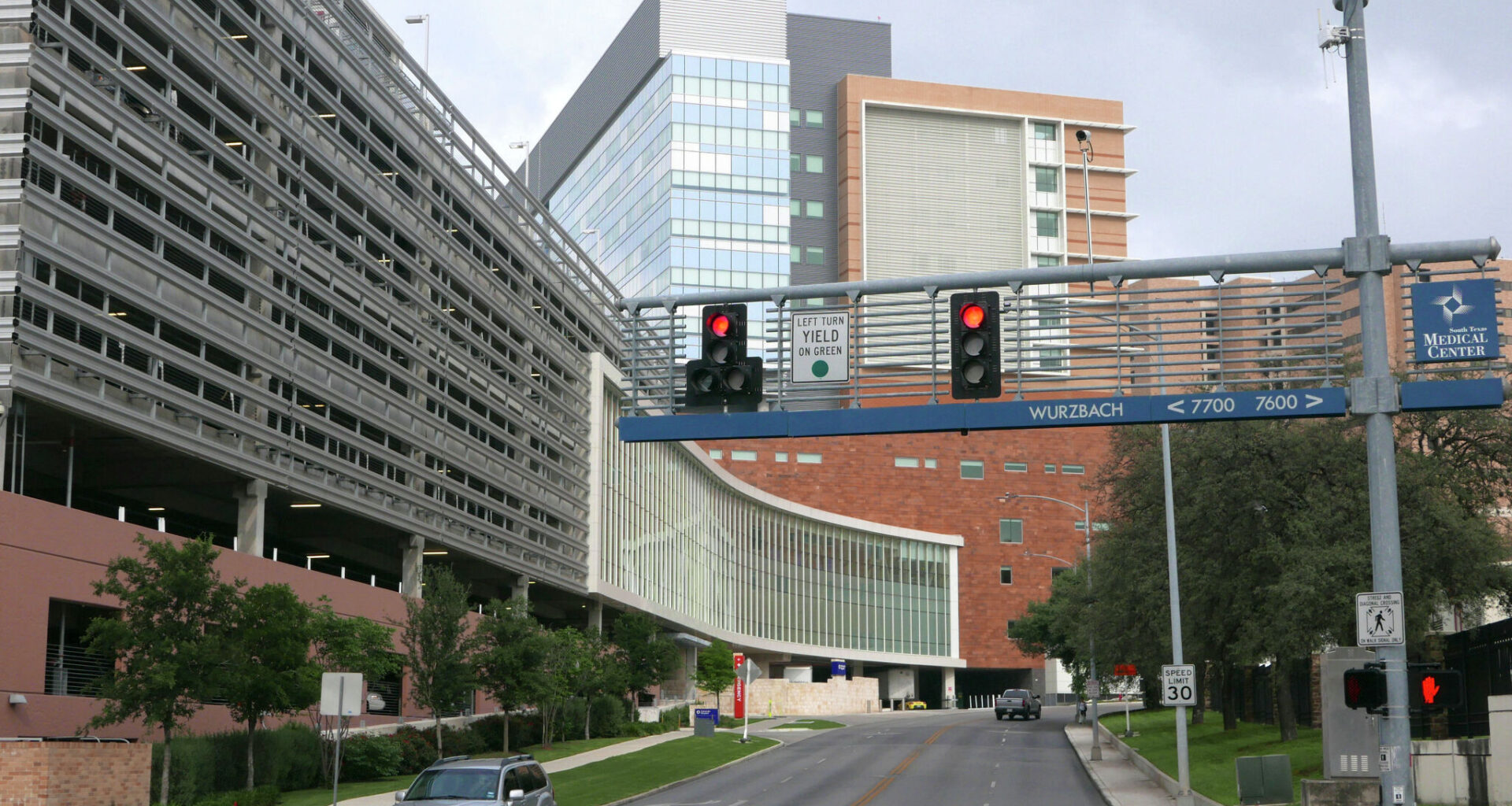
The South Texas Medical Center in District 8 is an economic driver that provides healthcare to residents from across the city. A bond program that only focuses on Districts 1 through 5 would leave this key area out of infrastructure improvements
Billy Calzada/San Antonio Express-News
Mayor Gina Ortiz Jones has proposed a city bond program mostly limited to Districts 1 through 5. Such a move divides the city when bond programs should be unifying, our guest columnist writes.
Sam Owens/San Antonio Express-News
San Antonio’s next bond program presents an opportunity to address some of our city’s most pressing infrastructure needs.

It also presents another test of how we approach difficult decisions at City Hall: whether we build consensus around the needs of our entire community or see those decisions become contests between neighborhoods, priorities and the people we represent.
Article continues below this ad
A municipal bond program is one of the most significant tools available to invest in our city’s future. It allows us to make long-term improvements to streets, drainage systems, sidewalks, parks and public facilities that residents depend on every day. These investments should be guided by demonstrated need, infrastructure conditions, urgency, public benefit and community input.
That is why I have serious concerns about Mayor Gina Ortiz Jones’ recent proposal, now checked by City Council, to reserve 85% of the upcoming 2027-2032 bond program for Council Districts 1 through 5. Equitable investment should come from a transparent, needs-based evaluation, not a predetermined distribution that prioritizes geographic boundaries over the merits of individual projects.
San Antonio is not 10 separate territories. Our residents cross district lines every day to work, attend school, access healthcare, support local businesses and enjoy public spaces. A resident of District 8, which I represent, may work downtown, have family on the South Side and travel through several districts to get to school. Improvements made in one part of our city benefit residents throughout San Antonio.
Our infrastructure planning should reflect that reality.
Article continues below this ad
A citywide bond program should begin by identifying the most critical projects across all 10 districts, evaluating them against consistent criteria, and determining where these limited public resources can deliver the greatest long-term benefit, without excluding communities from meaningful consideration before the evaluation even begins.
My concern, however, extends beyond this particular bond proposal. It reflects a recurring theme in how the mayor approaches our most difficult policy decisions.
During the fiscal 2027 budget process, the plan to fund nonprofits morphed into a public contest between organizations serving our community. Rather than fostering collaboration and evaluating contributions on their merits, the discussion pitted organizations against one another for limited resources.
We encountered similar tensions in discussions surrounding Pre-K 4 SA and Ready to Work, two city programs voters approved to advance important, complementary goals: early childhood education and workforce development.
Article continues below this ad
Both deserve rigorous evaluation, financial accountability and thoughtful consideration of their long-term sustainability. Yet rather than leading a constructive conversation about how these investments fit into San Antonio’s broader economic future, the discussion shifted to the proposed redirection of funding between the two programs, placing voter-approved priorities in competition with one another.
Now, with the proposed bond framework, we risk repeating that approach on a geographic scale.
Property taxpayers across San Antonio help support the city’s financial obligations, including debt associated with general obligation bonds. Differences in property values and the distribution of the tax base also raise important questions about how the costs and benefits of these investments are shared.
We can’t ask taxpayers to support a citywide investment while limiting consideration of their own communities’ infrastructure needs. Equity cannot mean asking one set of residents to contribute to a shared responsibility while treating their own legitimate needs as secondary.
Article continues below this ad
In District 8, we continue to experience residential and commercial growth, supported by two of San Antonio’s major economic engines: UT San Antonio and the South Texas Medical Center. That growth brings jobs, economic activity and opportunities that benefit our entire city. It also places increasing demands on our streets, drainage systems, transportation connections and public infrastructure.
These needs deserve evaluation on their merits, just as infrastructure needs in every other district do.
I advocate for a process that considers infrastructure conditions, historical investment gaps, population and economic growth, public safety, project readiness and long-term community benefit before deciding where funding should go.
Article continues below this ad
San Antonio faces real financial limitations, and we can’t fund every project. That makes choosing among them even more important. Residents deserve to understand why one project advances while another must wait. They deserve decisions supported by evidence, consistent standards and a clear explanation of how investments serve the city’s broader interests.
The success of the 2027-2032 bond should not be measured by which districts receive the largest share of funding. It should be measured by whether we address critical infrastructure needs, reduce longstanding disparities, invest public dollars responsibly and strengthen the city as a whole.
City Council Member Ivalis Meza Gonzalez represents District 8.