
The pipe organ has come to be considered a religious instrument, and indeed most such instruments are in churches and cathedrals. But a parallel secular identity can be dated back to 18th-century France, not to mention boleros and storm pieces composed in the 19th.
In the 1920s and ’30s, before every town had a symphony orchestra, audiences filled vast municipal auditoriums to hear organists play symphonic and opera excerpts and arrangements of popular melodies. In more recent decades, Virgil Fox and Cameron Carpenter have attracted big audiences for populist performances. Other organists improvise music for silent-film presentations.
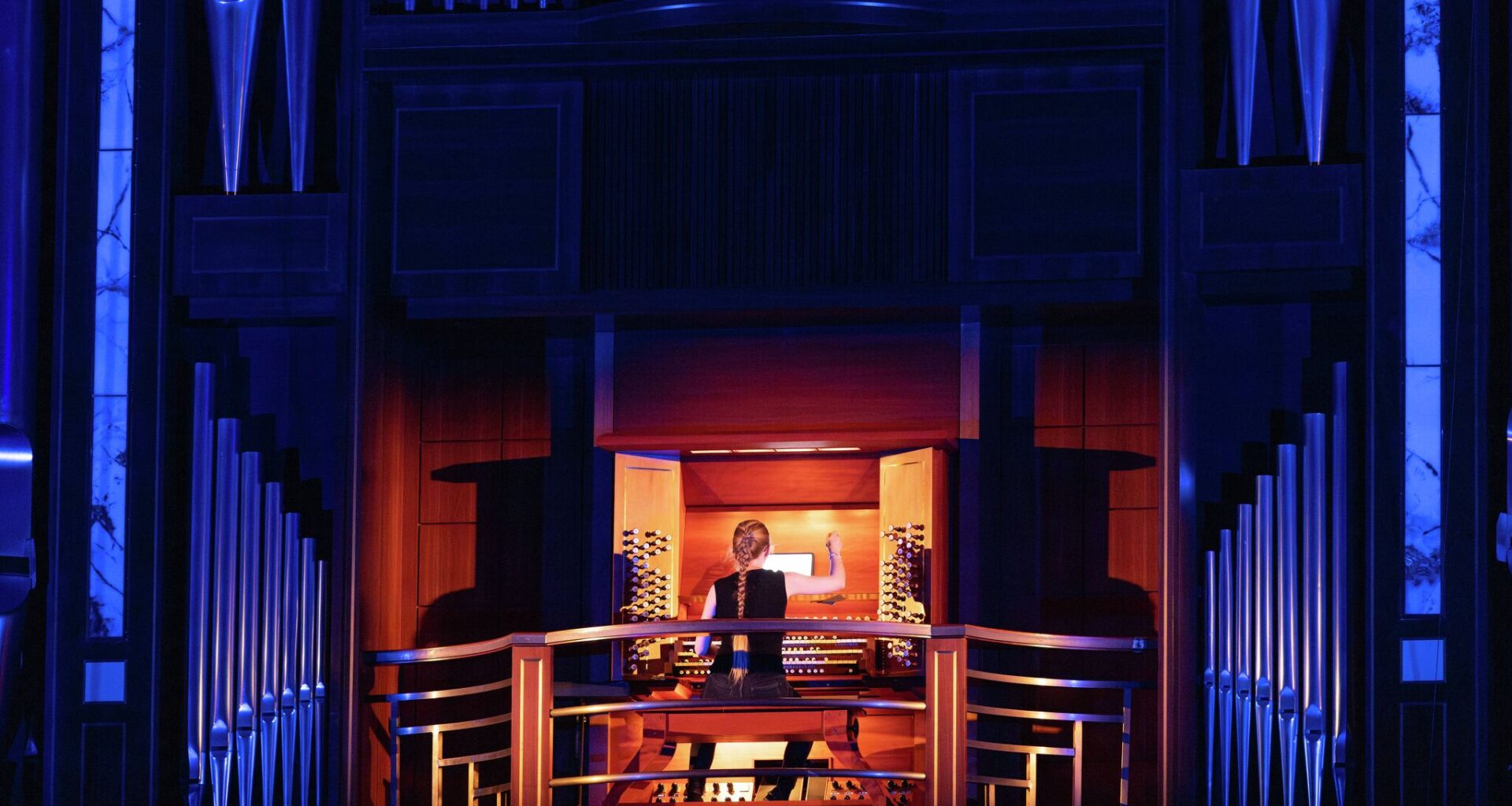
Into that varied tradition now comes British organist Anna Lapwood, with the added impact of an enormous worldwide social media following. She packs major venues on both sides of the Atlantic, and her sold-out Sunday afternoon recital at the Meyerson Symphony Center prompted booking a second performance Thursday night — also said to be sold out.
Lapwood is known for her arrangements of popular movie scores, and her Sunday program, presented by the Dallas Symphony Orchestra, included her versions of music from “The Da Vinci Code” and “Pirates of the Caribbean,” both composed by Hans Zimmer, and the “Lord of the Rings” trilogy, by Howard Shore.
An ebullient personality, Lapwood talked a lot. Before what she called a symphony from “Lord of the Rings,” she extensively traced the action, singing themes identified with characters and things. She added a few gentle vocal lines during the performance itself. The performance took 36 minutes; the spoken intro seemed almost as long. I’d have voted for less talk.
Before the “Pirates” suite, Lapwood rehearsed the audience in vocal lines from the score. A lot of people audibly knew the words and tunes and joined in singing at the appropriate moments.
The program’s sole piece composed for organ was “Limina Luminis,” by Olivia Belli. Rachel Portman’s gently hypnotic “Flight” was arranged from a piece originally for violin and piano.
Lapwood remarked on the formidable power of the Meyerson’s big C.B. Fisk organ, and she made generous use of the big trumpet and tuba stops. Deep pedal registers moved a lot of air. But a lot of the selections began with gentle, hypnotic flutings before building to enormous aural assaults. The audience got its money’s worth in decibels, but with a good deal of variety on the way there. Sarah-Anne Elizabeth McGrath supplied a virtuoso light show of shifting colors and patterns.
One doesn’t often think of organists as entertainers, but Lapwood rates the label in excelsis. She doesn’t set out to impress with dizzying speed, as Carpenter does. Her technique is obviously well grounded, though, and her elaborate registration schemes — all those crescendos and decrescendos — display both imagination and physical facility.
Big tunes and supportive pulsings great and small created atmospheres and set scenes. Heard apart from its dramatic origins, was much of the movie music musically compelling? Not so much to my ears, but the audience obviously loved the experience — and Lapwood herself.