
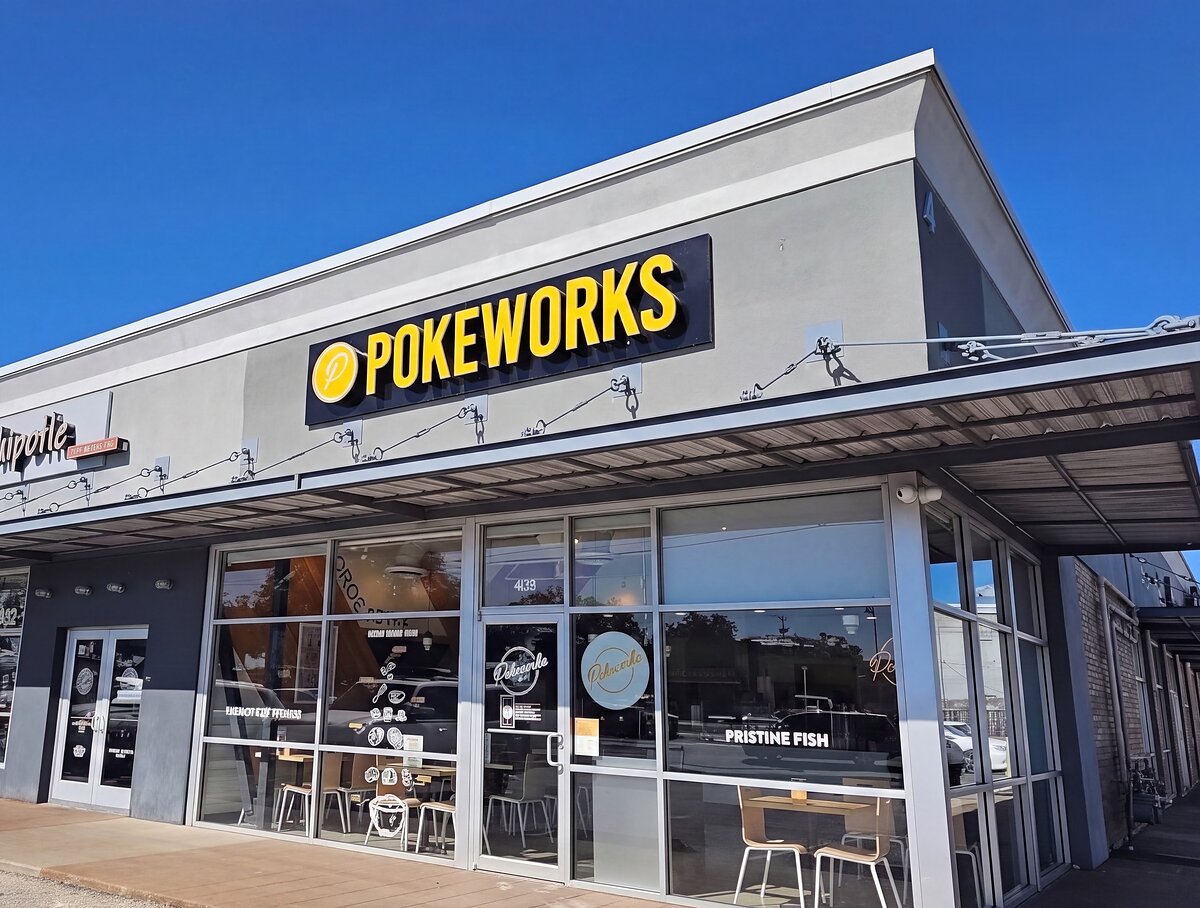
In today’s fast-casual landscape, the difference between a profitable franchise and a stalled one often isn’t the food—it’s the floor plan. Build-out costs, kitchen requirements, and the hunt for the right corner can make or break a growth plan. That’s exactly why the Austin-market expansion of Pokeworks franchisees Carol and Marcos Blanco is worth a close read.
Pokeworks, billed as the largest and fastest-growing fast-casual poke brand known for its fresh, customizable offerings, is deepening its Texas footprint as the Blancos push toward their seventh location. The couple currently has six restaurants open, with a seventh planned to open by the end of 2026 in Round Rock at 2601 Sundance Parkway.
A Franchise Built on Ambition—and Timing
The Blancos opened their first Pokeworks in Austin in June 2020 after relocating to the United States—an opening that landed squarely during the COVID-19 pandemic. When offered the choice to secure a territory for either three or five locations, they went big, committing to five stores and establishing an early foothold in the Austin market.
That ambition has since grown into a seven-unit operation. Their second opening of 2026 will mark number seven overall, continuing a measured but persistent development pace rooted in site selection discipline.
Why the Pokeworks Model Unlocks Real Estate Flexibility
Here’s the operational detail that matters most to prospective operators: Pokeworks’ streamlined footprint doesn’t require full-service kitchens or hoods. That single feature dramatically widens the universe of viable locations.
Because the brand skips the heavy kitchen infrastructure that defines most fast-casual concepts, franchisees can repurpose second-generation restaurant spaces—including former coffee shops, boba spots, and juice bars—to launch faster and more cost-effectively.
Simplified kitchen requirements that reduce build-out complexity.
No required hoods, opening up spaces that would otherwise be off-limits.
Second-generation conversions that accelerate the path to opening.
The Blancos’ Cedar Park location proves the point: it was converted into a Pokeworks in two months from start to finish.
“For us, it’s been worth it to wait to find the right location that fits our business goals,” said Marcos Blanco, Pokeworks Franchisee. “Pokeworks’ streamlined construction and operations give us incredible site flexibility, making the launch process faster and more efficient—especially when taking advantage of second-generation spaces.”
Relationships Before Real Estate
Flexibility on the physical side has let the Blancos play a longer, more strategic game on the deal side. Rather than chasing whatever’s available, they cultivate relationships in target areas and stay ready to move when the right space surfaces.
“Sometimes finding the right location means starting the conversation early,” said Carol Blanco, Pokeworks Franchisee. “We’ve learned to be proactive and build relationships with owners and stay connected to areas where we see potential for Pokeworks to thrive. Having that flexibility in the types of spaces we can consider has been tremendously valuable.”
A Hands-On Operating Philosophy
Even at seven units, the Blancos run their business much as they did with a single store. Marcos remains heavily involved in day-to-day operations, while Carol oversees administrative functions—a level of involvement that has strengthened their ties with the Pokeworks corporate team.
The couple credits Pokeworks’ leadership with providing significant support throughout their franchise journey, particularly during those early pandemic-era days. Carol describes the relationship as more like a family than a traditional franchisor-franchisee arrangement.
“Carol and Marcos’ success is a testament to their strong and driven commitment to finding the right sites for their business,” said Peter Yang, Co-founder of Pokeworks. “Finding a great location and pairing it with high-level operations is the key to building a successful Pokeworks restaurant, and they’re a wonderful example of how to do just that. We look forward to working alongside them as they continue to build a strong presence in the Austin area.”
Why It Matters
For restaurant operators and multi-unit franchisees, the Blanco playbook is a blueprint for scaling without getting buried in build-out costs. A kitchen model that doesn’t require hoods or full-service infrastructure isn’t just a convenience—it’s a strategic lever that expands your pool of leasable sites and compresses the timeline from signed lease to open doors.
The practical takeaways for operators and prospective franchisees:
Chase second-generation spaces. Former coffee shops, boba spots, and juice bars can slash build-out time—Cedar Park went from empty to open in two months.
Match your concept’s kitchen footprint to your real estate strategy. Lower infrastructure demands mean more viable locations and faster returns.
Be proactive on deals. Building relationships with property owners in target markets puts you first in line when prime space opens up.
Stay hands-on. Operational involvement at scale protects quality and deepens your partnership with the brand.
In a climate where construction costs and lease terms are squeezing margins, concepts with low-infrastructure requirements have a real competitive edge in site selection—and that’s a trend worth watching across QSR and fast casual.
The Takeaway for Growth-Minded Operators
The Blancos’ story shows how patience, relationship-building, and a flexible brand model combine into durable, repeatable growth. More information on Pokeworks’ franchise opportunities is available at pokeworks.com/franchise.
For more on how operators are scaling smart, see our coverage of Urban Bird Hot Chicken’s franchise expansion and how a hospitality group brought new concepts to the Austin market.
Are second-generation spaces part of your expansion strategy? Tell us how you’re approaching real estate and build-out in the comments.
Written by Michael Politz, Author of Guide to Restaurant Success: The Proven Process for Starting Any Restaurant Business From Scratch to Success (ISBN: 978-1-119-66896-1), Founder of Food & Beverage Magazine, the leading online magazine and resource in the industry. Designer of the Bluetooth logo and recognized in Entrepreneur Magazine’s “Top 40 Under 40” for founding American Wholesale Floral. Politz is also the founder of the Proof Awards and the CPG Awards and a partner in numerous consumer brands across the food and beverage sector.