
We don’t envy public university presidents. College campuses are supposed to be bastions of free speech, and university leaders have to make all sorts of judgment calls within the bounds of the First Amendment. They also have to weigh the fact that anything they do can exacerbate political attacks against their institutions — attacks that can affect their budgets and students’ educations.
Criticism comes with the job, and anyone who wishes to be a university president should grow thick skin. But let’s not pretend that decisions about speech are straightforward. When it comes to making pronouncements on the controversy du jour or allowing the latest provocateur on campus, public university presidents are damned if they do and damned if they don’t.
Perhaps no state university crystallizes this tension better than the University of Texas at Austin.
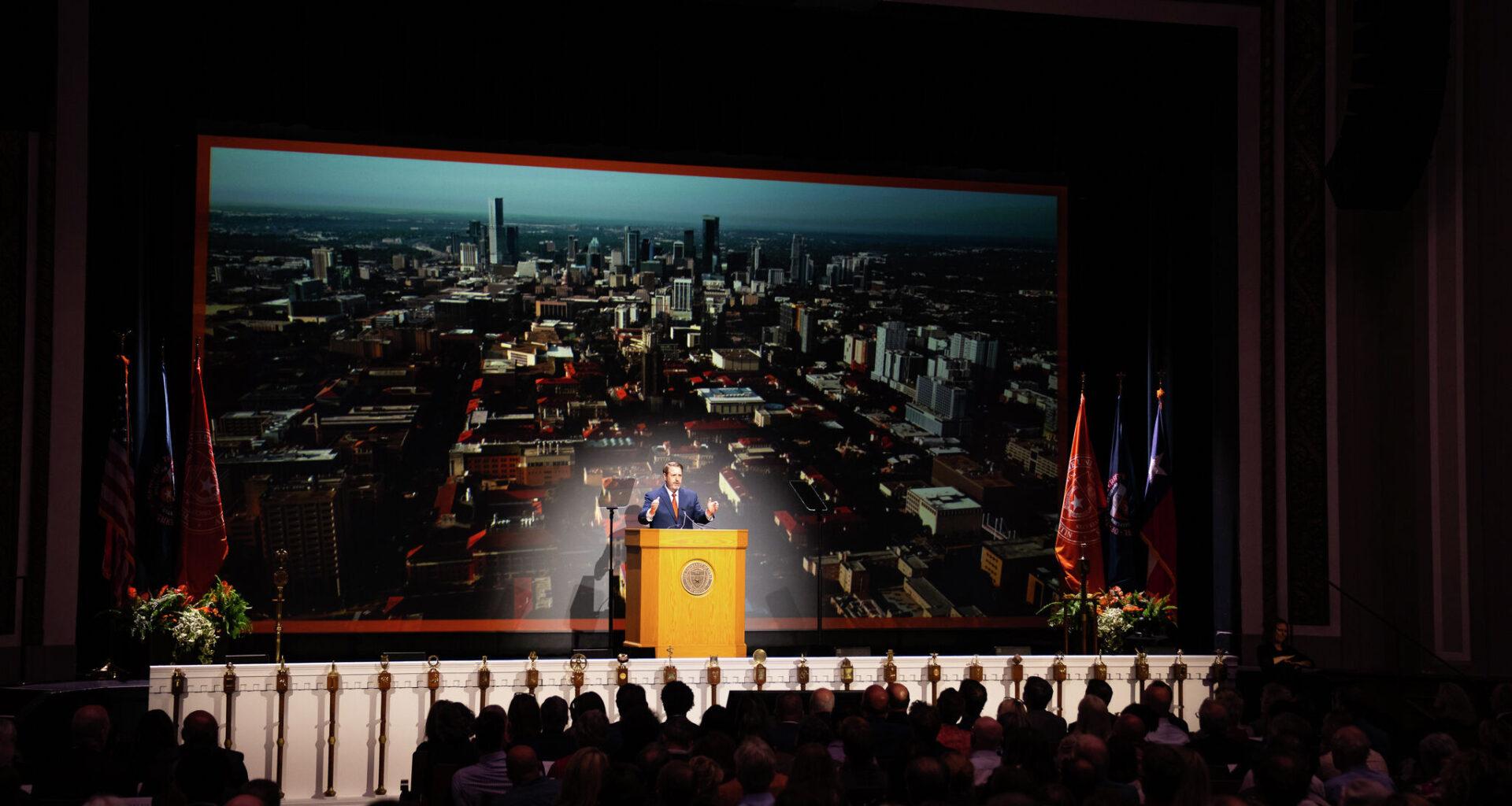
UT President Jim Davis spoke out 35 hours after French’s post. “Our students are exceptional. All of them are Longhorns,” Davis wrote.
This editorial page supports institutional neutrality. Too many colleges have been pressured to take political stances that chill the speech of students and professors with differing viewpoints.
Rare situations do warrant an institutional response, as was the case here. UT’s own student body was targeted in a public way. Some students and alumni thought UT’s response was too slow or tepid, but a university is not wrong to take its time deciding what it will say and how it will say it. It’s not lost on us that French was photographed campaigning with Gov. Greg Abbott and Lt. Gov. Dan Patrick this summer. Wading into an argument with a Republican nominee for statewide office is fraught with risk about antagonizing politicians who can punish UT financially or otherwise. Already Abbott has restricted public universities’ ability to hire foreign workers.
Another recent incident at UT is illuminating. Many students complained about UT hosting Myron Gaines, a racist and misogynist manosphere influencer invited to campus by a student group Oct. 7. UT police broke up the event after Gaines directed profanities at students in the crowd, according to the Austin American-Statesman.
Some students say the university made them unsafe by hosting Gaines, though his hate speech is legally protected. Meanwhile, the Foundation for Individual Rights and Expression said it’s investigating the shutdown of the Gaines event and looking into more than $17,000 in UT security fees charged to a student group for hosting far-left influencer Hasan Piker.
Davis issued a statement to students reiterating speakers’ legal rights while encouraging students to be thoughtful about how they respond to offensive speech. His words are worth quoting here: “Don’t take the bait of someone seeking to provoke you. They don’t define you, your character, or your place in the world and on your campus.”