
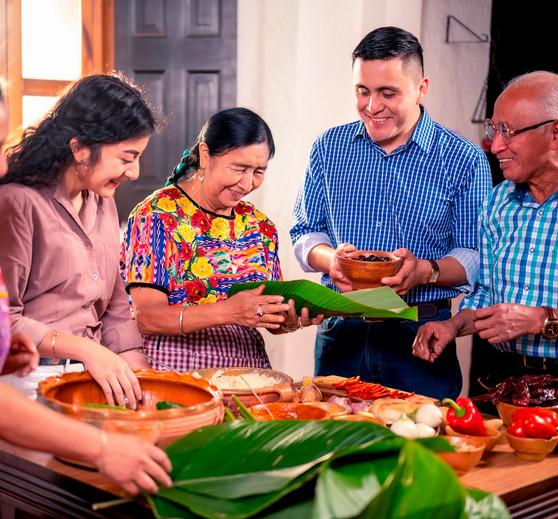
A Spencer Foundation grant will support research documenting how Indigenous knowledge and learning continue through community gathering, cultural camps and other informal settings across Texas.
A research team that includes Marissa Muñoz, PhD, associate professor in the Department of Interdisciplinary Learning and Teaching in the College of Education and Human Development, received a Spencer Foundation Small Grant for education to document Indigenous educational systems and community learning across Texas.
The project, “Kinship Visits for Educational Futurities: Mapping Indigenous Educational Systems in Colonial Texas”, will examine learning that takes place outside formal schools. The team will document cultural camps, community gatherings and the ways knowledge is shared across generations.
“Learning doesn’t only happen in the institution,” said Muñoz, co-principal investigator. “It happens in these small community spaces that many of us have been part of.”
The team includes faculty from UT San Antonio (Muñoz), Pablo Montes, PhD from Texas Christian University and Marleen Villanueva, PhD from Stony Brook University. Their work seeks to counter the misconception that Native people and Indigenous cultures have disappeared from Texas. Muñoz explained that histories of colonization and shifting political conditions have shaped how Native people are identified and represented.
“The roots are deep, and the roots are still alive,” Muñoz said. The project will highlight specific community efforts and honor the people who sustain them.
The researchers will use an Indigenous feminist methodology that centers relationship-building, or visiting, rather than treating community members’ stories as information to extract. The approach emphasizes including a range of voices, ensuring experiences are represented accurately and remaining accountable to the communities involved.
Muñoz said the research is meant to involve more than academic experts. Community members, elders and people with varied experiences hold knowledge that reveals how learning happens outside school settings. The team plans to share its findings in ways that are useful and accessible to the communities whose knowledge shapes the project.
A public website will feature a map of Texas and introduce visitors to the places, people and community education efforts connected to the project. Muñoz said the team hopes the site will serve a broad audience, including educators, homeschoolers and community members, rather than academic readers.
Muñoz said the project is about more than documenting these efforts. By sharing community stories through a public website, the team hopes they will inspire others and help Indigenous knowledge continue to grow. “Knowledge can also contribute to the nurturance of other seeds that might be sprouting in quiet ways,” she said.