
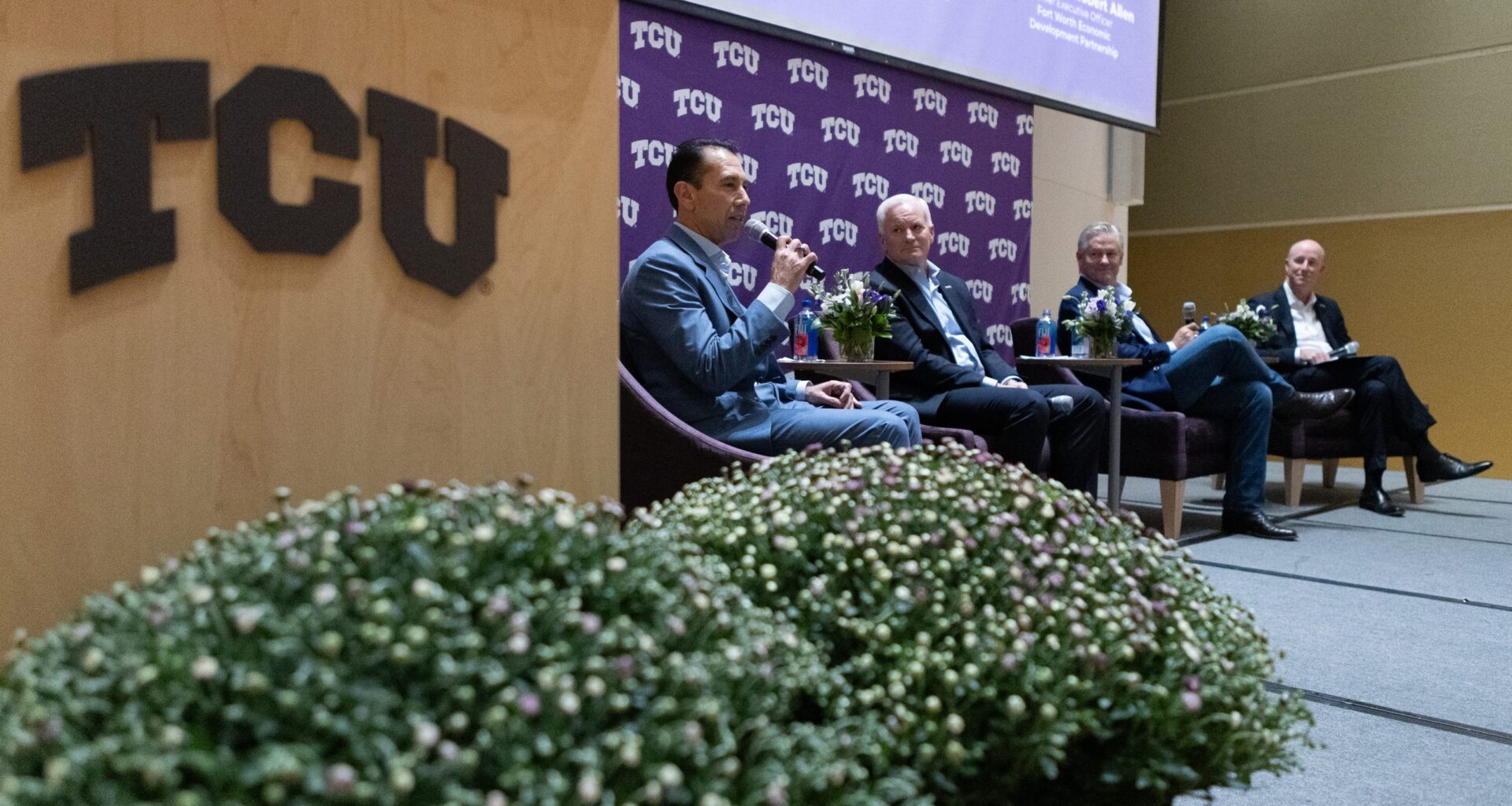
North Texas airport and airline leaders cited big numbers when they described their industry’s economic impact.
Hundreds of thousands of customers daily. Hundreds of thousands of jobs. Billions of dollars in economic activity.
Those figures, they said, start with people — and finding the right ones.
“We’re a people-serving-people business,” American Airlines CEO Robert Isom said.
At the Oct. 27 celebration of Texas Christian University’s new professional aviation degree, leaders from American, Southwest Airlines and Dallas Fort Worth International Airport said the industry’s growth hinges on finding workers who pair technical skill with a commitment to the people they serve. TCU is betting its program can help supply them.
Through its College of Education, TCU offers a bachelor’s degree with a minor in aviation studies and a concentration in aviation administration. The degree helps prepare students for leadership roles in airlines, airports and aviation organizations. The professional pilot track is planned for fall 2027.
Fort Worth’s position as one of the country’s leading aerospace hubs gives the university access to industry expertise, potential partnerships and opportunities, TCU Provost Floyd Wormley Jr. said.
“It also gives TCU an opportunity to best educate the talented professionals who will lead this industry to the next level — in a way that nobody does like TCU,” Wormley said.
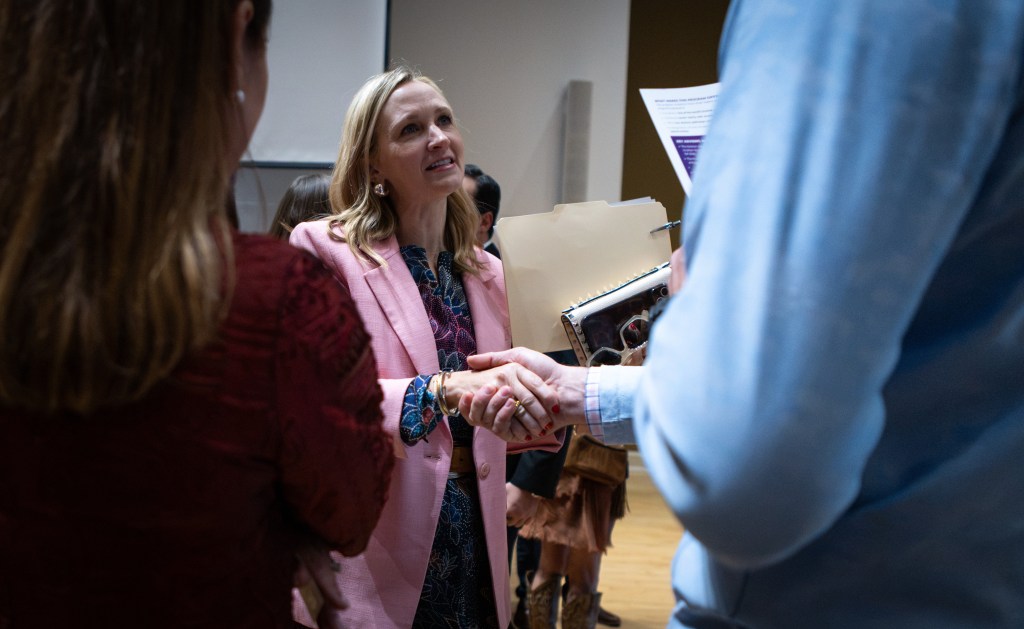 Fort Worth Mayor Mattie Parker shakes an attendee’s hand during a TCU Professional Aviation Degree panel Oct. 28, 2026, at Texas Christian University in Fort Worth. (Elvis Martinez-Cartagena | Fort Worth Report)
A TCU study estimated that American Airlines’s DFW hub supports about $70 billion in annual economic output and 350,000 jobs across North Texas. American serves about 700,000 customers daily, Isom said.
TCU’s coursework covers aviation safety, airport operations and decision-making. The range of career pathways appealed to Anastasia Kalulika, a TCU aviation student whose childhood dream was to become a flight attendant.
Kalulika, born in Congo and raised in South Africa, remembers being drawn to Emirates flight attendants’ uniforms and red lipstick. But her first flight to the United States at 17 frightened her enough to reconsider that dream.
But even after considering business, she found herself drawn back to aviation when she moved to Fort Worth and explored transferring to TCU.
Her classes cover aviation history and the physics of flight, Kalulika said. Learning about the people working behind the scenes has helped her see more possibilities for herself. Now she wants to work in airport management and is considering a business minor.
“I know now I have more options than just a flight attendant,” she said.
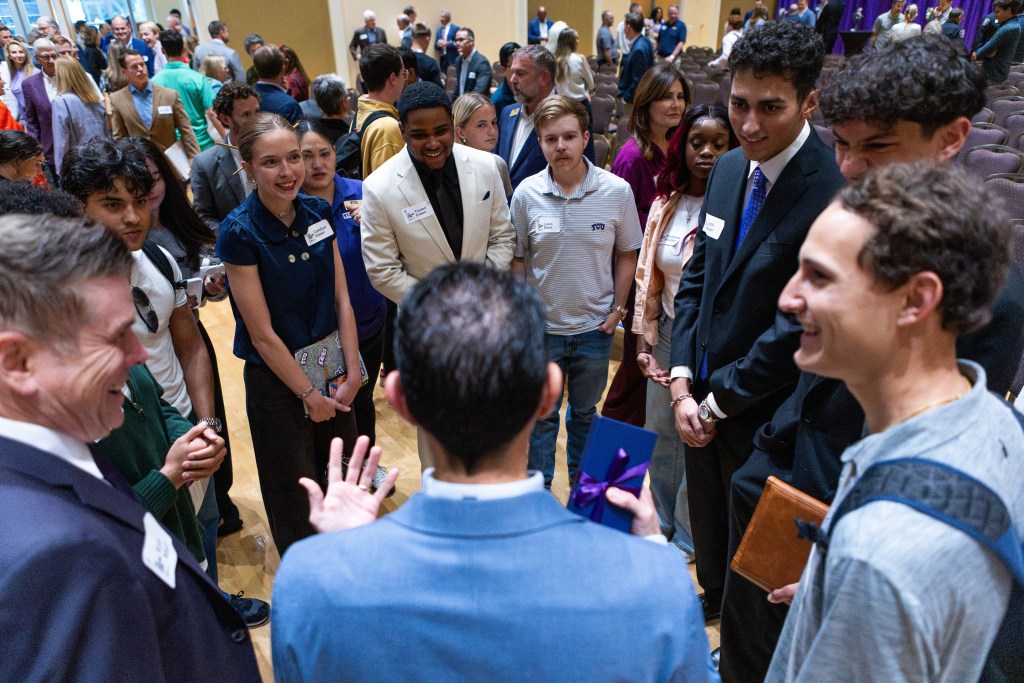 José Freig, vice president for business operations at American Airlines, speaks to students during a TCU Professional Aviation Degree panel Oct. 28, 2026, at Texas Christian University. (Elvis Martinez-Cartagena | Fort Worth Report)
Grant Morris, vice president of flight operations at Southwest, said employers need curious, motivated people who find work they enjoy. He wants people who can creatively analyze data to anticipate aircraft and pilot performance and improve safety and efficiency.
But that creativity begins long before they work for Southwest. For about two dozen TCU aviation students in attendance, Morris offered a habit to carry beyond graduation.
“I encourage our team to ask questions all the time, even if you think you know the answer,” he said.
DFW Airport CEO Chris McLaughlin described using artificial intelligence to improve heating and cooling maintenance as their airport faces pressure from retiring tradespeople. He wants to build an internal team of data scientists and engineers to grow the airport.
Employees either serve customers directly or support someone who does, said José Freig, vice president for business operations at American Airlines. Some of the most useful technologies, such as saving fuel or improving the airport’s operations, are those that customers never see, he said.
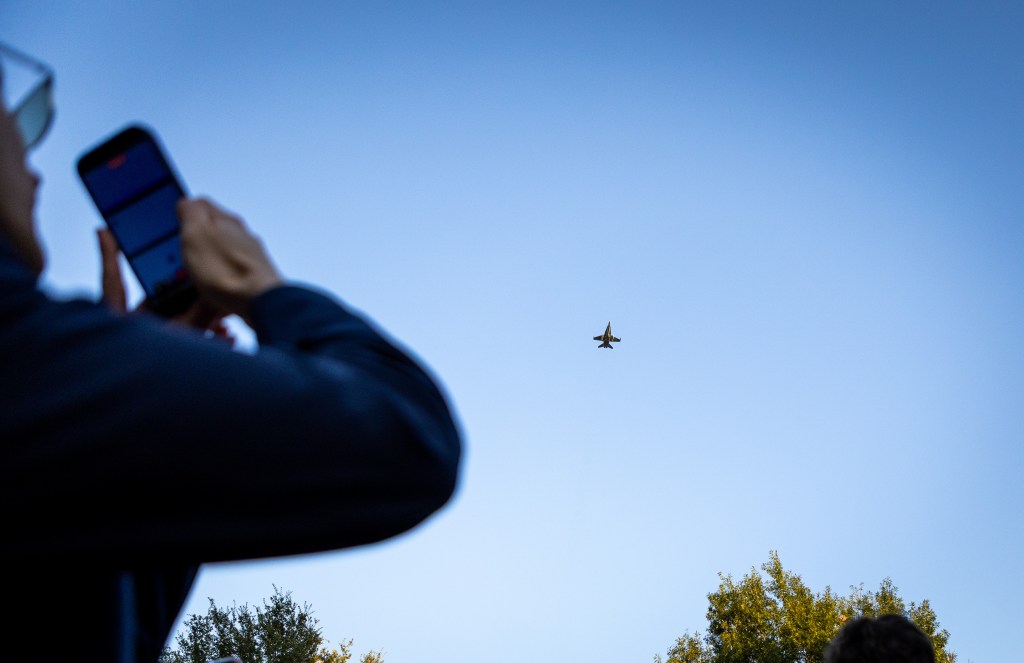 An F-18 plane does a fly over during a TCU Professional Aviation Degree panel Oct. 28, 2026, at Texas Christian University, in Fort Worth. (Elvis Martinez-Cartagena | Fort Worth Report)
North Texas airport and airline leaders described different challenges in their daily work.
A geopolitical problem overseas. A constant stream of emails. A call at 2 a.m.
Solving those challenges, McLaughlin said, starts by taking care of the people that the airport serves — employees, customers and community members.
Dang Le is the higher education reporter for the Fort Worth Report. Contact him at dang.le@fortworthreport.org.
The Fort Worth Report partners with Open Campus on higher education coverage.
The Report’s higher education coverage is supported in part by major higher education institutions in Tarrant County, including Tarleton State University, Tarrant County College, Texas A&M-Fort Worth Christian University, Texas Wesleyan University, the University of Texas at Arlington and UNT Health Fort Worth.
At the Fort Worth Report, news decisions are made independently of our board members and financial supporters. Read more about our editorial independence policy here.
This article first appeared on Fort Worth Report and is republished here under a Creative Commons Attribution-NoDerivatives 4.0 International License. 