
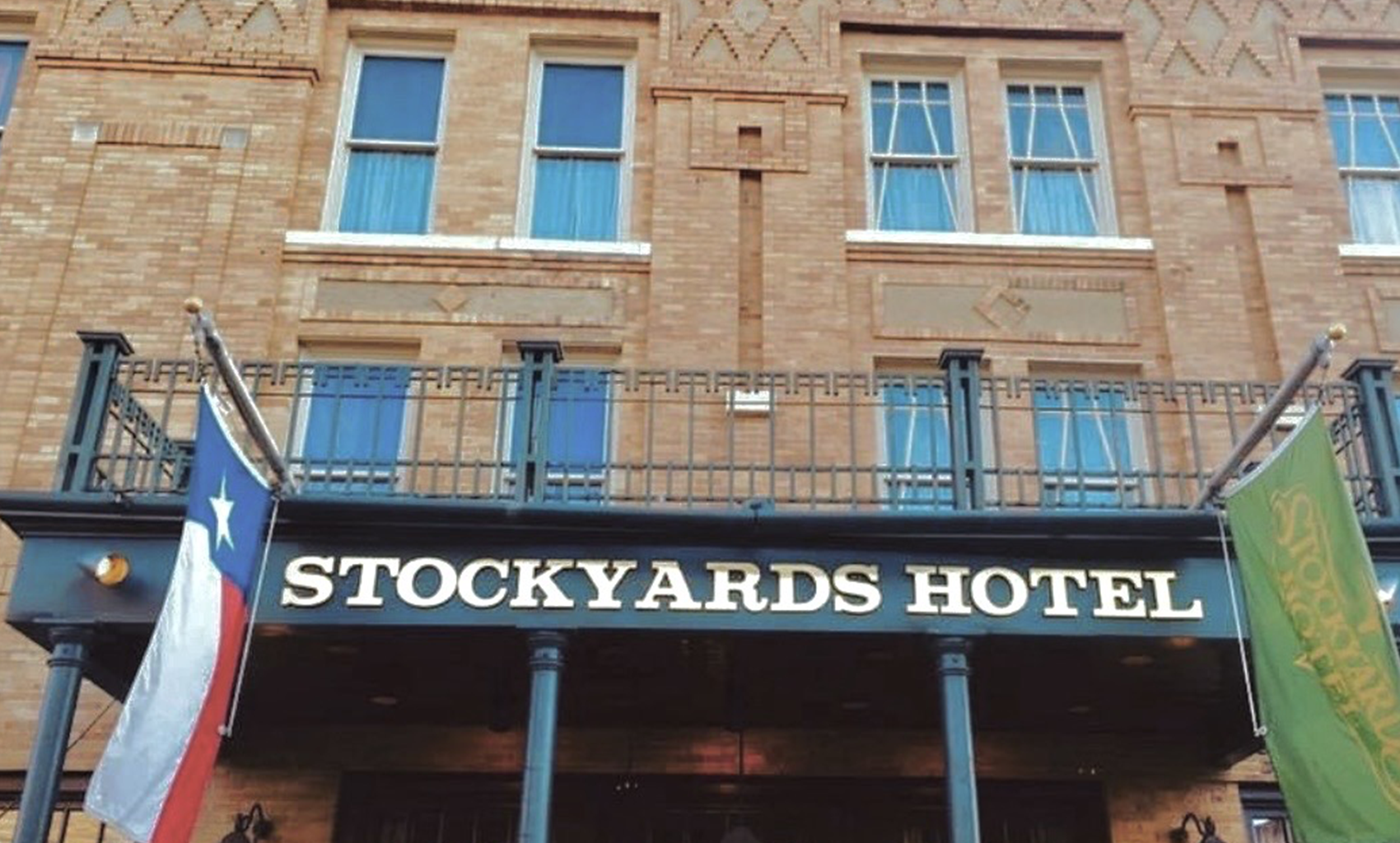
For nearly 120 years, the yellow-brick Stockyards Hotel has remained within Fort Worth’s ever-changing landscape. Once reportedly used as a hideout for Bonnie and Clyde, the hotel has witnessed more than a century of change in the historic Stockyards district. Now, the landmark property is undergoing a $30 million renovation that will reshape its interior while preserving its historic character.
History
In 1904, real estate developer Col. Thomas M. Thannisch purchased the property and built the Stockyards Club, a luxury two-story wooden hotel that welcomed visitors to Fort Worth’s booming livestock district. In 1907, the property expanded eastward with the construction of a three-story brick structure and an attached building for commercial use.
The original wooden structure was later demolished to accommodate an expansion of the brick building. The 86-room hotel reopened in 1913 as Hotel Chandler, named after its proprietor, Robert L. Chandler.
In 1984, the hotel underwent another major restoration following a change in ownership from the Thannisch family. The property is also recognized for its historic significance as part of the Fort Worth Stockyards National Register Historic District.
Preservation
When Stockyards Heritage Development Co. purchased the hotel, its future was uncertain. Preservationists recognized the property’s high real estate value but questioned the company’s plans for the historic building.
“Although the Stockyards in its entirety was on the national register, national register designation does not save buildings,” said Jerre Tracy, the executive director of Historic Fort Worth. “Historic Fort Worth was concerned that the entire Stockyards was going to be so competitive for high-end hotels.”
Although inclusion in the National Register of Historic Places does not automatically prevent alterations, the hotel has additional protections through its local landmark designation. Tracy said the city monitors renovation projects to ensure they comply with applicable preservation requirements.
Historic preservation incentives can also encourage developers to restore older properties. According to Tracy, developers seeking certain financial incentives must meet preservation standards to qualify.
Despite the organization’s initial concerns, Tracy said she is optimistic about the hotel’s future as developers invest in restoring the property.
“Our Historic Fort Worth interest in this hotel is truly to see it preserved, which is going to happen,” Tracy said.
For Tracy, the renovation represents a larger challenge facing Fort Worth as development continues throughout the Stockyards: balancing new investment with the preservation of the district’s Western identity.
“When people are investing in your city who are not from here, as long as they are respecting the buildings that make us unique, that’s the goal,” Tracy said.
The renovation
The renovation itself consists of interior demolition, construction and remodeling of the existing 50 rooms.
Guests can expect exterior improvements and revised public spaces, according to the original state filing.
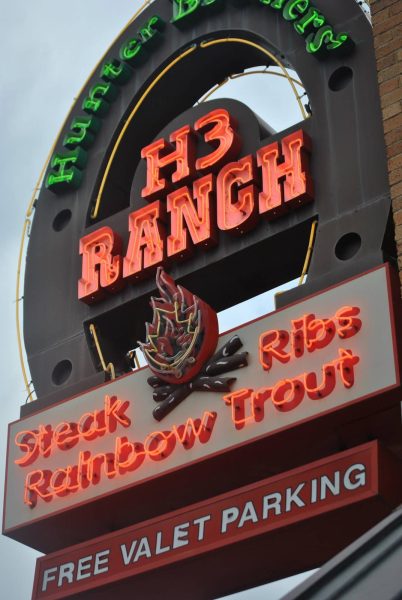 H3 Ranch, located inside the historic Stockyards Hotel, is undergoing renovations as part of the property’s multimillion-dollar redevelopment in Fort Worth’s Stockyards. (Courtesy of H3 Ranch via Facebook)
The filing does not specify whether the room count will change, how individual rooms will be redesigned, or which historic interior features will be preserved.
A separate $1.5 million state filing describes a new front entrance canopy, a new rear patio canopy, an outdoor bar and seating area and the replacement of an existing deteriorated rear deck.
The attached restaurant and bar, H3 Ranch and Booger Red’s Saloon, will also undergo major renovations.
Confirmed work includes new kitchen equipment, lighting, mechanical systems, plumbing and electrical upgrades.
The developer has also announced plans to refresh the dining room while retaining the restaurant’s established character. H3 Ranch is expected to reopen before the hotel in late 2026.