
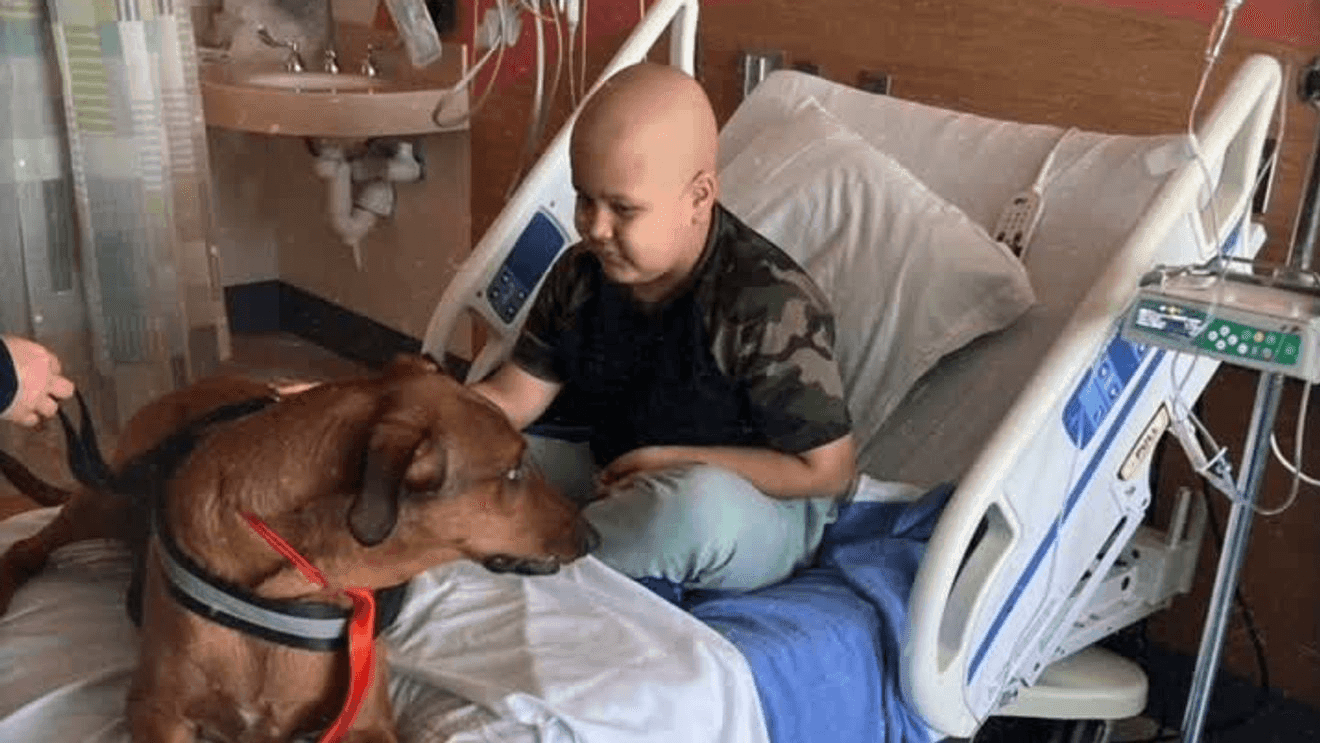
When Nathan was 9 years old, a painful bump on his arm changed his family’s lives. What they initially thought was an injury from a fall at school turned out to be Ewing sarcoma, a rare and aggressive form of cancer.
Nathan is the oldest son in his family and had been healthy before his cancer diagnosis. After he fell at school, he began experiencing pain in his arm. When the pain and bump failed to go away, his mother, Adelene Avila, took him to the emergency room.
In an interview conducted in Spanish and translated to English, Avila said, “They did X-rays, and they knew right away that something wasn’t right.”
Nathan was diagnosed with Ewing sarcoma, a rare cancer that can develop in bones and surrounding soft tissues. He remained in the hospital for 10 days after that emergency room visit before beginning treatment.
For Avila, learning that her young son had cancer was devastating.
“My world came crashing down,” she said. “We all think that this is something that could never happen to them, but it was just something unexpected.”
The tumor was found in an unusual location, according to pediatric oncologist Dr. Benjamin Carcamo.
“Ewing sarcoma is rare, and we only see it in maybe about one percent of all the children that we diagnose with cancer,” Carcamo said.
The disease can develop quickly and spread to other parts of the body, making early diagnosis and aggressive treatment critical.
“The most important is pain,” Carcamo said. “When the pain starts, that is the first warning sign, and the soft tissue tumor- whenever you feel the lump- so any lump has to be evaluated.”
He emphasized that children experiencing persistent pain, especially when accompanied by a lump, should be evaluated immediately.
Nathan began treatment in August 2022, and in November, he underwent surgery to remove the tumor, followed by continued chemotherapy.
His operation was a limb-sparing procedure using a cadaver bone graft, allowing doctors to preserve his arm and retain full use of his hand.
Ewing sarcoma treatment often combines chemotherapy and surgery, with radiation used in some cases. Carcamo said chemotherapy is typically started first to shrink the tumor, relieve pain, and address cancer cells that may have spread elsewhere in the body.
He said children diagnosed early, as Nathan was, have a better chance of successful treatment. Carcamo estimates that about 70% to 80% of children who receive timely treatment for the disease can be cured.
Although the treatment was necessary, the experience was difficult for Nathan and his family.
“He was in pain; he was not happy that we were keeping him in the hospital, he was not happy that we were doing all these tests, that we were poking and doing X-rays,” Carcamo said. “He was not at home doing the things that he usually does.”
The disruption extended beyond the hospital room. Avila said the family struggled with being separated from one another as they navigated Nathan’s care.
“It was really difficult because it was the first time that we all separated,” she said. “His siblings suffered a lot, and when you are here in the hospital, you look outside, and you notice that everyone continues with their lives and you’re here and it’s sad.”
Still, the people caring for Nathan worked to make the experience less frightening and more manageable.
Carcamo credited the hospital’s doctors, nurses, nurse practitioners and other staff, along with its child life specialists, for helping young patients cope with the physical and emotional challenges of cancer treatment.
Nathan remembers those efforts through the little moments that made hospital stays feel less like being stuck in a hospital.
“A happy experience that I had at this hospital is that we got little syringes and we filled them with water and we were playing water guns with the nurses,” he said.
He also remembers the nurses helping him through difficult days, even when treatment left him exhausted and withdrawn.
“Sometimes I was rude to them; I don’t know why,” Nathan said. “It’s cause sometimes I think it was the treatment or something, because I didn’t want to meet nobody; I just wanted to sleep.”
Looking back, he has a message for the people who helped him through it.
“For the nurses, thank you for taking care of me and for making it not boring when I’m here and making it fun,” he said.
To Carcamo, a big thank-you: “Thank you for taking care of me and for getting me well soon.”
After two years of treatment, Nathan completed his cancer care and rang the bell to mark the milestone.
At El Paso Children’s Hospital, patients who have reached two years after completing treatment are considered cancer survivors. Carcamo explained that the risk of the tumor returning becomes very low at that point, and the likelihood of remaining cancer-free increases the longer a patient goes without a recurrence.
But survivorship care does not end with treatment.
Carcamo said the hospital’s cancer survivorship program monitors patients to assess how cancer and its treatment may have affected their physical health, mental well-being, and social lives.
“We want to pay attention to our survivors,” he said. “We want to make sure that the cancer didn’t affect their body, their minds, their soul, their social situation, and we also want to make sure that the treatment that we gave didn’t hurt them as well.”
He described seeing former patients return to the clinic happy and smiling as one of the most rewarding parts of his work.
The hospital’s participation in the Children’s Oncology Group, which it achieved in 2014, has also provided access to established pediatric cancer treatment protocols and quality standards, Carcamo said.
For Nathan and his family, the end of treatment represents the chance to focus on what comes next.
Now preparing to attend Tornillo High School, Nathan is excited about the possibility of playing football again.
“I feel excited because some of my friends were telling me, like, when am I going to be able to play football again, and I was telling them, ‘I don’t know, maybe like a few years,’” Nathan said. “But now I feel excited to play with them.”
His ambitions extend beyond sports. Nathan hopes to become a welder and help his family in the future, motivated by the support they gave him when he needed it most.
For Avila, the journey has been a lesson in facing the unexpected while holding on to hope.
Her message to other families navigating a childhood cancer diagnosis is straightforward: “Don’t lose hope and that they are not alone in this and that there is always a way out, be strong.”
Learn more at www.elpasochildrens.org.
This article is sponsored by El Paso Children’s Hospital.