
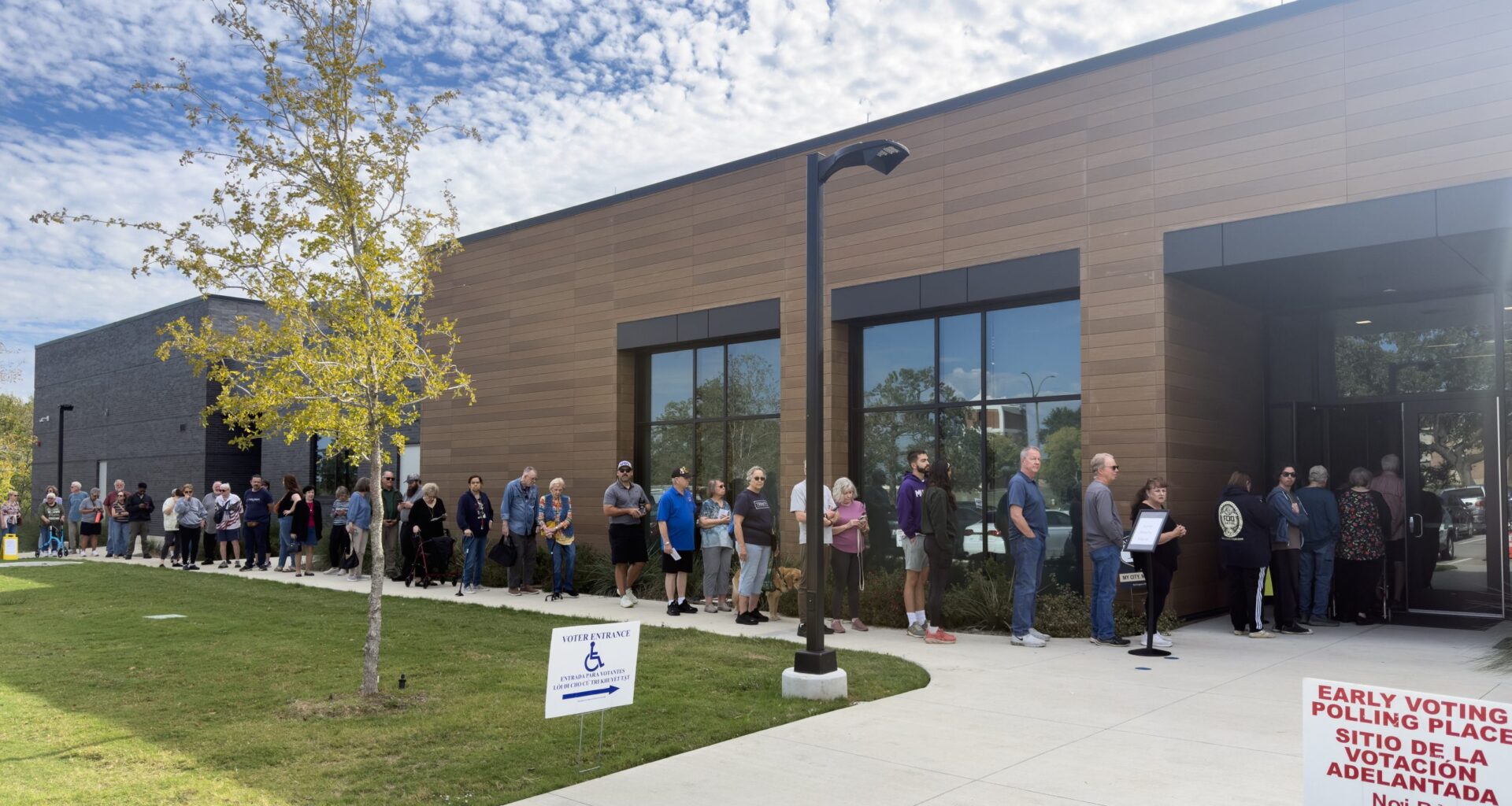
The Tarrant County Libertarian Party is pursuing legal action against the county’s Republican-controlled election board, alleging Libertarians have not been adequately represented on the ballot board tasked with verifying mail-in ballots for the Nov. 3 midterm elections.
The Libertarian Party plans to file a writ of mandamus, seeking a court order to force elections officials to properly perform their government duties or correct an abuse of discretion, party chair Sean Sparkman told the Fort Worth Report.
Under state election code, each political party with candidates on the midterm ballot — in this case, Democrat, Libertarian and Republican — must have the same number of members appointed to the county’s early voting ballot board. Such a board is created before each election to objectively process mail-in ballots and determine whether provisional ballots should be counted.
Libertarians claim the election board that appoints members to the ballot board hasn’t followed state election laws, but Republicans maintained that the board acted lawfully.
In July, Tarrant County’s election board created the 27-person ballot board for November, appointing nine members from each of the three parties, according to board documents reviewed by the Report. But since then, the three parties haven’t been equally represented in the ballot board room where ballots are counted, Libertarians allege.
Over the two-week early voting period, the Republican chair of the ballot board, Amie Super, scheduled nine Republicans, seven Democrats and only two Libertarians to process ballots, according to accounts by four Libertarians and two Democrats, including the Democratic Party chair.
“The way that we deal with this is we take them to court, and that’s what we’re going to have to do,” Sparkman told the Report.
The election board held a special meeting Thursday afternoon, five days before Election Day, to appoint 20 additional members to the ballot board, as both Democrats and Libertarians expressed concern about whether all the mail-in ballots could be counted on time. The new members include three Libertarians, three Democrats and 14 Republicans.
As of Oct. 30, the county elections office reported receiving 20,482 mail-in ballots — about 17% more than the amount received by that time in the 2022 midterm elections. The county reported a total of 22,597 mail-in ballots in 2022.
County elections administrator Clint Ludwig said the board was legally allowed to appoint the additional ballot board members and schedule them to work on an “as-needed basis” even though the political parties weren’t equally represented.
“The numbers in the ballot board room don’t have to be equal,” Ludwig said at the meeting, without citing a specific statute in the election code.
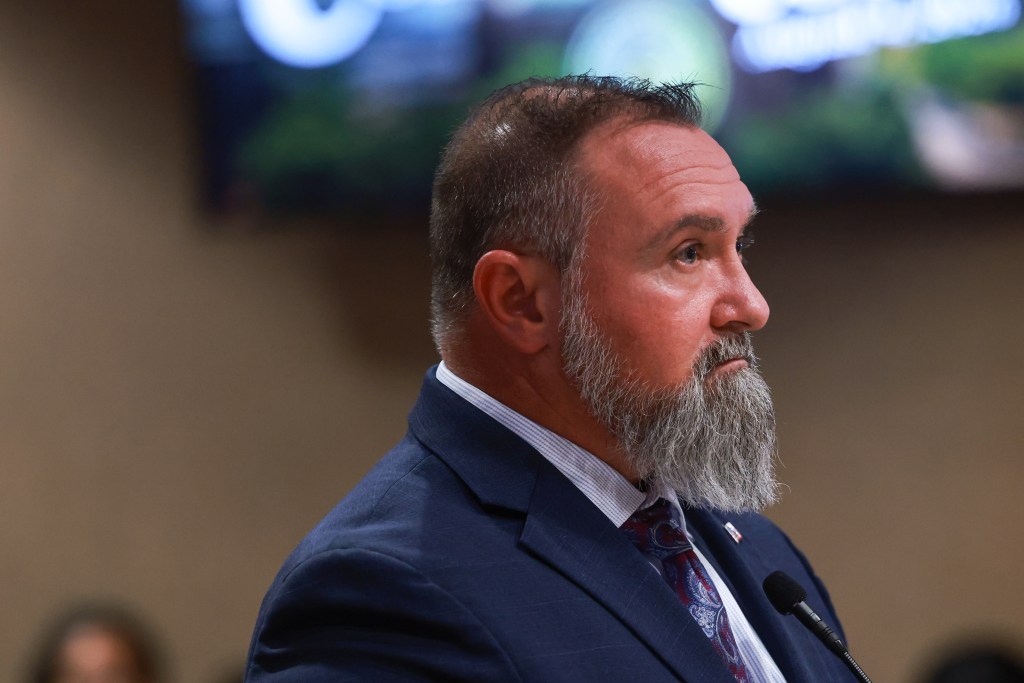 Elections administrator Clint Ludwig answers questions during a Tarrant County Commissioners Court meeting Aug. 4, 2026, in Fort Worth. (Christine Vo | Fort Worth Report)
Ludwig is the chair of the election board, which also includes Tarrant County GOP chair Tim Davis, Tarrant County Democratic Party chair Allison Campolo, Republican County Sheriff Bill Waybourn and Republican County Judge Tim O’Hare, who is on the Nov. 3 ballot seeking his second term. The five unanimously approved the new ballot board appointees.
After the Thursday meeting, Sparkman and other Libertarians told the Report their ballot board members had been discriminated against by Republicans for past political activity and for their current, unrelated litigation against Tarrant County.
“They brought politics in the room when politics have never been in that room before,” said Jocelyn Pantke, elections coordinator for the Tarrant County Libertarian Party. “It’s all about the voters.”
Pantke has served as a Libertarian on the ballot board for 36 elections in Tarrant County since 2020, she said. This November’s election is the first where she hasn’t been scheduled to work in the ballot board room, and the first where the election board has had to appoint additional members, she added.
Super, the ballot board chair, did not respond to a request for comment. Davis, the GOP party chair, deferred to Super about the scheduling of ballot board members, saying in a text message to the Report, “I’m not involved in that.”
“How are the Libertarians being excluded from the ballot board? Did they not notice we appointed every one of their recommendations yesterday?” Davis said via text Friday.
Under the state election code, the chair of each political party with nominees on the ballot gets to submit a list of people to serve on the ballot board, in order of the chair’s preference. The county election board must appoint at least one person from each party’s list to serve on the ballot board, following the chair’s preference, and “the same number of members must be appointed from each list,” according to the code.
The political party whose nominee for governor got the most votes in the most recent gubernatorial election gets to preside over the ballot board. The highest-ranked person on that party’s list of board nominees is named chair — in this case, Super of the Republican Party.
During Thursday’s meeting, Waybourn asked whether each party is required to have an equal number of appointees actively serving on the ballot board, questioning whether the new additions to the board would be considered alternate appointees.
Ludwig said he confirmed with the Texas Secretary of State’s office that the new appointments were legally permissible. A spokesperson for the office did not immediately return a request for comment.
“The advice I was given by their legal counsel is that we are able to appoint all the people on his list to be used on an as-needed basis,” Ludwig said. He later explained, “We have given equal effort to all the parties and equal consideration to be able to submit more names for their list. They just didn’t have them to submit.”
A county staff attorney who did not identify himself told the election board they may appoint unequal numbers of board members from each political party if needed, citing an election code statute governing the appointment of poll workers.
The election code statute cited by that attorney does not specifically pertain to the ballot board and “ignores the detailed and lengthy provisions governing fair appointment of members of different parties,” said Nina Oishi, staff attorney at the Texas Civil Rights Project, a nonprofit focused on protecting civil rights that has represented advocacy groups in lawsuits over last year’s county redistricting.
“Those provisions and the language of Chapter 87 of the Election Code clearly show that the code expects that the entire (early voting ballot board), including a fair apportion from all parties, be involved and scheduled to take part in the actual operations of the (ballot board),” Oishi said in a statement. “Moreover, the law is clear that all members of the (ballot board) may be present while the (ballot board) is meeting, and if any members are being excluded from meetings on the basis of party, that raises serious questions about legal violations.”
From the dais, Campolo questioned why the Libertarian appointees hadn’t been scheduled to work and attempted to further clarify whether state law allows political parties to have unequal representation in the ballot board room.
Davis and O’Hare said the board wasn’t able to discuss the topic, as it wasn’t included in the meeting’s posted agenda. Under the Texas Open Meetings Act, any topic a governmental body wants to discuss or vote on as a group must be explicitly listed on its meeting agenda.
“Each individual person can go discuss whatever they want with the elections administrator or the presiding judge or a ballot board member, but you can’t discuss what to do with that because it was brought up during public comments. It’s not on the agenda,” O’Hare told Campolo.
At Thursday’s meeting, Sparkman and other Libertarian speakers were candid in addressing the election board about their concerns, asking for intervention to ensure mail-in ballots are counted fairly and on time.
“These little petty games are only going to put y’all behind schedule,” Sparkman told the election board. “We are for transparency and accountability, and we want to get this done. I don’t see why we shouldn’t schedule these people.”
Elizabeth Miller is an appointed Libertarian member of the ballot board. She said she’s been available “for weeks” to process ballots but hasn’t been put on the schedule, alleging that Super is discriminating against her for her role in a lawsuit against O’Hare and the county over the decorum policy at commissioners court meetings.
Miller has served on the ballot board for multiple political parties since 2018. Addressing the election board, Miller emphasized that she is suing the county on “constitutional matters” and urged members to “dial down the partisanship and just get the votes counted.”
For now, the additional ballot board members are anticipated to be able to handle the load of mail-in ballots, although Libertarians remained concerned that the board would have to work “around the clock” to get the processing done.
Cecilia Lenzen is a government accountability reporter for the Fort Worth Report. Contact her at cecilia.lenzen@fortworthreport.org.
At the Fort Worth Report, news decisions are made independently of our board members and financial supporters. Read more about our editorial independence policy here.
This article first appeared on Fort Worth Report and is republished here under a Creative Commons Attribution-NoDerivatives 4.0 International License. 