
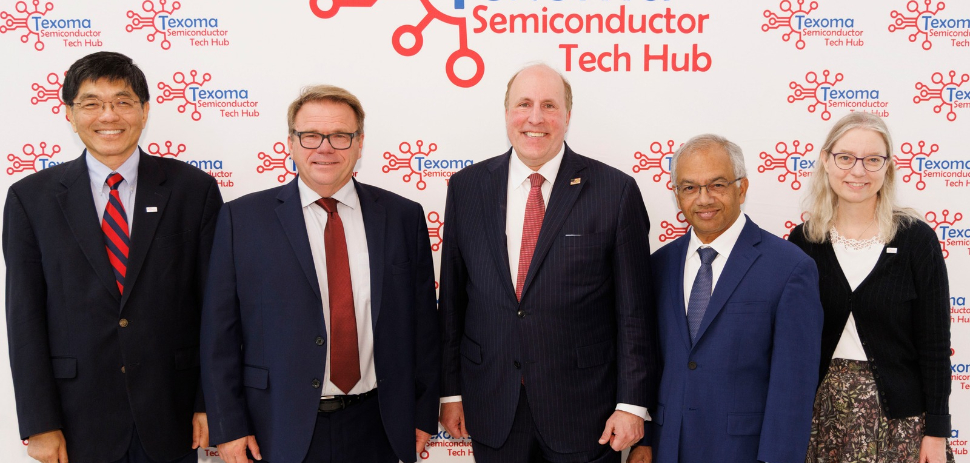
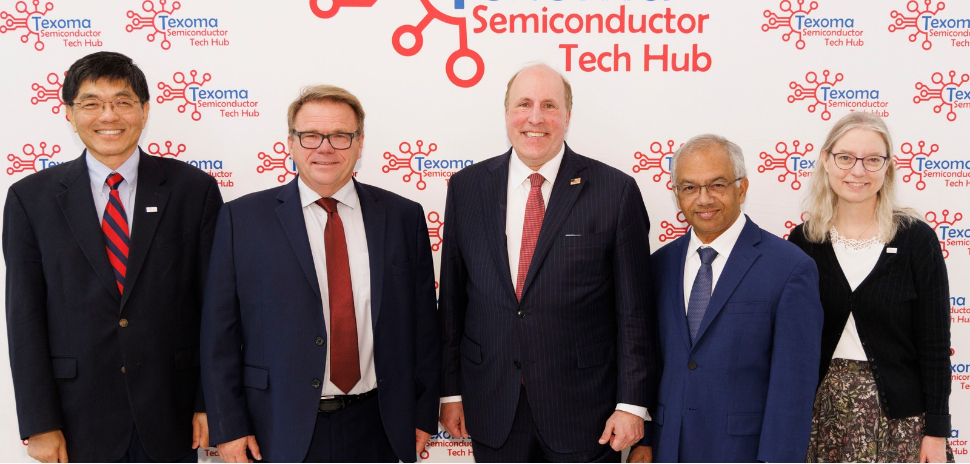
From left, SMU professor J.C. Chiao; James Grimsley, regional innovation officer of the Texoma Semiconductor Tech Hub; Deputy Commerce Secretary Paul Dabbar; Suku Nair, SMU vice provost for research and chief innovation officer; and SMU professor Jennifer Dworak celebrate nearly $29 million in new funding for the SMU-led Texoma Semiconductor Tech Hub. [Photo: SMU]
A regional semiconductor hub led by Southern Methodist University will use nearly $29 million in funding to help bulk up the region’s chip industry.
The new funding for the Texoma Semiconductor Tech Hub will go toward developing semiconductor infrastructure, strengthening the semiconductor workforce and commercializing chip technology. The package includes nearly $24 million from the U.S. Department of Commerce.
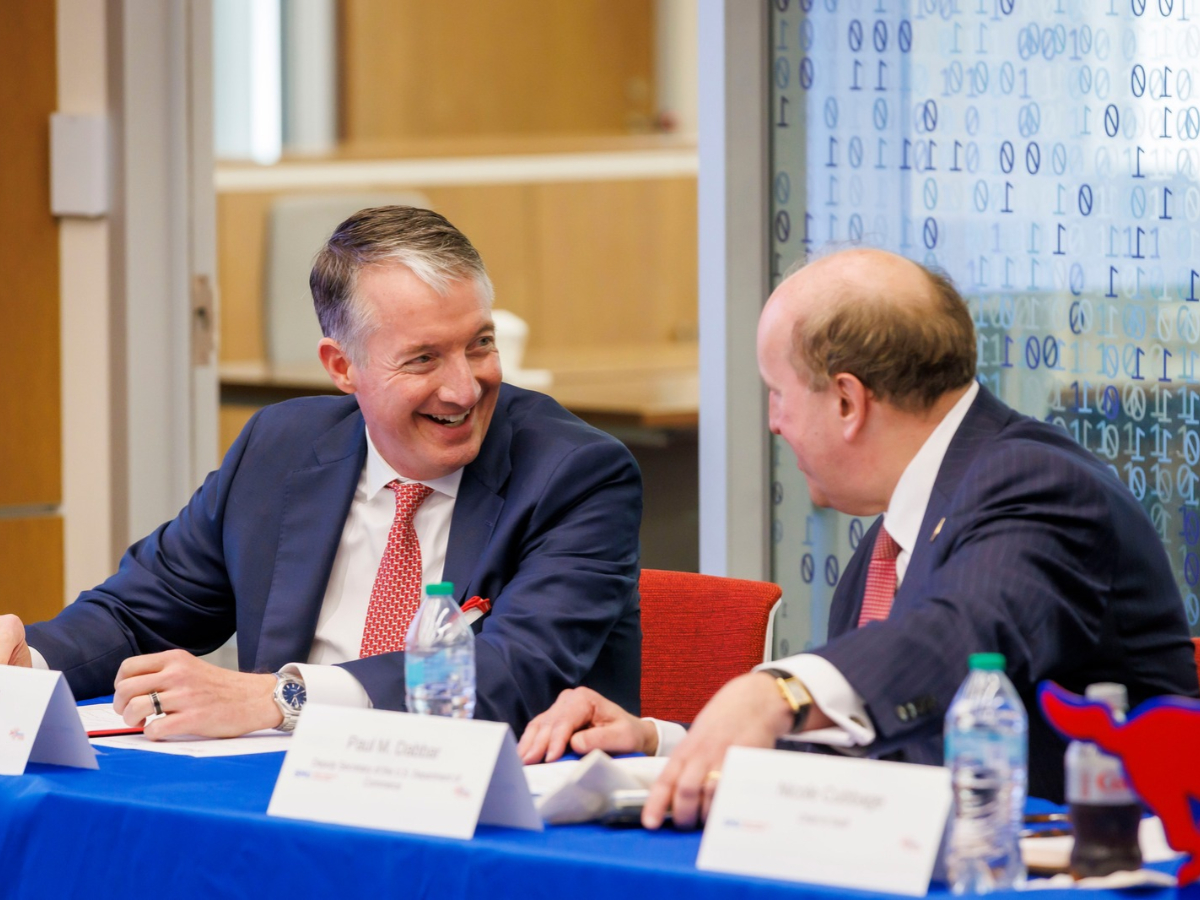
SMU President Jay Hartzell participates in the announcement of new funding for the Texoma Semiconductor Tech Hub. [Photo: SMU]
The Texoma hub is one of 31 U.S. tech hubs established in 2023 by the Commerce Department and one of four federally backed tech hubs focused on semiconductors.
The hub is a regional coalition that brings together players in the semiconductor sector across 29 North Texas and southern Oklahoma counties.
“Semiconductors are the brains behind the 21st-century devices we all depend on,” the hub said on its website. “The Texoma Semiconductor Tech Hub is dedicated to building jobs and a skilled workforce across Texas and Oklahoma to reduce our dependence on importing these crucial components.”
Semiconductor infrastructure and ‘fablets’
Of the $24 million in federal funding, $13 million will go toward developing shared semiconductor infrastructure and creating special semiconductor-prototyping facilities called “fablets.” Another $6 million will go toward workforce education and training, and $5 million will support entrepreneurs and businesses in bringing chip technology to market, SMU said.
The federal funding, plus the $4.8 million from other sources, “will help address some of the critical needs facing the semiconductor industry as it expands in North Texas and southern Oklahoma,” J.C. Chiao, an SMU professor of electrical and computer engineering, told Dallas Innovates.
Chiao, along with SMU Lyle School of Engineering professors Jennifer Dworak and Scott Douglas, helped form the Texoma hub.
Chiao said the hub “will make the region more competitive in attracting semiconductor investment while strengthening the domestic supply chain.”
SMU said the fablets will give researchers, entrepreneurs and businesses access to equipment for design, manufacturing, packaging and testing. Fablets are smaller, less expensive alternatives to full-scale semiconductor fabs, where raw silicon wafers are turned into integrated circuits, or chips.
The initiative also aims to help semiconductor startups move from prototype to commercial production through improved access to funding, industry networks, intellectual property and shared resources, SMU said.
Strengthening the talent pipeline
Suku Nair, vice provost for research and chief innovation officer at SMU, said the hub envisions North Texas and southern Oklahoma as a top-notch center for semiconductor innovation and manufacturing.
The tech hub plans to bolster the region’s talent pipeline through workforce training and upskilling programs using AI and digital twin technology, SMU said.
“As the region continues to attract new investments from across the country and around the world, we must proactively address workforce gaps and strengthen our talent pipeline to meet both current and future industry needs,” Nair told Dallas Innovates.
Consortium growth
In the three years since the hub was established, the coalition has more than doubled in size, from 41 to 95 organizations, SMU said.
The hub’s partners include big players in semiconductor development and manufacturing, such as Dallas-based Texas Instruments; GlobiTech, a subsidiary of Taiwan’s GlobalWafers; and Pennsylvania-based Coherent. All three companies operate large semiconductor plants in the Sherman area. Texas Instruments also makes semiconductors in Richardson.
Texas Instruments gave birth to the integrated circuit in 1958.
Building on momentum
For SMU, the tech hub funding underscores the university’s research prowess. In September, the U.S. Department of Energy committed $19.3 million to the university’s critical mineral mining project, the largest research funding for an individual researcher in SMU history. Semiconductor production relies on critical minerals.
SMU President Jay Hartzell said in a statement that the latest federal investment “is a powerful example of what SMU can accomplish by bringing together research, industry and regional partners to address challenges of national importance.”
“Through the Texoma Tech Hub, we have an opportunity to translate innovation into economic growth, attract and develop the next generation of talent and strengthen a critical U.S. industry,” Hartzell said.
R E A D N E X T

The MassChallenge-run SMU Cox FinTech Accelerator will select up to 15 fintech startups for the annual program. The accelerator opened applications Oct. 6 and will accept them through Nov. 19.

The five-year MacArthur Fellowship recognizes Ron’s research on how Northern agriculture shaped economic growth and federal power in 19th-century America.
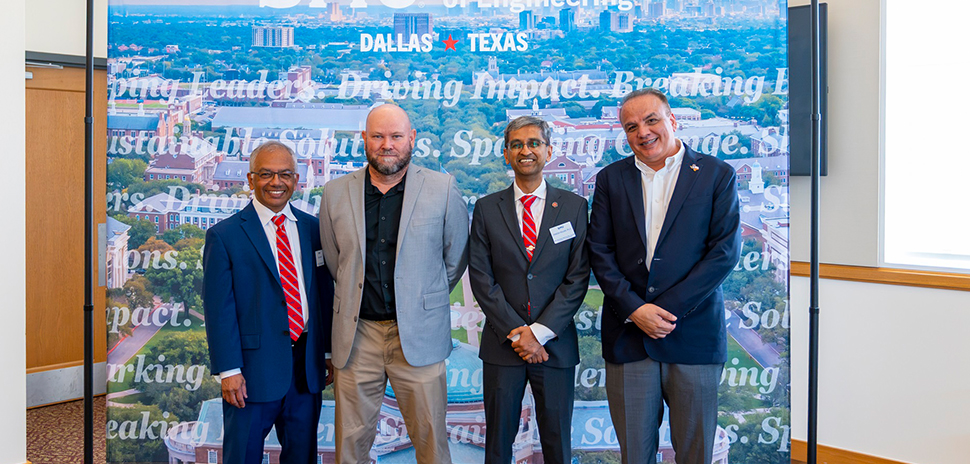
The U.S. Department of Energy awarded the money to SMU researcher Saeed Salehi for development of what is thought to be the world’s first synthetic mine inside an advanced drilling and sensing test facility.

Cost savings, a new business court and friendlier laws in Texas are driving a shift away from Delaware — and North Texas stands to benefit.

The Dec. 11 event will feature more than two dozen speakers from companies such as Lockheed Martin, Caterpillar and Toyota North America. Organizers plan to make it an annual forum focusing on innovation strategy as the CInO role continues to grow.

The innovations include the AI-powered Starbase Connection, which converts fan-submitted photos into customized Dallas Cowboys hype videos shown at AT&T Stadium.