

I was driving around South Dallas a few days ago when a left turn off Elsie Faye Heggins Street put me in front of a large old house at the corner of Leland Avenue and Southland Street. It easily could be mistaken for just another tumbledown house in a neighborhood where new bright-white two-stories with slanted roofs and smooth driveways threaten to overtake original houses freshened up with coats of bright green or blue paint. Yet it looked vaguely familiar, like a place I’d visited a lifetime ago.
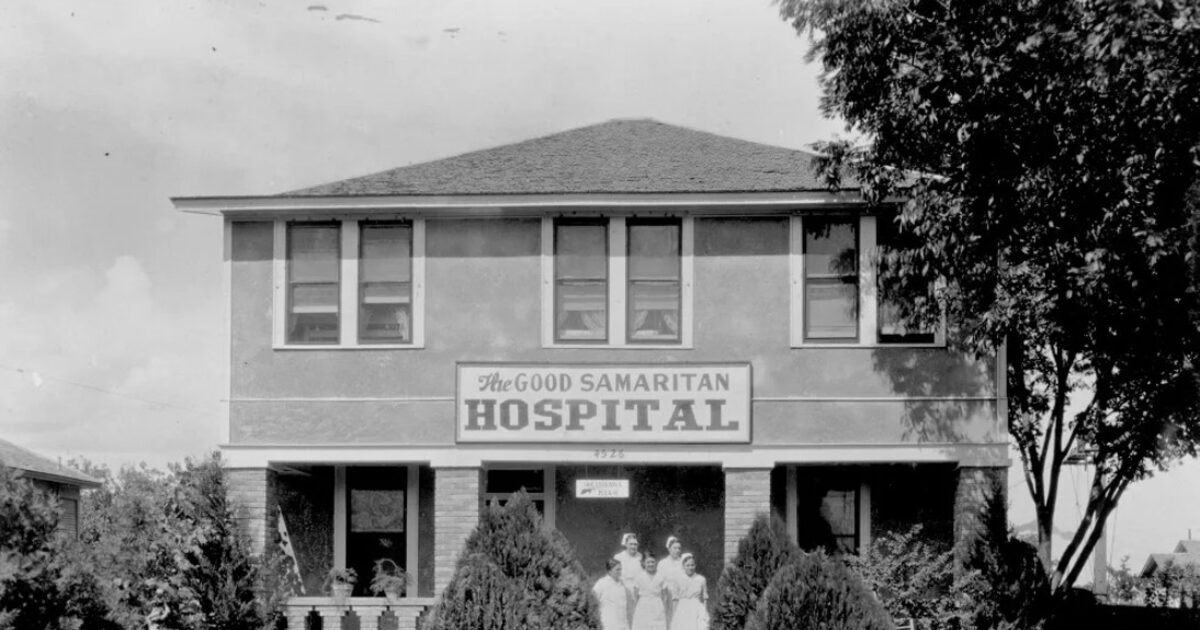
It took a few minutes, and a Google search, before it hit me: Oh, right, that’s the Good Samaritan Hospital, where, beginning in 1920, Martha Schultze, a registered nurse from Germany, spent decades delivering the babies of unwed mothers who couldn’t afford care.
By the mid-1950s it was the Baker Residential Hotel, long believed to have been the first licensed apartment building in Dallas that rented to Black tenants.
It’s also an honest-to-God Dallas landmark. Since a Dallas City Council vote in January 2012, this Prairie-style structure owned by Vanessa Baker, the daughter of Baker Residential Hotel owners James and Bertha Baker, has been one of South Dallas’ few untouchable structures.
That didn’t stop city attorneys and code officials from trying to raze it just a few months ago.
Opinion
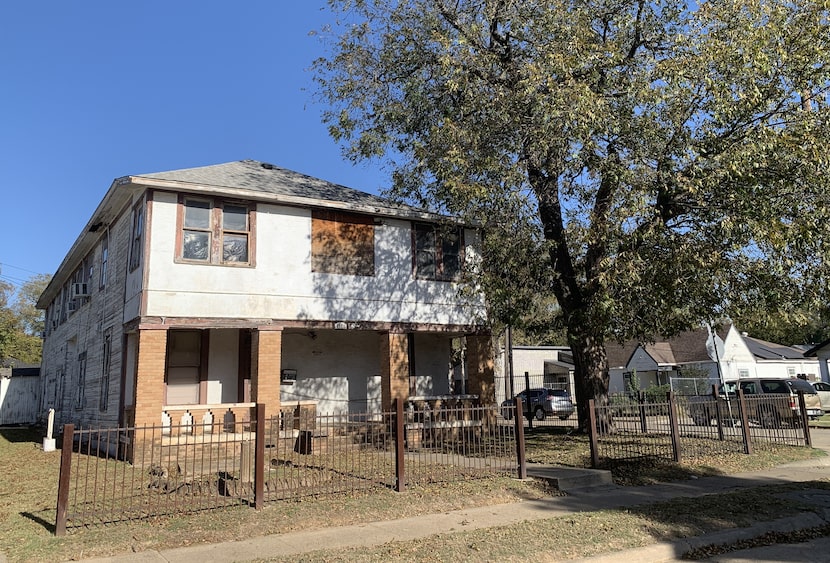
The former Good Samaritan Hospital and Baker Residential Hotel in South Dallas as it looks today
Robert Wilonsky
While I was trying to jog my memory, I discovered that in August the city sued Baker over her landmark, insisting that “the structure is dilapidated, substandard and unfit for human habitation, and is a hazard to the public health, safety and welfare, thereby constituting an urban nuisance.” City attorneys wanted it repaired, removed or demolished within 30 days, though it looks far better — far sturdier, far cleaner — than countless nearby homes seemingly propped up by sheaths of faded plywood.
Baker and Katherine Seale, the former Preservation Dallas executive director who championed the Good Samaritan’s salvation, told me this week the city agreed to nonsuit its case. In return, Baker will have to meet with community prosecutors once a month to prove progress is being made.
“Even though the exterior looks horrible, I’ve done a lot of work,” Baker told me Thursday. “The foundation was done. The roof has been replaced. The electrical and plumbing has been redone. Everything not visible to the eye but important to the structure is or has been worked on, and we are working with a contractor assessing the work that needs to be done. This is on-the-job training for me.”
Baker just wanted to save this structure because it meant something to her, and should mean something to this city. But as my former colleague Roy Appleton once wrote in these pages, landmark designation didn’t spare Baker from requirements to keep the structure up to code, even when she faced a long haul in her attempt to turn the former community hospital and boarding house — and her childhood home — into a museum, theater, community center and nonprofit coworking space.
Though she was once a Preservation Dallas board member, Baker’s not a preservation architect or a developer with deep pockets. The former Dallas Cowboys Cheerleader is just an English professor trying to preserve two families’ legacies in a part of town full of important stories seldom told.
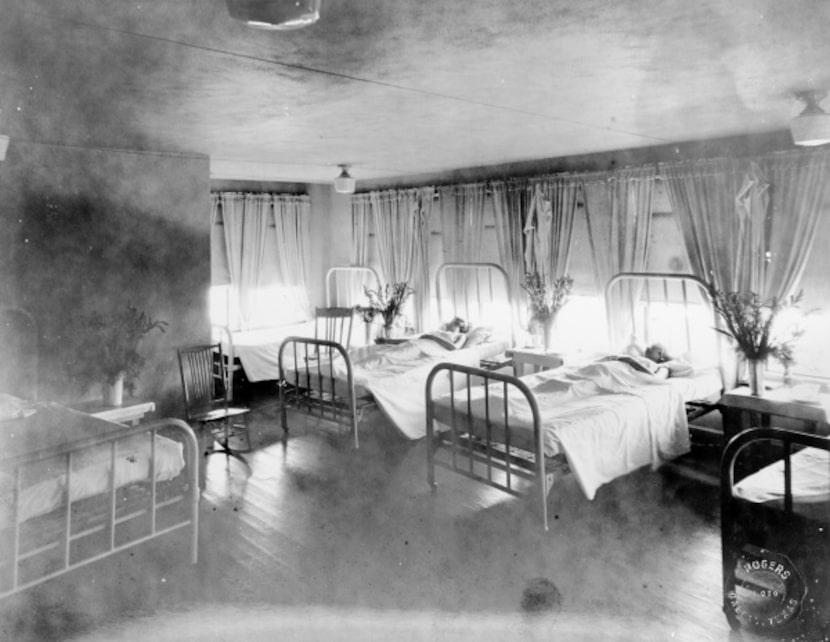
The maternity ward at Good Samaritan Hospital specialized in care for unwed mothers, some of whom came from Europe, any of whom faced the stigma of immorality.
The story of the Good Samaritan Hospital — where the unwed, the unwelcome, the unwanted were cared for by a woman from Düsseldorf — is an epic that spans two world wars. Martha Schultze, who came to Dallas with husband Ernest in 1908, worked as a registered nurse in hospitals across town before the couple bought the property on Leland in 1910, where they built a two-story home that became a maternity-care hospital after the couple divorced and Ernest decamped for South Texas.
“During the first half of the 20th century, unwed mothers were often stigmatized, and many women gave their children up for adoption,” according to the landmarking documentation. “In some cases, unwed mothers abandoned their babies to the streets. In a few cases, unwed mothers were incarcerated and sterilized. Martha Schultze recognized this critical social concern, and privately addressed it.”
By the early 1930s, she expanded the hospital to include an operating room, and hired registered and student nurses to keep up with the caseload. Schultze, who never received U.S. citizenship, took out ads in the local newspapers and even tried to open a second hospital in her home on Park Row. But by 1945, she had to shutter the Good Samaritan, having lost her staff to the demands of the second World War, giving way to the Baker Residential Hotel.
The hotel’s story is set amid the bombings that took place in South Dallas in the 1950s as white homeowners fire-bombed the homes of Black newcomers to a neighborhood to which they had as much right as any. The Bakers’ hotel was right next door to the former home of pants presser Claude Thomas Wright, who confessed to three of the bombings funded by “two white South Dallas community associations,” as Jim Schutze wrote in The Accommodation. Wright moved away about a year after the Bakers moved in.
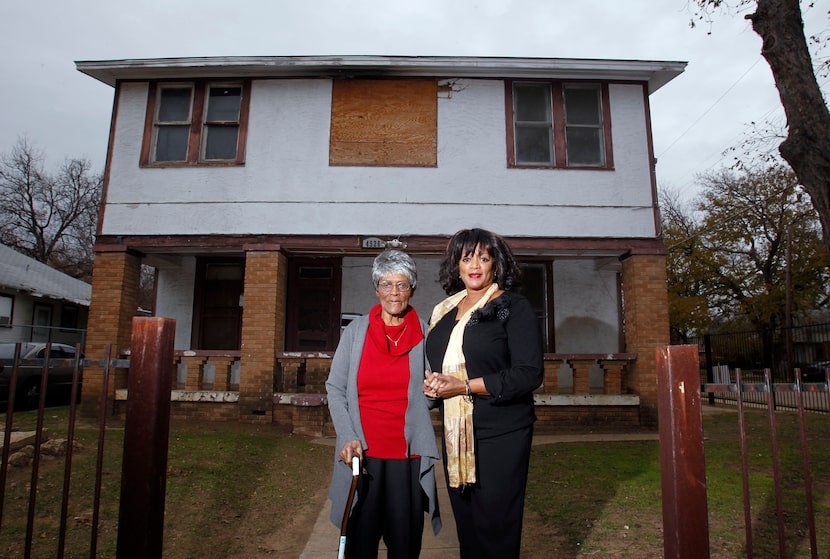
Bertha Baker Hilburn, left, and daughter Vanessa Baker posed for a portrait in front of what used to be the Good Samaritan Hospital on December 12, 2012. Bertha died at 98 in 2015, three years after her daughter got the building, also known as the Baker Residential Hotel, landmarked by city officials.
Vernon Bryant / Staff Photographer
Baker, who teaches at Southwestern Christian College in Terrell, speaks of the structure as a “she.” Baker said the building has already had two lives and is now awaiting its third.
“She’s in a position to share the Dallas story, that of German and Jewish and Black connections in South Dallas,” Baker told me. “Her assignment is to establish a museum where history is preserved because so much of our history is being erased.”
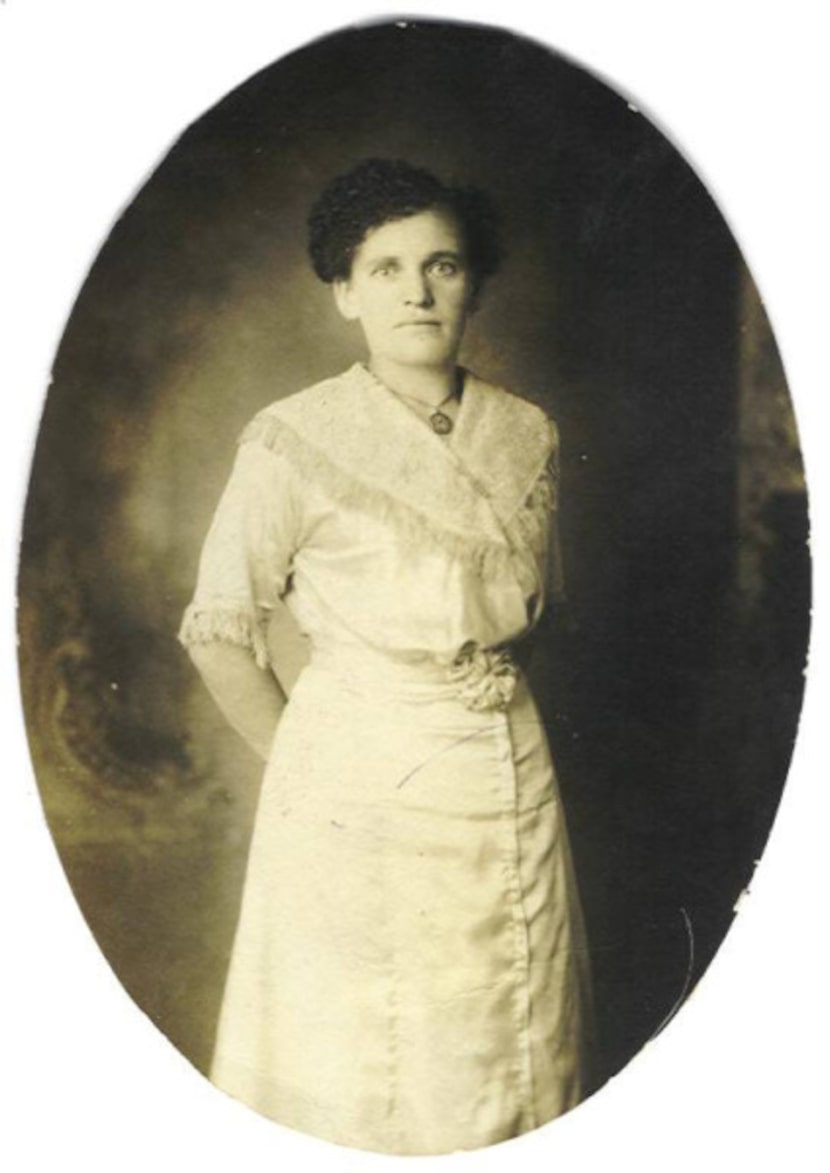
Martha Schultze, a registered nurse from Germany, ran Good Samaritan Hospital for 25 years beginning in 1920, when she and her husband divorced and he deeded the Leland Avenue property to her.
Baker, who until recently still lived in her parents’ old hotel, hates that the structure looks just as it did when I last photographed it 15 years ago, a shabby shade of boarded-up wood and peeling paint. Long after its landmarking, there’s no medallion indicating its status as a Dallas landmark, nor the 2008 marker from the Texas Historical Commission recounting its significance as “a facility that served residents of the area regardless of income or status.”
Though the story of the building is compelling, it’s also difficult to distill into that short, sharp elevator pitch needed to sell donors on giving. It took the flooding of civil rights leader Juanita Craft’s South Dallas house — a local, state and national landmark visited by President Jimmy Carter, Duke Ellington and a young attorney named Thurgood Marshall — before this town paid attention to it, yet its restoration, largely funded by City Hall, still took years to complete.
“Vanessa has been trying to get her story out, and she’s devoted to seeing this through,” Seale told me Wednesday in City Hall’s Flag Room, hours before the council began debating the fate of the building in which we were sitting.
Seale, who once bought land just to spare an imperiled historic home in the Cedars, has brought in other preservationists to help Baker save the Good Samaritan. Because if not her, then who?
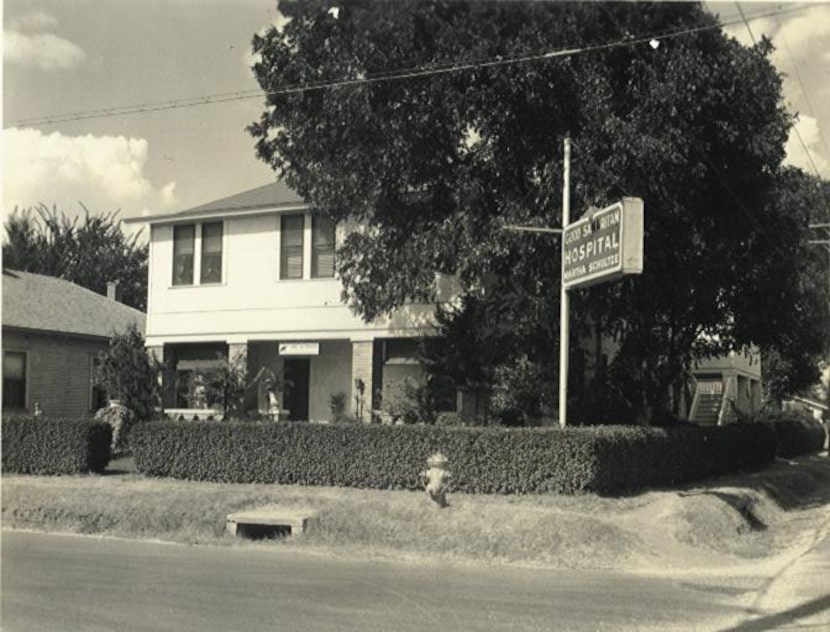
Undated photo of the Good Samaritan Hospital at 4526 Leland Ave. in South Dallas
Earnestine “Tina” Smith / Digital File_UPLOAD
“It’s going to take a lot of vision and a lot of leadership and a lot of knowhow and all of us to come together and rally around it to make it happen,” Seale said. “Historic preservation has to serve a higher undertaking than itself. It’s not enough to just have a building with a great past. The building actually has to provide some kind of good for today. And taking a building in the middle of a single-family residential neighborhood and having it continue to provide that public good is going to require a lot of thought.”
Preservation in a town that’s moving toward tearing down City Hall is hard enough when there’s not a single nonprofit raising money to just slow — forget stop — the razing of history. Having to fight city attorneys who either didn’t know the building on Leland was a landmark or didn’t care makes it feel nearly impossible.