
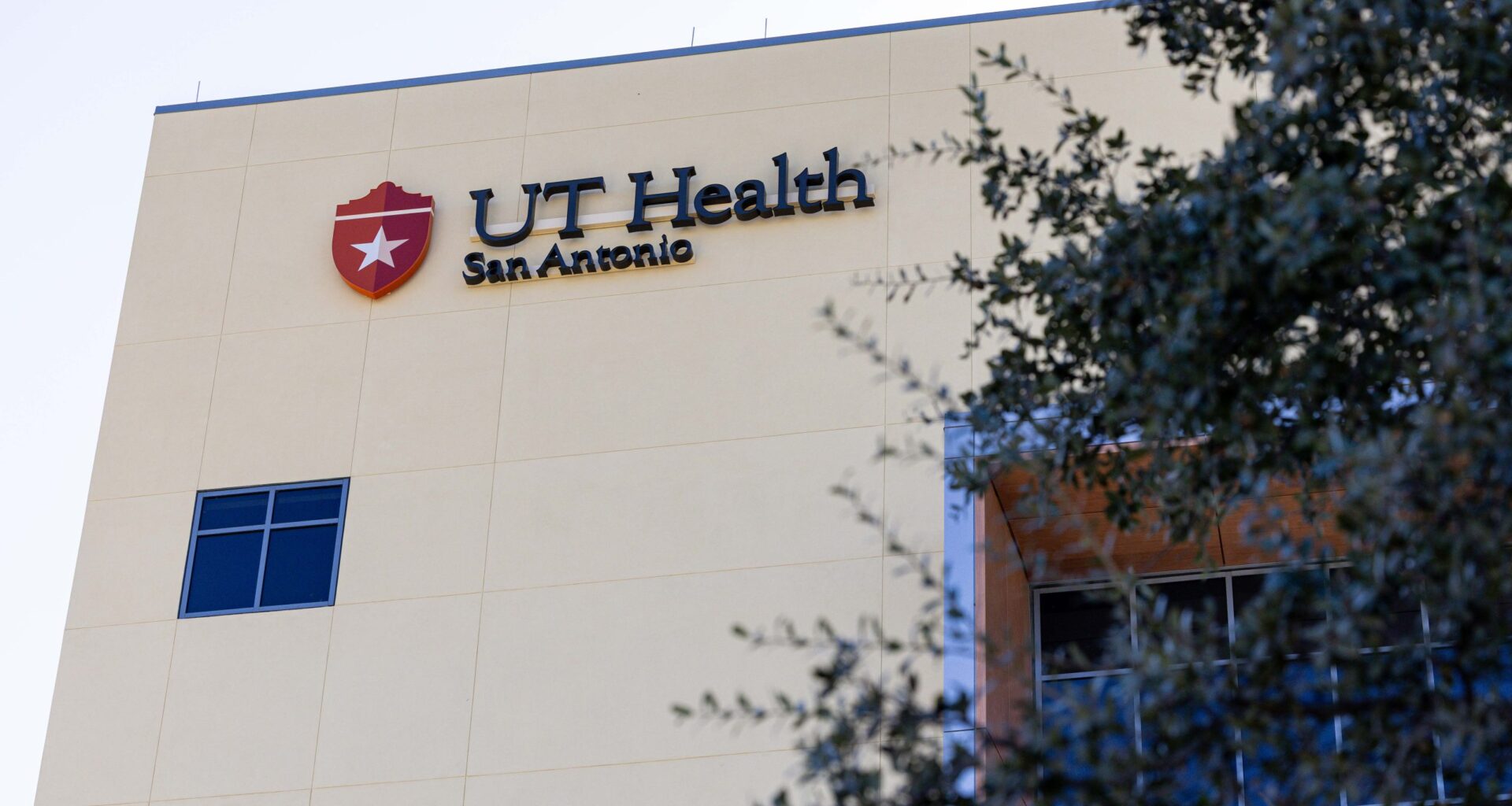
For Melissa Garcia, chief of staff and vice chancellor of the University of Texas System, the opening of UT San Antonio’s new Center for Brain Health is deeply personal.
Her father started exhibiting signs of cognitive decline in 2015, receiving an Alzheimer’s Disease and Lewy Body Dementia diagnosis four years later. She watched his health decline rapidly until he passed earlier this year in May. He was from Starr County in the Rio Grande Valley, which has one of the highest rates of dementia in the U.S.
It was “brutally challenging” for Garcia and her family, who ultimately decided to donate his brain to the university’s Glenn Biggs Institute for Alzheimer’s and Neurodegenerative Diseases for research.
“We hope that it will be a small yet profound part of showing the critically important mission that research will hopefully have to eliminate this tragic disease,” Garcia said during a ribbon-cutting ceremony at the center on Wednesday
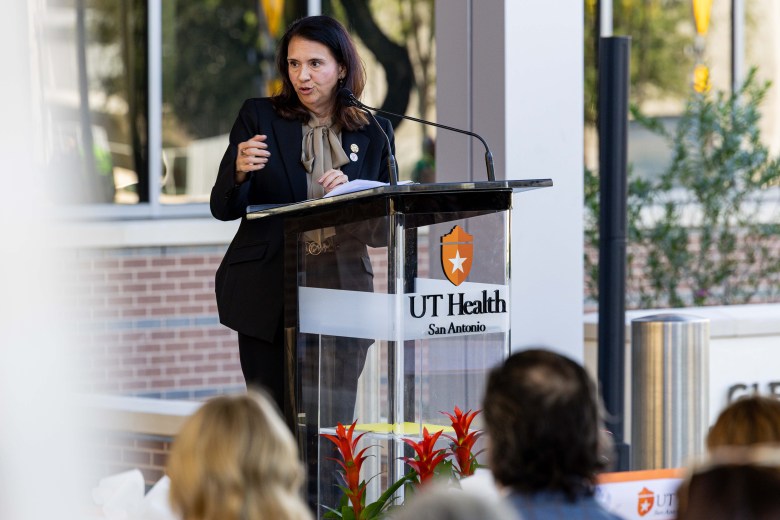 Melissa Garcia, senior associate vice chancellor and chief of staff for the University of Texas System, speaks at the ribbon cutting celebration for UT Health’s new Center for Brain Health on Wednesday. Credit: Amber Esparza / San Antonio Report
The new, $100 million Center for Brain Health will bring the university’s neurological specialists, therapies, diagnostics, support groups and research all under one roof.
The five-story, 100,000 square-foot building contains just about everything patients and their family might need: 91 exam rooms, physical therapy, mental health support, community rooms for caregiver education and support groups, as well as spaces for music, art and meditation. It’s a testament to how far dementia care has come, said Dr. Carlayne Jackson, the chair of UT San Antonio’s Department of Neurology.
“When I started my residency here in 1987, neurology was kind of teased as the field of ‘diagnose and adios,’” Jackson said, “meaning that we could diagnose devastating conditions, but we really didn’t honestly have a lot that we could do for the diseases that we treated.”
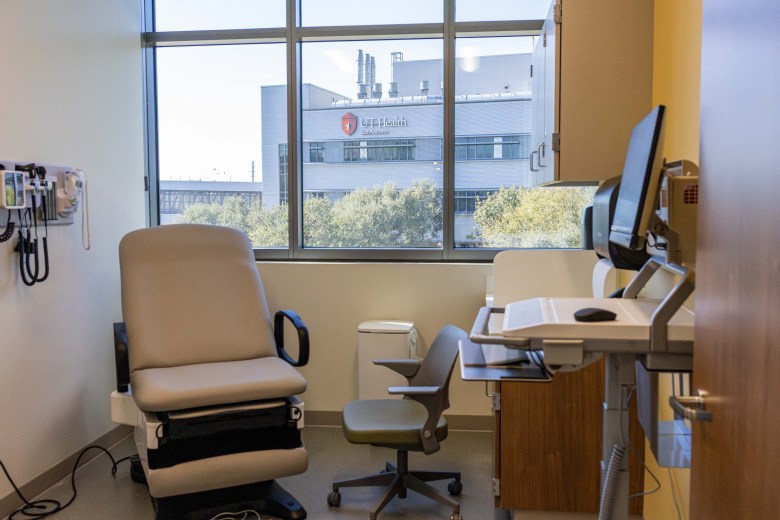
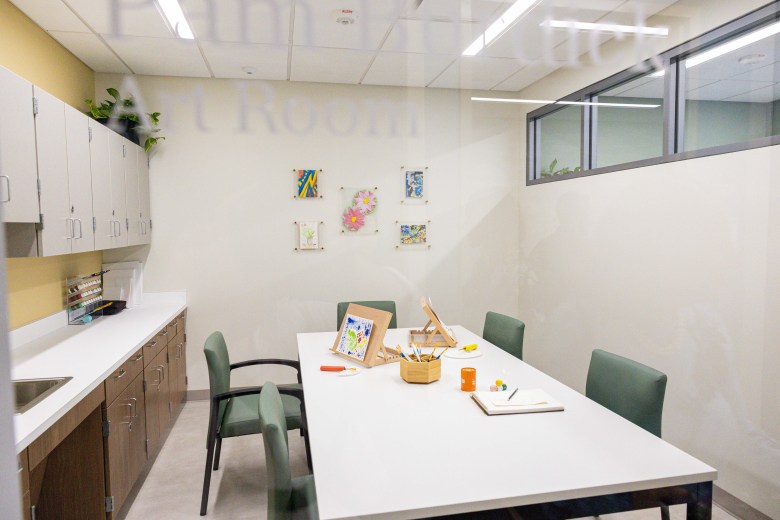
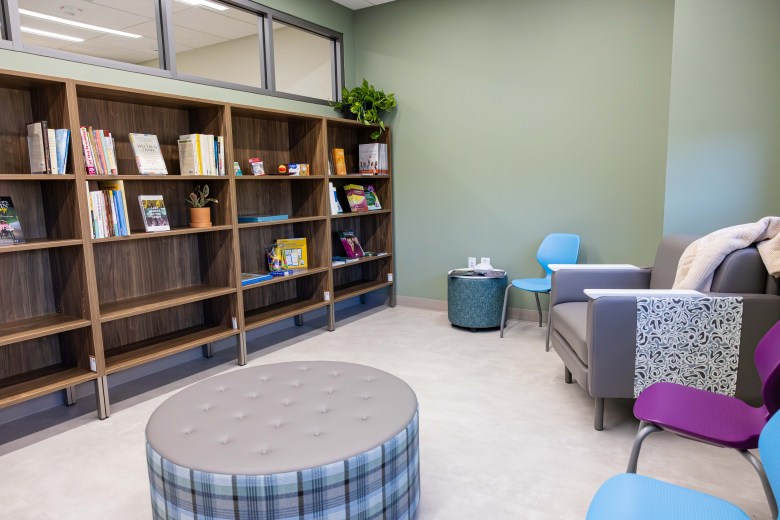
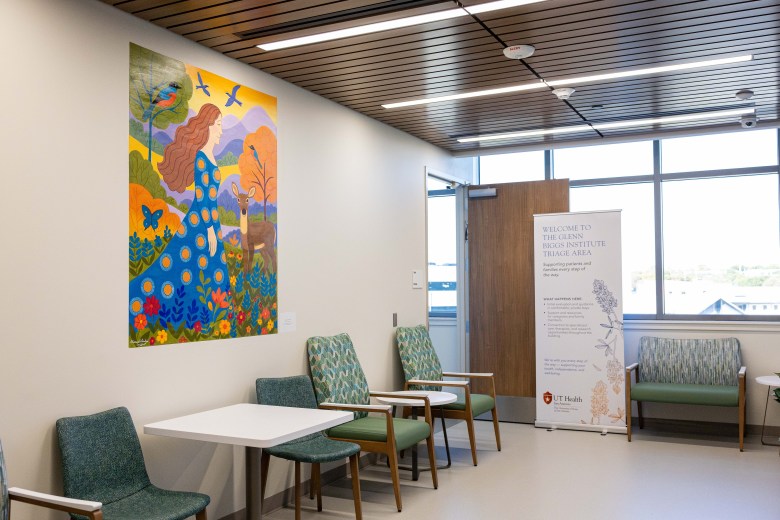 The check-in and triage area of the Glenn Biggs Institute on the third floor of the new UT Health San Antonio Center for Brain Health. Credit: Amber Esparza / San Antonio Report
Now, “nothing could be further from the truth,” she said.
“This center represents progress—real, meaningful progress and a future filled with innovation, compassion and hope for patients and families dealing with disorders of the brain.”
Drug infusions recently approved by the U.S. Food and Drug Administration shown to slow the progression of neurodegenerative diseases will be administered at the center.
The center is also home to one of the most powerful MRI scanners in the state, which produces high-resolution brain images critical in diagnosing and studying Alzheimer’s, Parkinson’s, epilepsy and other brain diseases.
Located at 4940 Charles Katz Drive in the South Texas Medical Center, the center will officially open on Dec. 10.
Included in the new building is the school’s Glenn Biggs Institute, one of 37 federally designated Alzheimer’s research centers in the U.S.
Of them, the Biggs institute is home to one of the largest Hispanic populations, which faces higher rates of the disease and has historically been underrepresented in clinic trials and research. Several UT Health researchers aim to untangle the jumble of social, genetic and lifestyle factors that give South Texas higher rates of these diseases.
The building will also be home to the UT San Antonio Long School of Medicine’s Department of Neurology.
UT’s expansion follows another big win earlier this month for dementia researchers in the state. Texas voters approved Proposition 14 on election day, securing $3 billion in state funding for research grants on neurodegenerative diseases. UT Health and other organizations had been pushing for approval of the research institute, which they say will help attract research talent to the state.
However, officials agree that there’s still a tremendous amount of work to be done. There is still no cure for Alzheimer’s and other similar diseases, despite advances in some drug therapies. But UT San Antonio officials have high expectations for the center and the research that might come out of it.

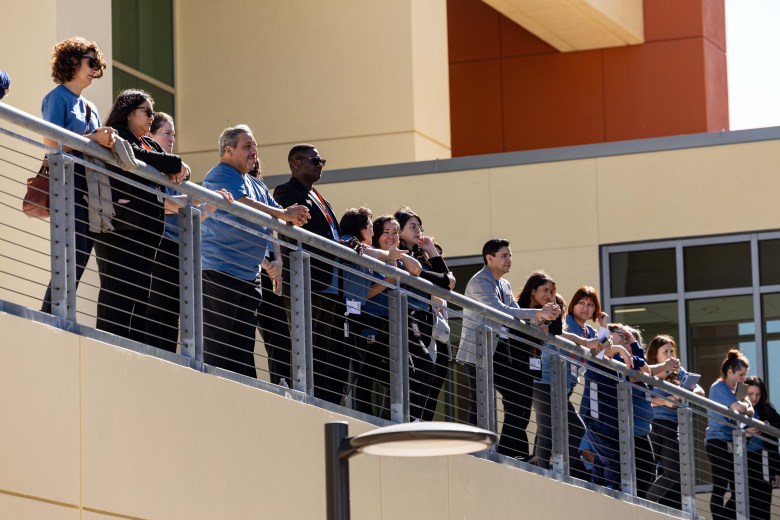
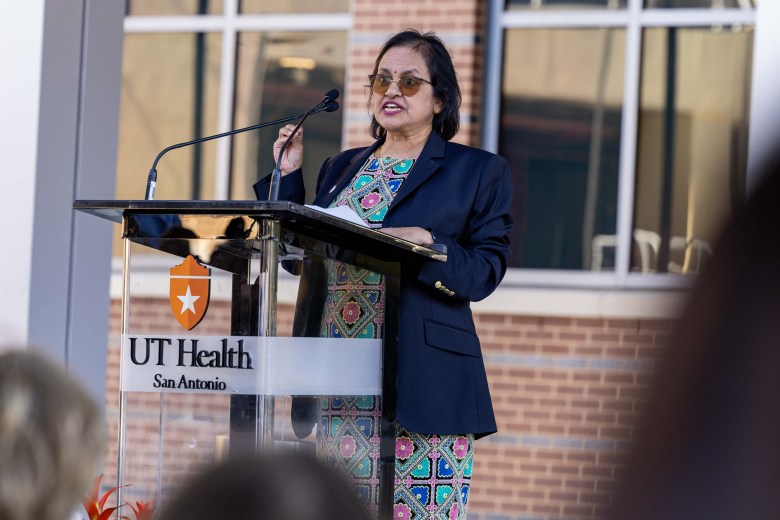
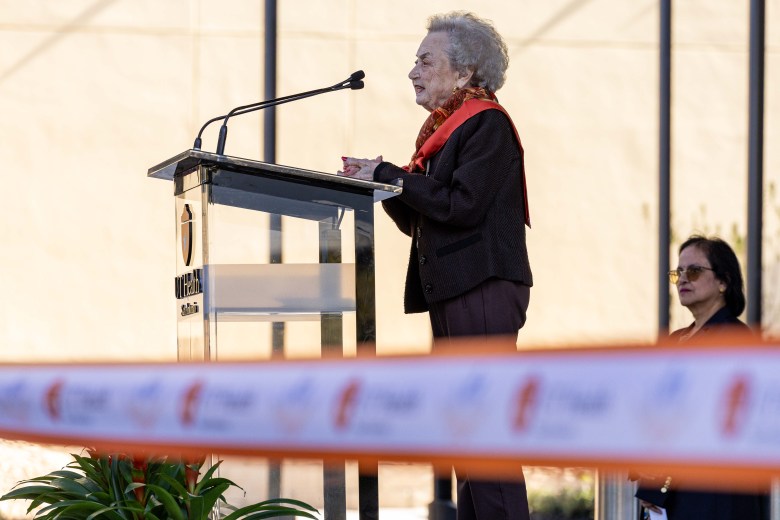 Ann Biggs, a philanthropist and widow of Glenn Biggs, speaks during the opening celebration and ribbon cutting ceremony for UT Health’s new Center for Brain Health on Wednesday. Credit: Amber Esparza / San Antonio Report
“It is our responsibility to basically solve this mystery of Alzheimer’s and eliminate it,” said Francisco Cigarroa, senior executive vice president for health affairs at UT San Antonio. “The center … reflects our belief that scientific innovation must always be tied to humanity. Otherwise, I think we’ve lost our soul.”
Dr. Sudha Seshadri, the founding director of the Glenn Biggs institute, is confident that there’s a cure for the disease, and much to be learned about prevention, and that UT San Antonio researchers will be the ones to find such breakthroughs.
“We are not there yet, not where we want to be,” she said. “We have so much more to do … to make dementia treatable, reversible and preventable.”
The same goes for Ann Biggs, 91, a philanthropist and widow of Glenn Biggs, the San Antonio business leader and the institute’s namesake.
“We still have work to do. We need to find those missing links, those parts to pull together. If we can move forward, I predict there could be a prize down the line,” she said at the ribbon-cutting, hinting at a potential Nobel Prize. “I feel like maybe we can hope for that, and we’ll have another day to celebrate.”