
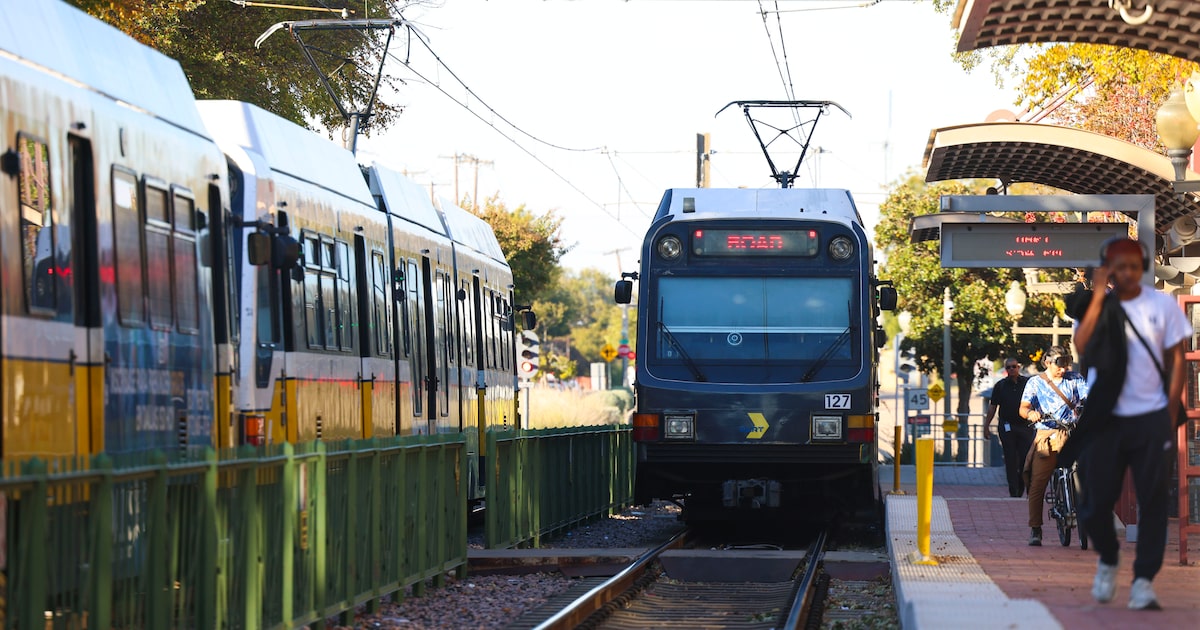
The 1980s called. They want their transit system back.
Once upon a time, DART made sense. Way back in 1983, when DART was created by the state Legislature, U.S. Highway 75 was just two lanes each way, and the slough into Dallas, where most of the jobs were, was pure drudgery. The people of North Texas recognized the need for efficient public transit, and when the member cities opted into the DART system, the value proposition was clear: ease congestion on the roadways for just a penny of your sales tax.
I remember a time when the parking lot of the Parker Road Station was packed with the cars of commuters who took the light rail to Dallas. Those days waned well before the pandemic, however, for one simple reason: In the 42 years since DART was created, North Texas has evolved dramatically, while DART has not.
DART has mired itself in an outdated model, doing a huge disservice to the people who rely on it the most because it has no incentive to modernize. No matter what DART does, it’s going to get that penny of sales tax, which now has ballooned in Plano to an expected $123 million next year. That’s more than the funding for the entire Plano Police Department, and more than Plano residents pay in property taxes. Using DART’s own data, I was able to calculate that for less than half of what Plano pays into DART, we could just get all those riders free rideshare instead. Uber isn’t a viable public transit solution, but it shows just how upside-down things are.
Opinion
Now, the cities of Plano, Irving, Highland Park and Farmers Branch have all called for a ballot referendum next May for our people to consider voting out DART and leaving the system.
How did we get here? I had just been elected to Plano City Council back in 2019 and started asking some basic questions. How much money does the city contribute to DART? How many people ride it? How can we get more effective service? How much does DART spend in Plano?
Instead of answers, for nearly six years, through three legislative sessions, we got misdirection, smokescreens and numerous empty promises.
Eventually, an Ernst & Young study was commissioned, which, when finally delivered late last year, quantified what everyone already knew: Taxpayers from some cities, like Plano, were heavily subsidizing the system, while taxpayers and riders were being ripped off by a system whose goal was, in the words of DART CEO Nadine Lee, “to spend every dollar.”
Lest anyone claim it’s all about money, Irving is also fed up with a lack of partnership and poor service for those who rely on it, and Irving receives more money than it pays in.
People need a public transit solution, and there’s a reason fewer people choose to ride DART. There’s a reason no other cities have chosen to join the DART system in 40 years. There’s a reason four member cities are now considering withdrawal from the system. The reason is that DART no longer makes sense for North Texas.
Plano is already moving forward with providing for the transit needs of our own people, particularly disabled paratransit riders for whom DART has punitively raised fares. And we’re doing it for a fraction of the cost. The North Texans who rely on public transit deserve better than DART.
The people of North Texas deserve a transit solution that makes sense, is reliable and safe, fiscally responsible and truly regional. In the year 2025, DART is none of these things and seems unwilling to change. The time has come for the people of North Texas to vote out DART and welcome the future of transit.
Shelby Williams is a former Plano City Council member and current candidate for Collin County Commissioner, Precinct 4.